

LUXER ONE BLOG

How Can Automated Lockers Transform Food Pantry Access?

How can smart lockers transform food pantry access

Modern food pantries are being asked to do more with less. They need to serve more people, offer greater flexibility, and operate with fewer staff and volunteers. As organizations look for ways to expand access without increasing overhead, many are wondering: Is there a better way to distribute food?


This Q&A explores the kinds of questions partners are already asking, and how automated locker solutions are helping provide answers.

What Are the top challanges food pantries are facing today?

  1. Limited staff and volunteers
  2. Growing need for services
  3. Restricted hours
  4. Acquiring funding

    Food banks are serving more people than ever, often with limited staff and restricted hours. Many organizations struggle with volunteer availability, balancing a budget, and food distribution meeting people where they are. Traditional pickup windows don’t always work for families juggling multiple jobs, transportation challenges, or caregiving responsibilities.

How do food pantries serve people who can’t visit during open hours?

When pickup is only available during business hours, individuals who work or rely on public transportation may miss out. This creates gaps in access, increases food waste, and adds stress to already overburdened staff and volunteers. By utilizing automated locker technology, pantries can offer 24/7 self-service pickup. This flexibility helps food banks reach more people without increasing staffed hours.

food pantry volunteers handing out food

How can automated lockers support food pantries?

Automated lockers are secure, technology enabled storage units that allow items to be distributed without requiring staff to be present at pickup. Each recipient receives a secure code or mobile notification, allowing them to pick up food on their schedule.

Automated lockers allow recipients to pick up food discreetly, without long lines or public distribution windows. This self-service model reduces stigma, empowers users, and creates a more respectful experience that feels closer to modern retail pickup than traditional aid distribution.

Can automated lockers qualify for funding?

In addition to direct funding from donors, food banks and pantries can access support through federal programs that supply food and other resources. Assistance can also come in the form of infrastructure grants, equipment donations, or partnerships with local agencies and nonprofits. Some examples include Feeding America, FEMA’s Emergency Food and Shelter Program, or the USDA. View our Food Pantry Funding Guide for more information.

Are automated lockers affordable for small or community run pantries?

Automated locker solutions are scalable and can be tailored to different budgets and needs. Smaller pantries can start with a limited number of lockers and expand if needed. When compared to ongoing staffing costs, food loss, and inefficiencies, lockers often provide long term operational savings.

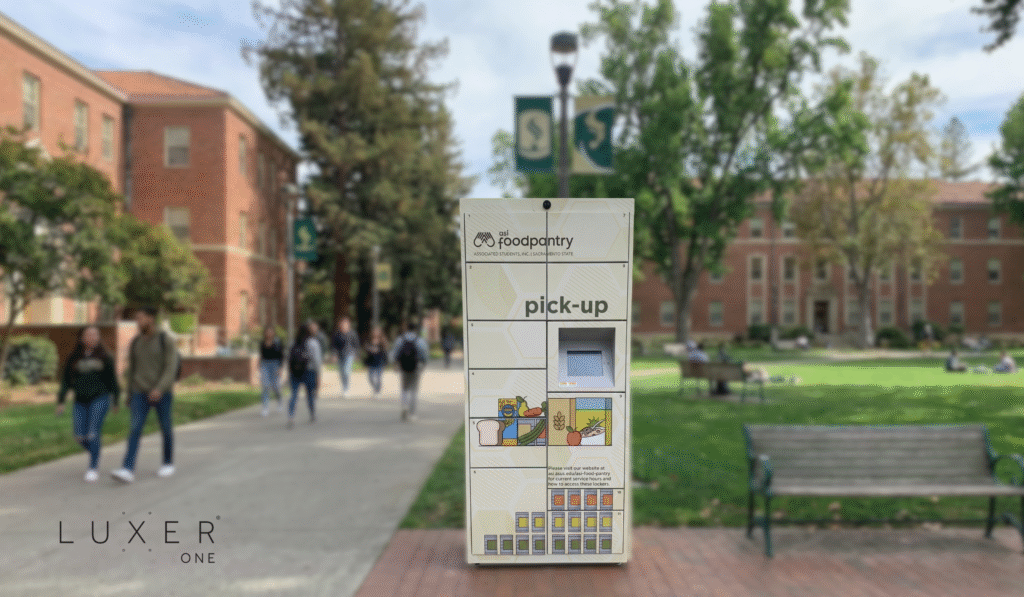
Food pantry locker on campus university

How are universities using automated lockers for campus food pantries?

Universities are increasingly using automated lockers to expand access to campus food pantries in a way that fits student schedules and privacy needs. With students balancing classes, jobs, and extracurriculars, traditional pantry hours often don’t align with availability. Automated lockers allow campus teams to preload food and let students pick up items discreetly at a time that works for them.

How can food pantries protect privacy during pickup?

Privacy is a major concern for many individuals seeking food assistance. Automated lockers offer a discreet, self guided pickup experience that removes public handoffs and waiting in lines. Recipients can collect food without feeling rushed or exposed, helping create a more respectful and empowering experience.

Dion's food pantry smart locker

Do automated lockers work for refrigerated or frozen food?

Yes, automated locker systems can be designed to support refrigerated and frozen items. Temperature controlled lockers help food pantries safely distribute perishable goods while maintaining compliance with food safety standards. This expands the types of food pantries can offer and helps reduce spoilage and waste.

Ready to Expand reach to your Community?

As food insecurity continues to rise, the most impactful solutions will be the ones that feel simple, scalable, and people oriented. Automated lockers don’t change the mission of food pantries, they help them carry it forward. For organizations asking how to serve more neighbors without burning out staff or volunteers, the answer may already be automated lockers.

Contact us to get started.

  • Lauren Buote

    Lauren Buote is a Marketing Coordinator at Luxer One who blends her fine arts background from North Carolina State University, with marketing experience in small businesses and museums. She specializes in content and design that support Luxer One’s storytelling and brand growth in the Commercial sector.

    See Posts

RECENT POSTS

Vendor Fatigue Is Real, Here's How to Consolidate

Vendor Fatigue Is Real, Here’s How to Consolidate

Vendor evaluation is not seasonal. Contracts come up for renewal year-round, and a tool that is not earning its spot does not wait for a convenient month to become a problem. But budget season puts it in sharper focus than usual, since every vendor on the books gets a harder look right as 2027 technology budgets lock in.

Read More »
How to Prepare Your Community for Incoming Holiday Package Piles

How to Prepare Your Community for Incoming Holiday Package Piles

Holiday cheer is coming, but so are the holiday package piles. Every year, November and December bring a spike in online shopping that puts pressure on even the most organized communities.
Without the right systems in place, this seasonal surge can lead to overwhelmed package rooms, rising operational costs, and frustrated residents. If you’re not planning ahead now, the holidays will plan themselves right into your budget and staff bandwidth.

Read More »
What Your Mid-Year Multifamily Market Report Reveals About 2026 Multifamily Market Trends

What Your Mid-Year Multifamily Market Report Reveals About 2026 Multifamily Market Trends

Budget season is here, and with it comes the same question every property manager, owner, and developer is asking: what does the rest of 2026 actually look like, and what should that mean for 2027?
That’s why we built the Mid-Year Multifamily Market Report: a data-backed snapshot of the multifamily market trends shaping occupancy, pricing, supply, and operations right now, with a clear “what it means” takeaway for every finding.

Read More »
Budget Season Is Here. What the Market Is Actually Telling You.

Budget Season Is Here. What the Market Is Actually Telling You.

August marks the start of budget season for most of the multifamily industry. Over the next 60 to 90 days, property managers are reviewing vendor contracts, owners are stress-testing their 2027 revenue assumptions, and developers are making go or no-go decisions on projects they have been holding.

Everyone is asking the same question: what kind of market are we actually planning into?

Read More »

TOPICS

Share: