



LUXER ONE BLOG

From Food Banks to Food Access Networks: How Distribution Is Evolving

food pantry access

For decades, food banks and pantries have operated on a centralized model. People travel to a single location during set hours to receive support. While this model has served communities for years, it is time to adapt to a more flexible solution that can serve anyone, regardless of time or location.

Work schedules are less predictable, transportation can be unreliable, and demand continues to rise. As a result, food access is beginning to shift away from a single point of distribution and toward something more flexible that works with the community.

What makes a Food Access “Network” different than a food pantry?

This network is defined by:
  • Multiple distribution points across a community
  • Flexible access beyond traditional hours
  • Systems that support self-service pickup

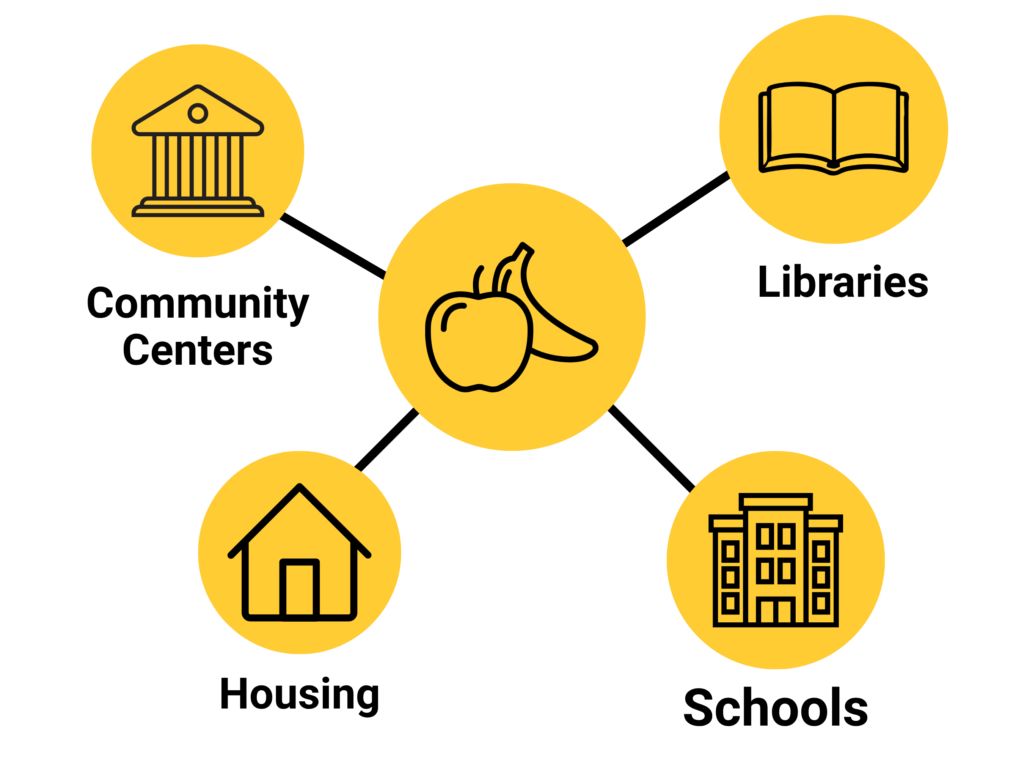
Rather than relying on one primary pantry location, many organizations are beginning to think in terms of networks. A food access network connects locations across a community to make it easier for individuals to access food. This includes food pantries collaborating with schools, libraries, housing complexes, or community centers, to place pickup points at locations people frequent.

This model is not about replacing traditional food banks, but about extending their reach. By decentralizing distribution, organizations can meet people closer to where they live and work. It also allows food providers to respond better to demand, rather than relying on a one-size-fits-all approach.

food pantry volunteers handing out food

Why Communities Are Moving in This Direction

The move toward distributed food access is driven by both necessity and opportunity. On one hand, food banks are facing increased demand and ongoing resource constraints, including limited staffing and volunteer availability. On the other hand, communities have more tools than ever to rethink how services are delivered.

There is also a growing recognition that access is not just about availability, but about usability. If food is available but difficult to retrieve, it can prevent people from getting the support they need. Not to mention, more food is being wasted. A networked approach reduces those barriers by offering more options, more flexibility, and more convenient points of access.

Expanding Access Through Existing Community Spaces

One of the most impactful aspects of a food access network is that it does not require entirely new infrastructure. Instead, it builds on spaces that already exist within the community. Libraries, for example, have become hubs for a wide range of services beyond books, including internet access, education programs, and social support. Similarly, schools and universities are increasingly addressing basic needs through on campus food programs.

By working with these existing spaces, organizations can expand their reach without increasing overhead. This approach also helps normalize food access by integrating it into familiar, everyday settings rather than isolating it to a single location.

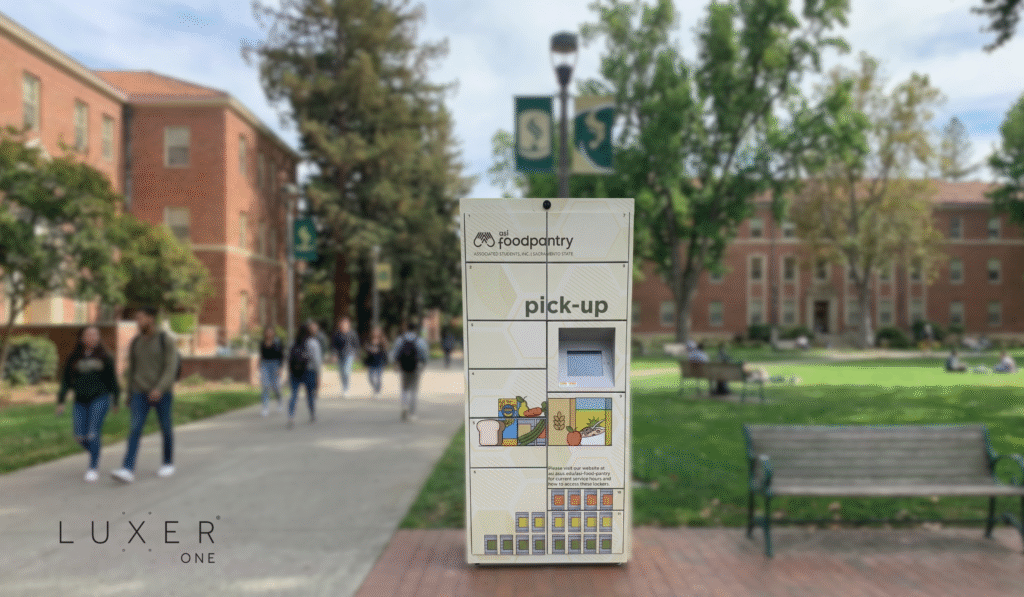
Food pantry locker on campus university

The Role of Technology in Enabling Distribution

With managing multiple locations, tracking inventory, and ensuring secure, reliable pickup, a new system is in order. This is where technology plays an important, but often understated, role.

Rather than changing the mission, technology supports the logistics behind it. Tools, like smart lockers, enable secure, self-service pickup, flexible timing, and visibility to help make distributed models sustainable. They allow organizations to extend access beyond traditional hours while giving users more privacy than traditional food pickup lines. For more information on how smart lockers can offer support for growing food banks and pantries, read more.

What This Means for the Future of Food Distribution

The evolution from centralized food banks to distributed food access networks reflects a broader shift in how communities think about service delivery. It is not about replacing, but expanding in a way that is more adaptable and inclusive.

As organizations continue building out food access networks, the infrastructure should be prioritized in the strategy. Solutions like smart lockers from Luxer One are helping support this shift by enabling secure, flexible distribution across multiple locations without adding operational strain. For food banks, campuses, and community partners exploring more scalable models, the right infrastructure can make a distributed approach not just possible, but sustainable.

  • Lauren Buote

    Lauren Buote is a Marketing Coordinator at Luxer One who blends her fine arts background from North Carolina State University, with marketing experience in small businesses and museums. She specializes in content and design that support Luxer One’s storytelling and brand growth in the Commercial sector.

    See Posts

RECENT POSTS

The Middleman Problem: Why More Delivery Logistics Creates More Problems

The Middleman Problem: Why More Delivery Logistics Creates More Problems

On paper, adding more steps to a delivery process can sound like progress. More coordination, more handling, and more structure.
But in reality, more logistics often leads to more problems.
This is the core issue facing today’s multifamily delivery logistics strategies. In an effort to manage growing package volume, many systems have introduced additional layers between the carrier and the resident.
And while those layers are meant to help, they often create the opposite effect.
Because every extra step is another opportunity for something to go off track.

Read More »
Scalable Package Management Solutions that Work for Every Community

Luxer Liaison: Scalable Package Management Solutions That Work for Every Community

From boutique properties to high rise luxury buildings, every community faces a different mix of challenges. Limited space, growing delivery volume, resident expectations, and staffing constraints all play a role. The common thread is the need for scalable package management solutions that adapt instead of overwhelm.
That’s where the Luxer Liaison package service stands out. By combining on site expertise with flexible service models, Liaison supports communities of all sizes without forcing them into rigid systems or delayed delivery models.

Read More »
Delivered Should Mean Delivered: The Problem with Delayed Package Models

Delivered Should Mean Delivered: The Problem with Delayed Package Models

There was a time when “delivered” meant something simple. A package arrived and a resident picked it up, end of story. Today, that definition is not so clear.
In some communities, “delivered” no longer means a package is in a resident’s hands. It means it is somewhere in the process. Waiting. Moving. Delayed. And that shift is exactly where frustration begins.

Read More »
What to Look for in a Package Management Solution for Multifamily Communities

Package Management Solution Tips: What Multifamily Communities Should Look for Today

Package management is no longer a behind-the-scenes operation. For multifamily communities, it has become a defining part of the resident experience.
Properties are facing a surge in deliveries, increasing pressure on staff, and rising expectations from residents who want fast, secure, and convenient package access. What used to be a minor operational task is now a major decision point for property performance.
That’s why having the right strategy matters. This guide to package management will walk through the most important factors to consider so your property can stay efficient, competitive, and resident-focused.

Read More »
Stop Hoping Packages Show Up: Why Control Matters More Than Convenience

Stop Hoping Packages Show Up: Why Control Matters More Than Convenience

For years, multifamily communities have been told that convenience is the answer to growing delivery volume. Add another step. Introduce another service. Reroute the problem somewhere else.
But what happens when convenience creates more complexity?
What you’re left with is something many property teams know all too well: package chaos.
And the reality is simple. You don’t solve logistics by adding more logistics.

Read More »

TOPICS

Share: