


LUXER ONE BLOG

The Middleman Problem: Why More Delivery Logistics Creates More Problems

The Middleman Problem: Why More Delivery Logistics Creates More Problems

On paper, adding more steps to a delivery process can sound like progress. More coordination, more handling, and more structure.

But in reality, more logistics often leads to more problems.

This is the core issue facing today’s multifamily delivery logistics strategies. In an effort to manage growing package volume, many systems have introduced additional layers between the carrier and the resident.

And while those layers are meant to help, they often create the opposite effect.

Because every extra step is another opportunity for something to go off track.

What Multifamily Delivery Logistics Look Like Today

Package volume continues to rise across multifamily communities, forcing property teams to rethink how deliveries are handled.

In response, many delivery models have evolved to include additional touchpoints. Packages may be rerouted, processed, stored, and then delivered again before reaching the resident.

What used to be a simple exchange has turned into a multi-step journey.

You can think of it like this:

  • Carrier → Processing → Transport → Resident
    vs.
  • Carrier → Property → Resident


The difference is not just the number of steps. It is the level of complexity introduced at each stage. And complexity comes with tradeoffs.

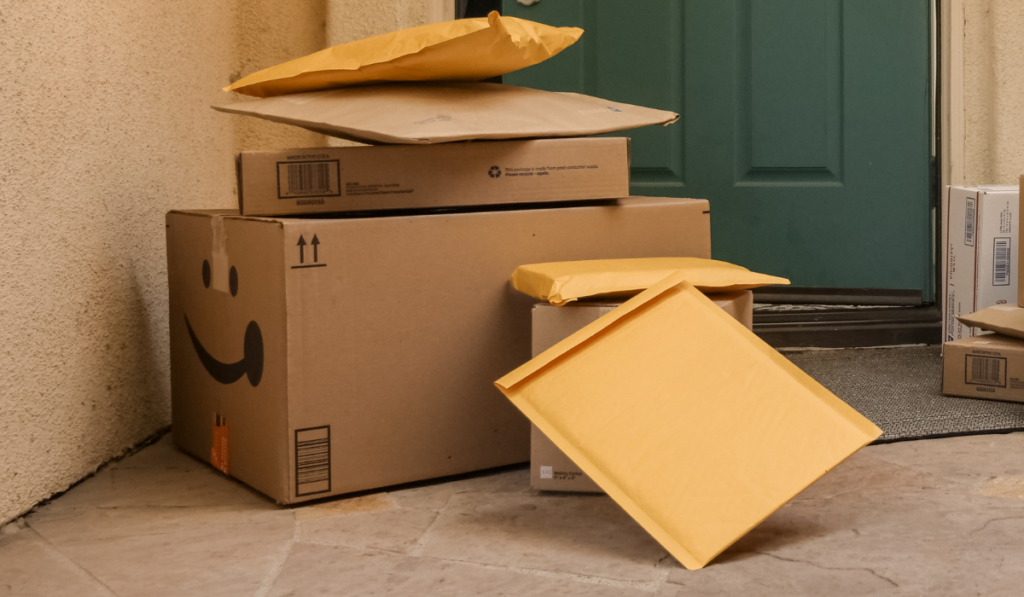
Don't let packages pile up at your property during peak delivery periods

The Middleman Problem

Every time a package changes hands, new variables are introduced.

Where is the package now?
Who is responsible for it?
What happens if something is delayed or misplaced?

The more touchpoints involved, the harder it becomes to answer those questions clearly.

This is what we call the middleman problem.

Instead of creating a seamless experience, additional logistics layers can lead to:

  • Reduced visibility into package location
  • Increased chances of delays during transitions
  • Unclear accountability between steps
  • More time spent coordinating delivery and pickup


For property teams, this means more time spent managing issues that originate outside their control. For residents, it means a delivery experience that feels less predictable and less reliable.

Why More Logistics Does Not Mean Better Outcomes

There is a common assumption that adding structure improves performance.  But in delivery systems, added structure often introduces friction.

Each step requires coordination. Transitions introduce potential delays. Additional handoffs create distance between the package and the resident. And over time, that distance adds up.

What started as an attempt to streamline operations can quickly become a fragmented process that is harder to manage and harder to trust.

This is why simplifying multifamily delivery logistics is often more effective than expanding them. Fewer steps create more clarity.

A Real-World Example of Simplification

For many properties, the turning point comes when they move away from layered logistics and toward a more centralized approach.

In one example, a property partnered with Luxer One’s Liaison service to support its package management operations. Instead of relying on multiple external steps, the property implemented a system that kept deliveries on-site while adding a dedicated support layer to handle exceptions.

The result was a more streamlined process.

Packages were received, managed, and distributed within a single, controlled environment. When overflow or unique situations arose, the Liaison team stepped in to resolve them quickly without introducing additional delays or confusion.

This approach reduced the need for extra coordination and gave both staff and residents a more consistent experience. It also reinforced an important idea: support should simplify operations, not complicate them.

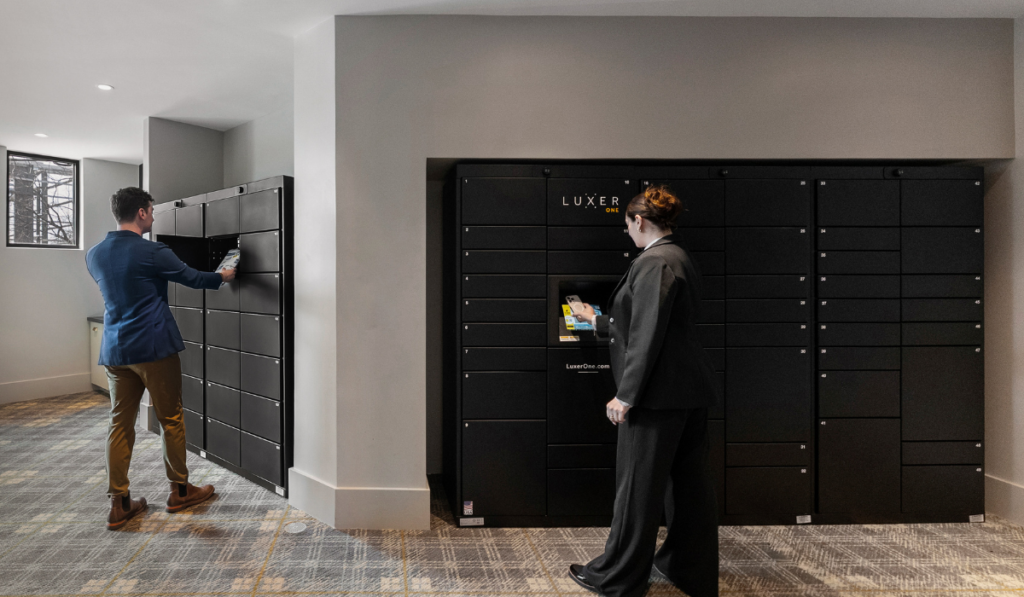
Residents using the Luxer One smart package lockers to get their deliveries

The Simplicity of On-Site Package Lockers

The most effective way to reduce complexity is to remove unnecessary steps altogether.

This is where on-site package lockers play a critical role.

By keeping deliveries within the property, on-site systems eliminate the need for additional transport, processing, and scheduling layers.

The process becomes straightforward:

  • Carriers deliver directly to the property
  • Packages are securely stored and logged
  • Residents are notified and can retrieve items on their own time


There is no middleman, no second delivery, and no added coordination.

Just a clear path from delivery to pickup.

For a deeper comparison of how different delivery models impact operations and resident experience, you can explore this breakdown.

When Support Matters Most

Even in the most streamlined systems, there will always be exceptions.

Oversized packages. High-volume delivery periods. Unique resident needs.

What matters is how those situations are handled.

Having a reliable support layer ensures that these moments do not disrupt the overall process. Dedicated services like Luxer Liaison provide that layer, stepping in when needed to maintain consistency without adding unnecessary complexity.

And when residents or staff need assistance, responsive support plays a key role in maintaining confidence in the system. Because a simple system backed by strong support creates a better experience for everyone involved.

Luxer Liaison assisting a resident to get a package out of the package room

Take Back Control of Your Delivery Process

The middleman problem is not about any one step. It is about the cumulative impact of too many steps. When delivery systems become more complex, they become harder to manage, harder to track, and harder to trust.

Simplifying multifamily delivery logistics is not about doing less. It is about doing what works.

By removing unnecessary layers and keeping deliveries on-site, properties can create a process that is faster, clearer, and more reliable. And that is what residents expect.

Take back control of your deliveries by choosing a solution that reduces complexity, eliminates unnecessary steps, and keeps everything where it belongs.

  • Christina Draper

    Christina Draper, Marketing Content Manager at Luxer One, creates storytelling-driven content that connects with property management professionals and highlights innovations in multifamily package management. With a marketing background from UNC Charlotte, she develops cross-channel campaigns that showcase how Luxer One is redefining the resident experience.

    See Posts

RECENT POSTS

Boost Resident Retention with Reliable Partners

Resident Retention Starts With Reliable Multifamily Partners

Resident retention has become one of the most important metrics in multifamily housing and one of the hardest to maintain. Today’s residents expect convenience, consistency, and responsive service across every touchpoint of their living experience. When operations fall short, frustration builds quickly.
That’s why more property and regional managers are reevaluating not just the amenities they offer, but the multifamily technology partners behind them.
Reliable partners don’t just help properties run smoothly. They directly support resident satisfaction, operational consistency, and long-term asset value.

Read More »
what is the best way to manage packages in a university mailroom?

What Is the Best Way to Manage Packages in a University Mailroom?

University mailrooms are under more pressure than ever. As online shopping continues to grow, campuses are receiving an unprecedented volume of packages each day, often without the staffing or storage space to keep up. For many universities, the question is no longer whether a new system is needed, it’s what is the best system to use?

Read More »
The Hidden Cost of Off-Site Package Models

The Hidden Cost of Off-Site Package Models

At first glance, some package management solutions seem like a win for property teams. They promise fewer packages on-site, less clutter, and less day-to-day handling.
But what looks convenient on the surface often comes with hidden tradeoffs. While these models may reduce visibility on the property, they do not eliminate the problem. They shift it somewhere else.
And in many cases, they shift it directly onto residents.

Read More »

Luxens on the Rise: Employee Highlight | Saular Moaddeli

At Luxer One, growth is part of the job. We prioritize promoting from within, provide clear paths for advancement, and encourage every team member to explore new opportunities! Our Luxens on the Rise series highlights team members who have carved their own paths within the company, taking on new challenges and evolving their careers along the way.

Read More »
food pantry access

From Food Banks to Food Access Networks: How Distribution Is Evolving

Modern food pantries are being asked to do more with less. They need to serve more people, offer greater flexibility, and operate with fewer staff and volunteers. As organizations look for ways to expand access without increasing overhead, many are wondering: Is there a better way to distribute food?
This Q&A explores the kinds of questions partners are already asking, and how smart locker solutions are helping provide answers.

Read More »

TOPICS

Share: