




LUXER ONE BLOG

Delivered Should Mean Delivered: The Problem with Delayed Package Models

Delivered Should Mean Delivered: The Problem with Delayed Package Models

There was a time when “delivered” meant something simple. A package arrived and a resident picked it up, end of story. Today, that definition is not so clear.

In some communities, “delivered” no longer means a package is in a resident’s hands. It means it is somewhere in the process. Waiting. Moving. Delayed. And that shift is exactly where frustration begins.

The Expectation Gap Is Growing

Resident expectations have changed dramatically in the last few years, driven by the speed of modern eCommerce.


Speed is no longer a perk. It is the baseline. At the same time, delivery networks are getting faster every year, shrinking average delivery windows and raising expectations even further.

So when a resident sees “delivered,” they are not expecting another step. They are expecting access. That is where delayed package models start to break down.

Carrier handing over packages to another person

When “Delivered” Turns Into “Delayed”

Delayed package models introduce an extra layer between the carrier and the resident. Packages are rerouted, processed, and eventually returned for pickup.

On paper, it sounds like a system. In reality, it often creates friction because every additional step adds time. And more importantly, it adds uncertainty.

Residents may find themselves:

  • Waiting hours or days after a package is marked delivered
  • Scheduling a second delivery or pickup window
  • Missing deliveries entirely due to timing constraints
  • Packages getting lost more often


This is not convenience, it is a delay disguised as a solution. And it creates a gap between what residents expect and what they experience.

The Resident Experience Breakdown

The biggest issue with delayed package models is not operational. It is emotional.

Residents are conditioned to expect immediacy. When that expectation is not met, frustration builds quickly. That frustration does not disappear when the package finally arrives. It carries over into how residents view the property itself.

Now the property team is not just managing packages. They are managing dissatisfaction.

Missed expectations turn into complaints. Complaints turn into negative reviews. And over time, that impacts retention.

The Pros of On-Site Package Systems

The solution is not to add more steps. It is to remove them.

This is where the pros of on-site package systems become clear.

When deliveries stay on-site, the process becomes immediate, visible, and predictable.

  • Carriers deliver directly to the property
  • Packages are logged and secured in real time
  • Residents are notified instantly
  • Pickup happens on their schedule, not someone else’s


There is no second delivery window. No added coordination. No delay between “delivered” and “available.” It is a direct path from carrier to resident. And that is exactly what today’s residents expect.

For a deeper look at how on-site and off-site approaches compare, you can explore the full breakdown in this blog.

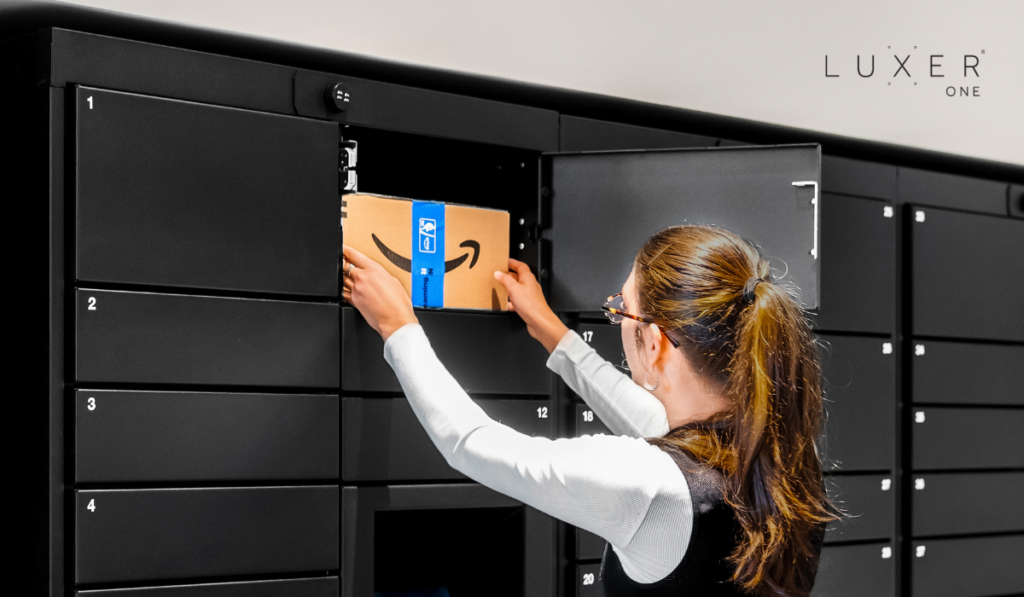
Resident taking Amazon package from black Luxer One smart lockers

Speed, Security, and Trust Go Together

Fast delivery is only part of the equation. Residents also expect their packages to be secure and handled reliably. On-site systems support both.

By keeping packages within the property, communities reduce unnecessary movement and minimize risk. And when something does go wrong, the experience matters just as much as the outcome.

Responsive, knowledgeable support can turn a frustrating moment into a manageable one. That is where having the right partner makes a difference.

Removing Delays, Adding Confidence

The core issue with delayed package models is simple: they redefine “delivered” in a way that no longer matches reality.

Residents expect speed, visibility, and control. When those expectations are not met, the entire experience suffers.

On-site systems bring delivery back to what it should be: immediate, reliable, and easy to access.

And when paired with additional support, like dedicated service teams that handle exceptions and overflow, properties gain an extra layer of consistency. Because even the best systems need reinforcement.

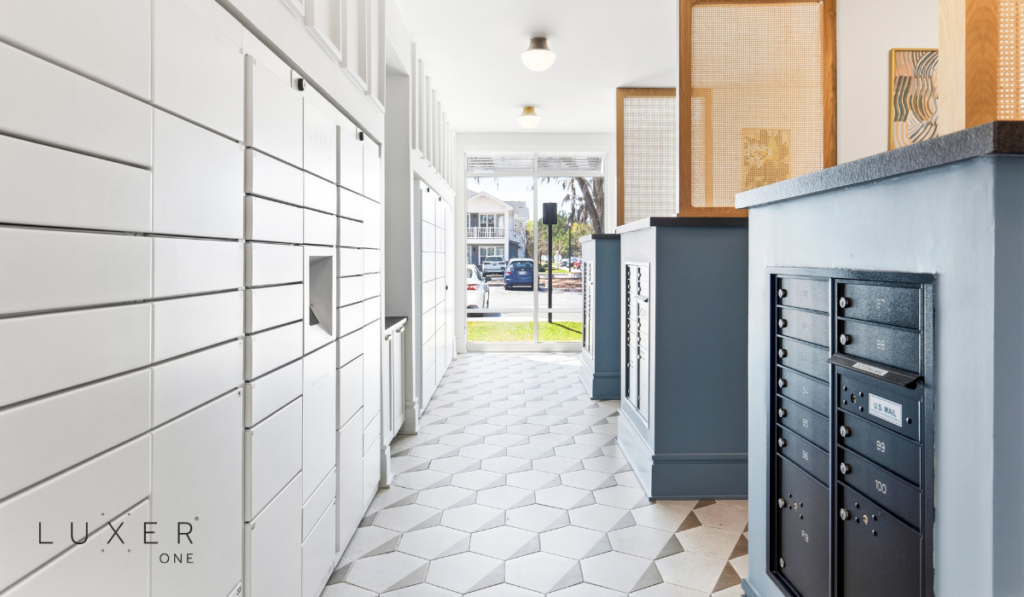
White, smart package lockers in community mail room

Delivered Should Mean Delivered

This is not just about logistics. It is about trust.

When a resident sees “delivered,” they should not have to wait. They should not have to schedule or wonder where their package went. Residents should be able to walk downstairs and pick up their package.

Anything less creates friction and doubt. It is time to move past delayed package models and rethink what delivery should look like.

Delivered should mean delivered. And with the right on-site solution, it finally can. Contact Luxer One to learn more about how onsite package systems can improve resident satisfaction.

  • Christina Draper

    Christina Draper, Marketing Content Manager at Luxer One, creates storytelling-driven content that connects with property management professionals and highlights innovations in multifamily package management. With a marketing background from UNC Charlotte, she develops cross-channel campaigns that showcase how Luxer One is redefining the resident experience.

    See Posts

RECENT POSTS

What to Look for in a Package Management Solution for Multifamily Communities

Package Management Solution Tips: What Multifamily Communities Should Look for Today

Package management is no longer a behind-the-scenes operation. For multifamily communities, it has become a defining part of the resident experience.
Properties are facing a surge in deliveries, increasing pressure on staff, and rising expectations from residents who want fast, secure, and convenient package access. What used to be a minor operational task is now a major decision point for property performance.
That’s why having the right strategy matters. This guide to package management will walk through the most important factors to consider so your property can stay efficient, competitive, and resident-focused.

Read More »
Stop Hoping Packages Show Up: Why Control Matters More Than Convenience

Stop Hoping Packages Show Up: Why Control Matters More Than Convenience

For years, multifamily communities have been told that convenience is the answer to growing delivery volume. Add another step. Introduce another service. Reroute the problem somewhere else.
But what happens when convenience creates more complexity?
What you’re left with is something many property teams know all too well: package chaos.
And the reality is simple. You don’t solve logistics by adding more logistics.

Read More »

Partner Spotlight: Craig Meddin, Postal Solutions

At Luxer One, our VAR (Value Added Reseller) partners are a big part of what makes our solutions work in the real world. Our Partner Spotlights highlight the people solving real operational challenges every day.

This month, we’re featuring Craig Meddin, Founder and CEO of Postal Solutions. With more than 25 years in the industry, Craig has built a business centered on helping properties simplify mail and package management, not just with technology, but with the right systems behind it.

Read More »
Spring Cleaning: How to Audit Package Lockers for More Efficient Deliveries

Spring Cleaning: How to Audit Package Lockers for More Efficient Deliveries

Package volume isn’t slowing down. It’s accelerating.
In 2025, nearly 24 billion packages were delivered in the U.S., averaging more than 90 million deliveries every weekday. For multifamily communities, that translates to one reality: more deliveries, more pressure, and more opportunities for breakdowns in your package system.
That’s why understanding how to audit package lockers is no longer optional. It is essential to maintaining efficient deliveries, satisfied residents, and controlled operational costs.

Read More »

TOPICS

Share: