


At first glance, some package management solutions seem like a win for property teams. They promise fewer packages on-site, less clutter, and less day-to-day handling.
But what looks convenient on the surface often comes with hidden tradeoffs. While these models may reduce visibility on the property, they do not eliminate the problem. They shift it somewhere else.
And in many cases, they shift it directly onto residents.
The Appeal of “Out of Sight, Out of Mind”
It is easy to see why off-site approaches gain traction. Package volume is increasing, staff are stretched thin, and space is limited. So the idea of removing packages from the property altogether can feel like relief. Fewer items in the office, fewer immediate interruptions, and less visible pressure.
But convenience at the operational level does not always translate into a better experience overall. In fact, it often introduces new challenges that are less visible at first, but more impactful over time.
The Hidden Cost: Resident Frustration
The biggest issue with off-site package models is not what happens to the packages. It is what happens to the resident experience. Instead of a simple pickup process, residents are now asked to adapt to a new system.
That often includes:
- Scheduling delivery windows or pickup times
- Waiting beyond the initial “delivered” notification
- Navigating a process that feels unfamiliar or inconvenient
What was once a quick, self-service experience becomes a multi-step task and that shift creates friction.
Residents are used to immediacy. When that expectation is not met, frustration builds quickly.
When Frustration Comes Back to the Property
Even though packages may be handled off-site, the impact does not stay there.
Residents do not separate their delivery experience from their living experience. When something goes wrong, they turn to the property team.
That leads to:
- Increased complaints about delays or missed deliveries
- More time spent answering questions without full visibility
- Negative online reviews tied to package issues
- A perception that the property is harder to live in
What started as a way to reduce workload can end up creating new operational pressure. Because now, staff are not just managing packages. They are managing dissatisfaction.
Scheduling Burden and Security Concerns
Two of the most common pain points in these models are scheduling and security.
Scheduling adds friction at every step. Residents must be available at specific times, plan around delivery windows, and sometimes deal with missed handoffs. What should be simple becomes something they have to think about.
At the same time, additional movement introduces more opportunities for packages to be misplaced, mishandled, or exposed to risk. More steps mean more transitions and more transitions can mean more uncertainty.
Security is not just about where a package ends up. It is about how consistently it is handled along the way.
What a Resident-First Solution Looks Like
A better approach starts by prioritizing the resident experience without adding complexity.
This is where on-site solutions like smart lockers and package rooms stand apart.
Instead of asking residents to adapt to a new system, these solutions work within the property environment they already use every day.
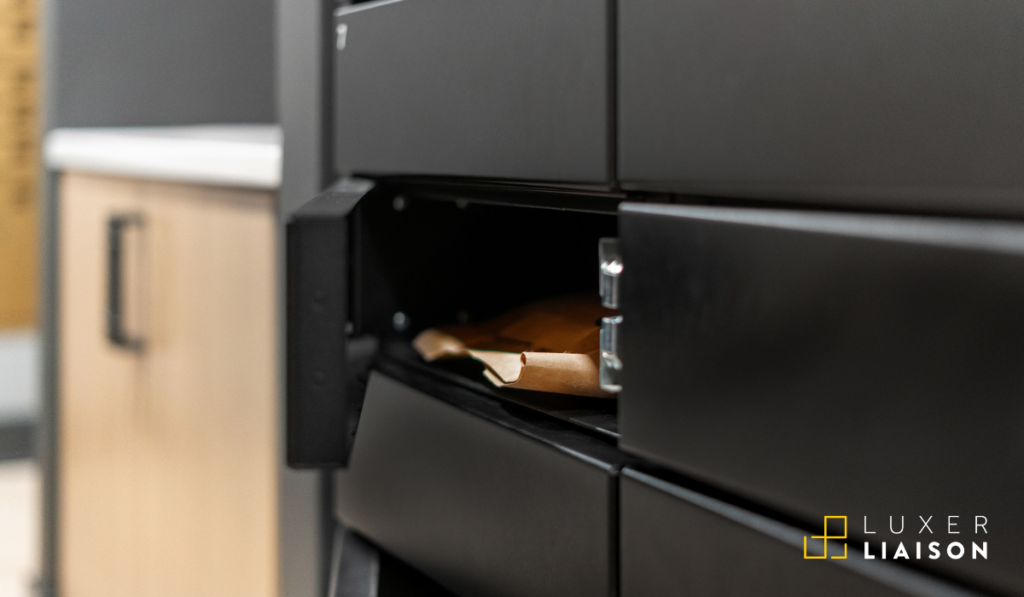
- Packages are delivered directly to the property
- Items are securely stored and tracked in real time
- Residents receive instant notifications
- Pickup happens on their schedule, without coordination
There is no added layer, second delivery, or scheduling burden. And beyond improving the resident experience, these systems also reduce operational strain. Fewer complaints, fewer manual interventions, and less time spent tracking down issues.
By simplifying the process, properties create a more consistent experience for everyone involved. If you are evaluating different approaches, this guide breaks down what to look for in a package management solution.
And for a side-by-side comparison of delivery models, you can explore more here.
Support Still Matters
Even with the right system in place, there will always be exceptions. High package volume. Oversized deliveries. Unique resident needs. What matters is how those moments are handled.
Scalable support services can help properties manage these situations without adding complexity or burdening staff. And when residents need assistance, responsive customer support plays a critical role in maintaining trust and satisfaction.
Because the best systems are not just efficient, they are supported.
Put Residents First
The hidden cost of off-site package models is not always obvious at the start. But over time, it shows up in resident frustration, increased workload, and a delivery experience that feels more complicated than it should be.
Convenience for operations should not come at the expense of the people who live there. When you prioritize simplicity, visibility, and control, you create a system that works for both staff and residents.
Put residents first by choosing a package management solution that removes friction, reduces complaints, and delivers a better experience from start to finish.
-
See Posts
Christina Draper, Marketing Content Manager at Luxer One, creates storytelling-driven content that connects with property management professionals and highlights innovations in multifamily package management. With a marketing background from UNC Charlotte, she develops cross-channel campaigns that showcase how Luxer One is redefining the resident experience.