


LUXER ONE BLOG

Rethinking the Last Mile: Understanding the Final Step in Hospitality and Retail

carrier deliverying package

What is Last-Mile Delivery?

When you order food to your hotel room, pick up an online order at a store, or grab a takeout meal from your favorite restaurant, you’re experiencing the last mile of delivery, the final and most critical step of logistics.

Last-mile delivery refers to the movement of goods from a local distribution hub to their end destination, often a customer, guest, or employee. It’s where logistics meets real-world experience, and in commercial environments, it’s no longer just about speed, it’s about reliability, security, and service.

According to research, the last mile accounts for more than 50% of total shipping costs making it the most expensive part of the supply chain. Yet, for businesses like hotels, retailers, and restaurants, it’s also the most visible touchpoint with the customer, where a smooth or failed delivery can define the entire brand experience.

In this blog, we explore how the last mile shows up in three major verticals: hotels, retail, and quick-service restaurants (QSRs). Each faces different pressures, guest package management, rising click-and-collect orders, and surging digital food pickups. But, they all share the need for more reliable, organized, and efficient handoff systems.

Why the Last Mile Matters

For businesses, last-mile delivery is about more than getting products from point A to point B, it’s about managing complexity

What challenges occur in the last mile of delivery?
Commercial environments have unique constraints: limited space for couriers, varying access hours, security protocols, and multiple delivery types (food, parcels, returns, internal assets). A single location might handle dozens of deliveries daily, each with its own timing and urgency.

Why is last-mile delivery important now?
Customer expectations have changed. Guests and shoppers expect flexibility, immediacy, and communication. That demand has collided with labor shortages, rising carrier costs, and limited urban space, forcing operators to rethink how to handle the final handoff.
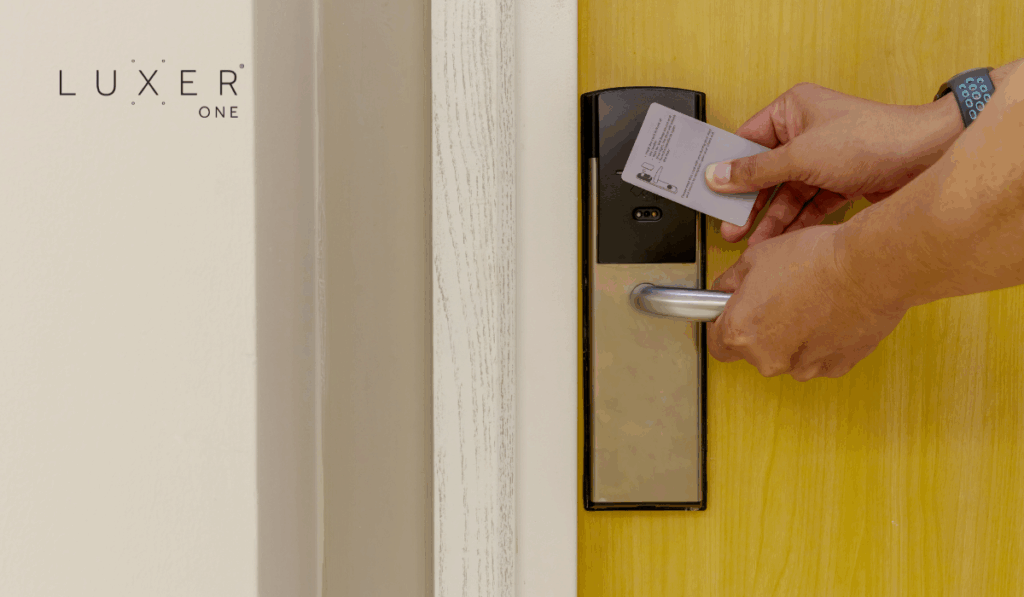
hotel check in yellow door key card

Hotels: The 24/7 Delivery Challenge

Hotels have become mini logistics hubs. Between room service, guest deliveries, and staff shipments, managing packages has become an around-the-clock operation.

What does last-mile delivery look like for hotels?
It often includes third-party food delivery, luggage shipping, and personal parcels. The issue? Couriers arrive at all hours, and front desk staff are left juggling check-ins, calls, and pizza boxes.

In fact, half of hotel guests now order delivery or dine off-property during their stay, which has driven many hospitality brands to partner with delivery platforms rather than operate traditional kitchens.

In addition to food delivery, guest package management has become a major operational strain, with many properties receiving dozens of guest parcels each day. Front-of-house teams are often left to sort, store, and track these items while balancing check-ins and guest service, creating a growing need for more organized, self-serve delivery and pickup processes.

Retail: When Click-and-Collect Becomes the Brand

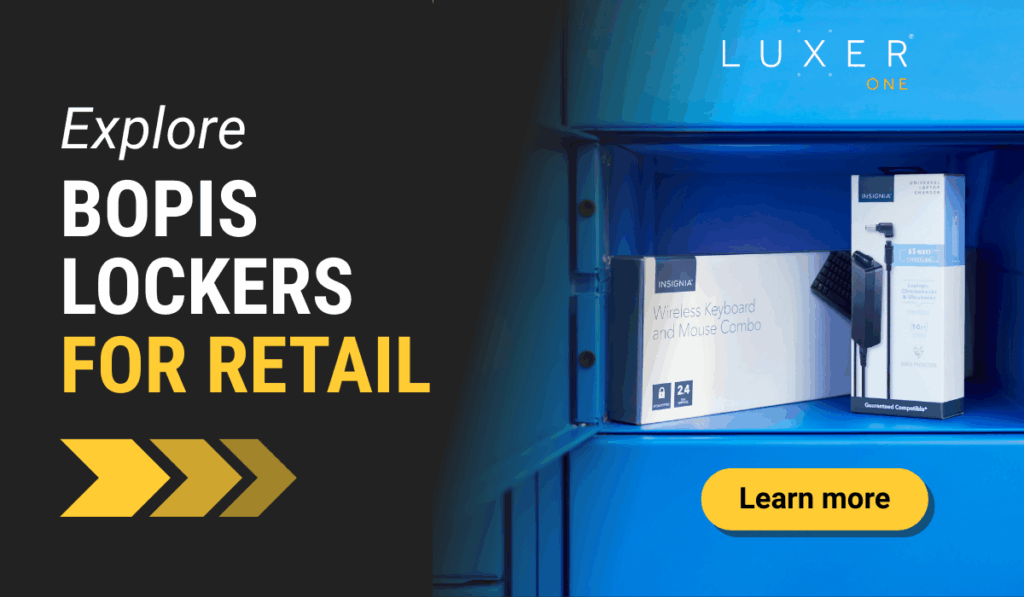
Buy-online-pickup-in-store (BOPIS) has become a core part of the retail experience. In 2025, it’s projected to make up 10.5% of all U.S. e-commerce salesand that number keeps growing.

Why does last-mile delivery matter for retailers?
Because it shapes two crucial customer moments: order pickup and returns. A poor pickup experience can negate the convenience of online ordering, and a slow returns process can frustrate customers and strain staff. In 2024, U.S. retailers processed an estimated $890 billion in returns, with a return rate near 17%. Optimizing last-mile operations, through secure, self-serve returns and pickups, saves labor and improves the customer journey.
woman online shopping with credit card

Restaurants & QSRs: The Fast Lane to Friction

With the surge in digital orders, restaurants must manage delivery driver traffic and customer pickups alongside traditional dine-in. Without a dedicated system for handoff, whether in the store or externally, brands risk bottlenecks, service delays, and diminished food quality.

On top of that, many locations now handle a constant flow of third-party couriers arriving simultaneously, which can overwhelm small front-of-house areas and disrupt staff workflows during peak meal periods.

How can QSRs improve their last-mile experience?
Quick-service restaurants can strengthen their last-mile operations by creating clearer, more organized pickup workflows for both delivery drivers and customers. Establishing designated pickup zones, improving order-status visibility, and separating courier traffic from dine-in lines helps reduce congestion and wait times.

By implementing organized pickup lockers, accurate order tracking and verified pickups can ensure food quality and reduce wait times for both customers and drivers.
online food ordering delivery

Security, Trust, and Sustainability

Package theft isn’t just a residential concern, it’s increasingly common in hotels, retail backrooms, and office spaces. In 2024 alone, 58 million packages were stolen across the U.S., totaling $16 billion in losses.

How can businesses make last-mile delivery more secure and sustainable?

Secure pickup infrastructure prevents theft and lost items, while centralized delivery points reduce unnecessary trips and failed deliveries. Consolidated handoffs also mean fewer vehicles idling at curbs, cutting emissions and improving city logistics.

A Smarter Way to Manage the Last Mile

The best last-mile strategies in commercial settings share a few key traits:

  • Verified, trackable delivery and pickup
  • Flexible, 24/7 access
  • Reduced dependency on staff
  • Integration with delivery apps and systems

If you’re exploring ways to make last-mile delivery more reliable, Luxer One offers smart locker systems built for commercial environments. We provide secure, auditable, and branded delivery experiences that help hotels, retailers, and restaurants meet the new expectations of convenience and control.

RECENT POSTS

Best Practices For Package Locker Setup In Apartments

Best Practices For Package Locker Setup In Apartments

Package lockers have become an essential amenity in modern apartment communities. With daily delivery volumes rising and residents expecting secure self-service pickup, a well planned locker setup can make a major difference in resident satisfaction and staff efficiency. Below are the top questions property managers ask when planning a successful package locker deployment, along with practical best practices.

Read More »
The Future of Real Estate Technology: What Multifamily Leaders Should Prepare For Now

The Future of Real Estate Technology: What Multifamily Leaders Should Prepare For Now

Real estate tech is advancing faster than ever, and multifamily operators are feeling the shift across every corner of their portfolios. AI adoption is accelerating, centralized operations are becoming the standard, and residents expect more connected, digital-first experiences in their homes. Following recent industry conversations, including trends highlighted at OPTECH 2025, the future of real estate technology is taking shape around efficiency, data intelligence, automation, and resident expectations.
For multifamily leadership teams, understanding where the industry is heading is only half the challenge. The real task is identifying the practical steps to stay competitive today while preparing for what is next.
Below is a look at what is driving the future of real estate technology, supported by the latest industry data, along with actionable insights you can use to future-ready your operations.

Read More »
The Impact of Online Shopping on Multifamily and Why Package Management Matters More Than Ever

The Impact of Online Shopping on Multifamily and Why Package Management Matters More Than Ever

Online shopping continues to grow at a rapid pace, and multifamily communities are feeling the effects more than almost any other sector. In early 2025, U.S. e-commerce sales were up 5.3% year-over-year, reaching 15.5% of all retail spending, according to the U.S. Census Bureau. At the same time, global online shopping participation surpassed 2.7 billion digital buyers, reflecting a long-term shift toward online purchasing.
For multifamily operators, regional managers, and asset managers, this trend creates a daily operational reality: higher-than-ever delivery volume, greater pressure on staff, and the constant challenge of managing package piles at apartments. This blog breaks down how the surge in online shopping is reshaping multifamily communities and what forward-thinking properties are doing to keep up.

Read More »
How To Cut the Carbon Footprint From Package Deliveries in Your Community

How To Cut the Carbon Footprint From Package Deliveries in Your Community

As resident expectations rise and delivery volumes continue to grow, multifamily communities are looking for practical ways to cut the carbon footprint tied to daily package traffic. While sustainability efforts often focus on building operations or energy upgrades, last-mile delivery is an overlooked area where properties can make meaningful impact.
This guide answers common questions about where emissions come from, how operations contribute, and how modern tools including the sustainability of smart lockers can help communities reduce waste, streamline processes, and support broader ESG goals.

Read More »
From Digital to Physical: The State of the Modern Workplace

From Digital to Physical: The State of the Modern Workplace

The modern workplace has entered a new era of complexity. Hybrid schedules have reshaped how teams use office space. Digital employee experience has become just as important as physical comfort. Asset visibility is now a daily operational challenge. Workplace leaders are being asked to deliver environments that are productive, flexible, and secure. Not to mention they often have fewer resources than before.
This report explores the most significant trends defining today’s office environment, backed by industry research from the past year. For office managers, facilities teams, and operations directors, understanding these shifts is essential to staying ahead. Below, we break down the most common questions workplace managers ask about improving asset management in the workplace and how smart locker systems can help.

Read More »

TOPICS

Share: