


LUXER ONE BLOG

How Smart Lockers Are Revolutionizing Asset Management in the Workplace

How Smart Lockers Are Revolutionizing Asset Management in the Workplace

Managing equipment in today’s workplace is more complex than ever. Between hybrid schedules, shared devices, rotating staff, and rising IT demands, many organizations are struggling to keep track of essential assets. Smart lockers for asset management are emerging as a powerful solution, offering automated, reliable, and secure workflows that support both traditional offices and modern hybrid environments.

Below, we break down the most common questions workplace managers ask about improving asset management in the workplace and how smart locker systems can help.

What Does Asset Management in the Workplace Mean Today?

Asset management in the workplace refers to how organizations track, store, distribute, and maintain the equipment employees rely on every day. This includes laptops, tablets, handheld devices, chargers, monitors, keys, badge replacements, and other shared resources.

Hybrid work has complicated this process. It’s no surprise that companies see a sharp rise in device circulation as employees switch between home and office. This mobility increases the risk of misplaced items and lengthens the time it takes to locate equipment. Many office admins now spend hours each week searching for missing assets or coordinating handoffs.

At the same time, the pressure to operate efficiently is rising. Workplace leaders consistently cite time savings, productivity gains, and operational clarity as top priorities. Resources like Luxer One’s Productivity and Operational Tips for the Workplace illustrate how quickly teams can become overwhelmed when asset tracking depends on emails, sign-out sheets, and manual oversight.

Laptop and clipboard on a desk with colleagues talking in the background in an office

How Do Smart Lockers Improve Asset Management in Traditional and Hybrid Offices?

Smart lockers automate the check-in and check-out process for workplace assets, offering a secure, centralized system where staff can pick up or return equipment at any time. Instead of tracking items manually, workplace managers use a digital interface to assign items, monitor inventory, and generate reports.

Here is how smart lockers transform both traditional and hybrid workplaces:

  • Automated tracking ensures every transaction is recorded in real time.

  • Improved accountability reduces loss, shrinkage, and confusion about who has what.

  • Self-service access allows employees to retrieve items outside standard business hours.

  • Optimized workflow efficiency helps equipment move through the office faster and with fewer delays.

  • Centralized storage ensures devices are stored securely rather than scattered around desks or drawers.

For traditional offices, this means streamlined operations, clear audit trails, and better organization. For hybrid workplaces, it solves one of the biggest challenges: ensuring employees can access devices when they need them, without waiting on admin or IT teams.

Explore more workplace benefits with smart lockers for office solutions.

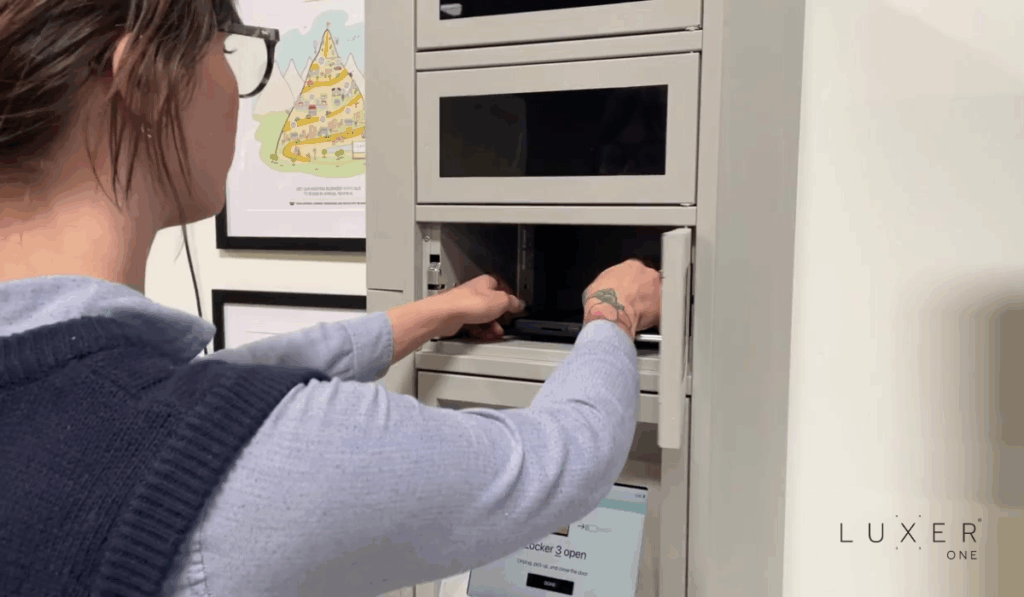
Employee removing handheld device from smart device management locker

What Makes Smart Lockers More Reliable Than Manual Asset Management?

Manual processes create room for error. With shared spreadsheets, paper forms, or email-based sign-outs, it is easy to lose track of who took a device or whether it was returned. These gaps directly impact productivity. In fact, employees lose 11 hours per month due to device issues, missing equipment, or inefficient access processes.

Smart lockers eliminate inconsistencies by automating the entire chain of custody. Every pickup and return is logged automatically. Managers can see exact timestamps, user activity, and inventory status instantly. This level of visibility helps reduce equipment loss and ensures assets are where they are supposed to be.

Digital reporting and auditing tools also support compliance needs, asset replacement planning, and budget forecasting. For teams that rely heavily on high-demand or rotating equipment, smart lockers bring predictability and efficiency that traditional methods cannot match.

Learn more on how automated tracking works with asset management lockers.

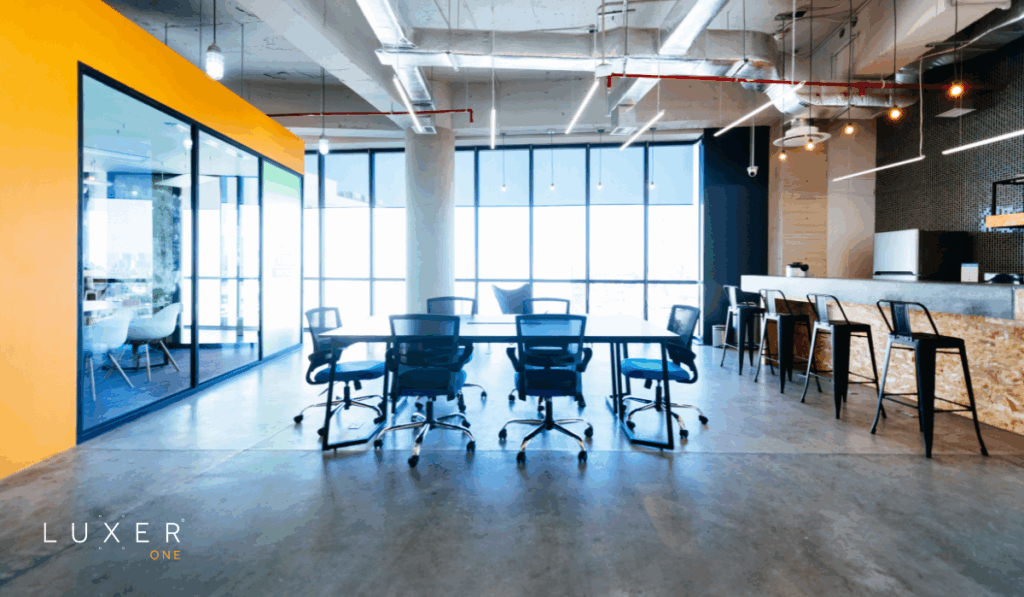
Modern workplace environment featuring a conference room setting

How Do Smart Lockers Support IT Departments and Device Management?

IT teams are some of the biggest beneficiaries of smart locker systems. With hybrid work increasing the volume of laptop swaps, break or fix exchanges, and device upgrades, IT staff often spend a lot of time coordinating handoffs or troubleshooting lost items.

Smart lockers simplify this model by allowing:

  • After hours pickup for repaired or replacement devices

  • Break or fix exchanges without waiting for IT desk availability

  • Secure returns for malfunctioning laptops, tablets, or peripherals

  • Hot swap access for sales teams, field roles, or employees using shared devices

This reduces help desk ticket volume and frees IT teams to focus on larger projects. It also accelerates device turnaround, improving employee productivity and reducing downtime.

For a deeper look at how lockers support tech heavy workplaces, see read this blog on how smart lockers help track IT equipment and office assets.

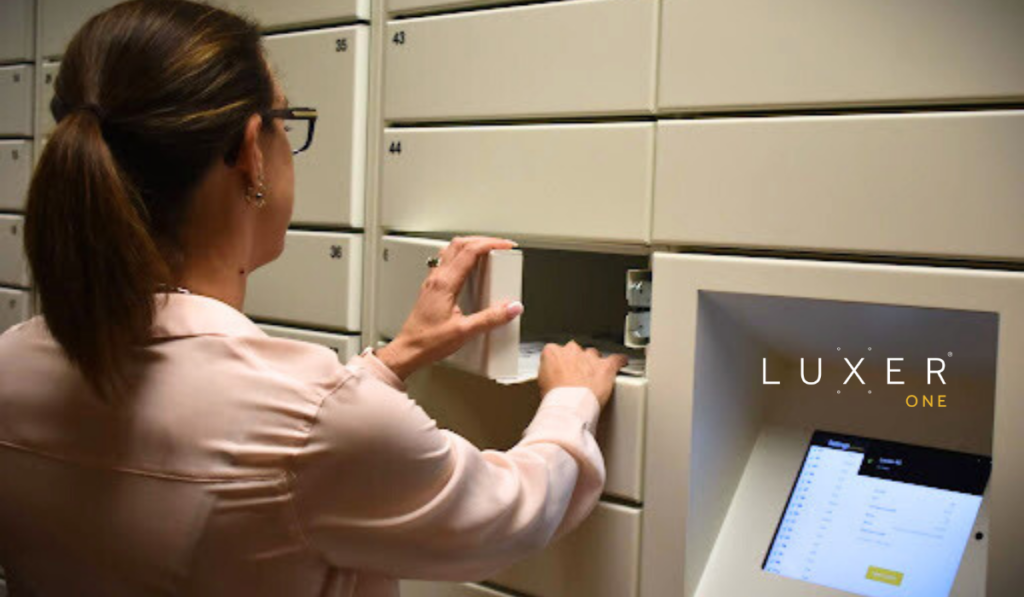
Woman picking up item from Luxer One smart lockers

What Should Workplace Managers Look for in a Smart Locker System?

When evaluating smart lockers for asset management, workplace managers should look for systems that offer:

  • Secure, configurable storage

  • Real time tracking and reporting

  • Detailed audit logs

  • Reliable uptime and strong hardware durability

  • User friendly administrative tools

  • Flexible configurations for different asset sizes

  • Seamless integration into existing workflows

A dependable support structure is also essential. Hybrid teams need consistent access, which means your locker system must operate smoothly and offer ongoing reliability.

Final Thoughts: Why Smart Lockers Are Transforming Asset Management in the Workplace

Smart lockers are becoming indispensable for modern workplaces. They deliver structured, traceable, automated workflows that reduce asset loss, improve accountability, and support employees across both traditional and hybrid environments. 

For office administrators and workplace managers looking to streamline operations, smart lockers offer a simple, scalable way to improve efficiency and transparency.

If you’re ready to modernize your approach to asset management in the workplace, contact Luxer One to learn how a smart locker system can support your team.

  • Christina Draper

    Christina Draper, Marketing Content Manager at Luxer One, creates storytelling-driven content that connects with property management professionals and highlights innovations in multifamily package management. With a marketing background from UNC Charlotte, she develops cross-channel campaigns that showcase how Luxer One is redefining the resident experience.

    See Posts

RECENT POSTS

Best Practices For Package Locker Setup In Apartments

Best Practices For Package Locker Setup In Apartments

Package lockers have become an essential amenity in modern apartment communities. With daily delivery volumes rising and residents expecting secure self-service pickup, a well planned locker setup can make a major difference in resident satisfaction and staff efficiency. Below are the top questions property managers ask when planning a successful package locker deployment, along with practical best practices.

Read More »
The Future of Real Estate Technology: What Multifamily Leaders Should Prepare For Now

The Future of Real Estate Technology: What Multifamily Leaders Should Prepare For Now

Real estate tech is advancing faster than ever, and multifamily operators are feeling the shift across every corner of their portfolios. AI adoption is accelerating, centralized operations are becoming the standard, and residents expect more connected, digital-first experiences in their homes. Following recent industry conversations, including trends highlighted at OPTECH 2025, the future of real estate technology is taking shape around efficiency, data intelligence, automation, and resident expectations.
For multifamily leadership teams, understanding where the industry is heading is only half the challenge. The real task is identifying the practical steps to stay competitive today while preparing for what is next.
Below is a look at what is driving the future of real estate technology, supported by the latest industry data, along with actionable insights you can use to future-ready your operations.

Read More »
The Impact of Online Shopping on Multifamily and Why Package Management Matters More Than Ever

The Impact of Online Shopping on Multifamily and Why Package Management Matters More Than Ever

Online shopping continues to grow at a rapid pace, and multifamily communities are feeling the effects more than almost any other sector. In early 2025, U.S. e-commerce sales were up 5.3% year-over-year, reaching 15.5% of all retail spending, according to the U.S. Census Bureau. At the same time, global online shopping participation surpassed 2.7 billion digital buyers, reflecting a long-term shift toward online purchasing.
For multifamily operators, regional managers, and asset managers, this trend creates a daily operational reality: higher-than-ever delivery volume, greater pressure on staff, and the constant challenge of managing package piles at apartments. This blog breaks down how the surge in online shopping is reshaping multifamily communities and what forward-thinking properties are doing to keep up.

Read More »
How To Cut the Carbon Footprint From Package Deliveries in Your Community

How To Cut the Carbon Footprint From Package Deliveries in Your Community

As resident expectations rise and delivery volumes continue to grow, multifamily communities are looking for practical ways to cut the carbon footprint tied to daily package traffic. While sustainability efforts often focus on building operations or energy upgrades, last-mile delivery is an overlooked area where properties can make meaningful impact.
This guide answers common questions about where emissions come from, how operations contribute, and how modern tools including the sustainability of smart lockers can help communities reduce waste, streamline processes, and support broader ESG goals.

Read More »
From Digital to Physical: The State of the Modern Workplace

From Digital to Physical: The State of the Modern Workplace

The modern workplace has entered a new era of complexity. Hybrid schedules have reshaped how teams use office space. Digital employee experience has become just as important as physical comfort. Asset visibility is now a daily operational challenge. Workplace leaders are being asked to deliver environments that are productive, flexible, and secure. Not to mention they often have fewer resources than before.
This report explores the most significant trends defining today’s office environment, backed by industry research from the past year. For office managers, facilities teams, and operations directors, understanding these shifts is essential to staying ahead. Below, we break down the most common questions workplace managers ask about improving asset management in the workplace and how smart locker systems can help.

Read More »

TOPICS

Share: