



College campuses are home to more than classrooms and dorms, they’re also centers for important student resources. Food insecurity continues to affect millions across the country, and universities are adding resources that help students have reliable access to meals. One of the most common resources is the food pantry.
Whether operated directly by the university or a nonprofit partner, campus food pantries are reducing barriers to food access while helping students stay focused on their education. But how do these programs actually work? In this blog, we will break down how school food pantries operate and the best ways to execute them across campus.
Why Universities Are Investing in Campus Food Pantries
Food insecurity is a growing concern in higher education. According to The Hope Center for Student Basic Needs, nearly two in five college students experience food insecurity at some point during their academic career. When students worry about where their next meal will come from, it can affect everything from academic performance to mental health.
In response, colleges and universities across the country have made basic needs support a priority. Campus food pantries provide students with free access to groceries and household essentials, helping reduce financial stress while creating a more supportive learning environment. For many institutions, these programs have become an essential part of student success initiatives rather than simply an emergency resource.
Nearly two in five college students experience food insecurity at some point during their academic career
-Hope Center for Student Needs
How Does a College Food Pantry Work?
While every campus operates differently, most college food pantries follow a similar process. Food is sourced through donations, partnerships with local food banks, grants, campus food drives. University staff members and/or volunteers organize the inventory, stock shelves, and prepare orders for students. Partnerships with local grocery stores or food banks allow for leftover or excess inventory to not go to waste, while supporting a good cause.
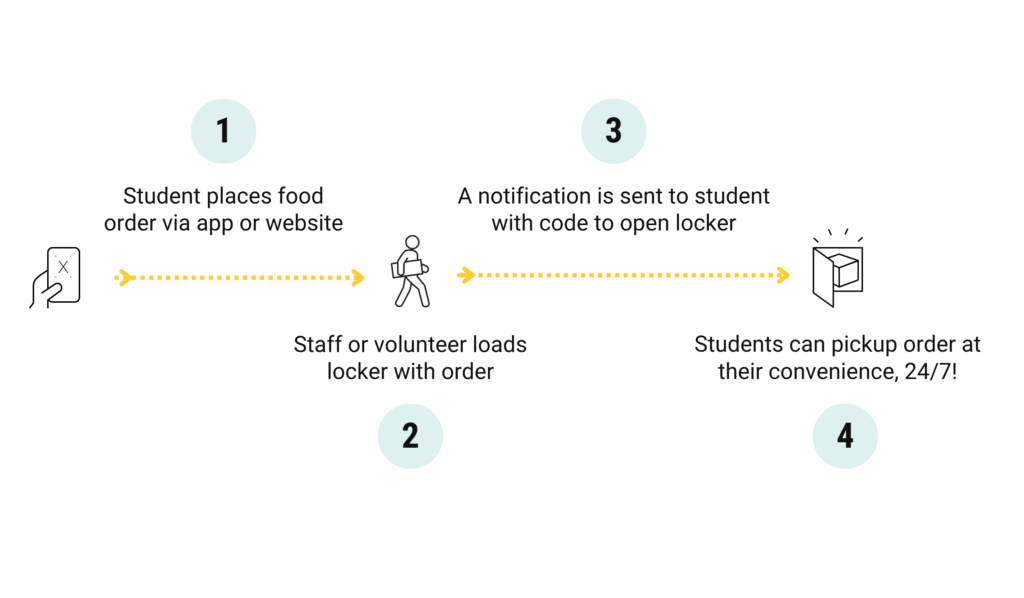
Some universities operate with a traditional walk-in method, where students browse available items during scheduled hours. Others have adopted technology focused systems, like smart lockers, that allow students to reserve groceries in advance. Students can select available items, schedule a pickup time, and collect their order when it’s convenient.
Making Food Pantries More Accessible with Technology
While campus food pantries are providing an essential service, limited operating hours can sometimes make it difficult for students to visit during the day.
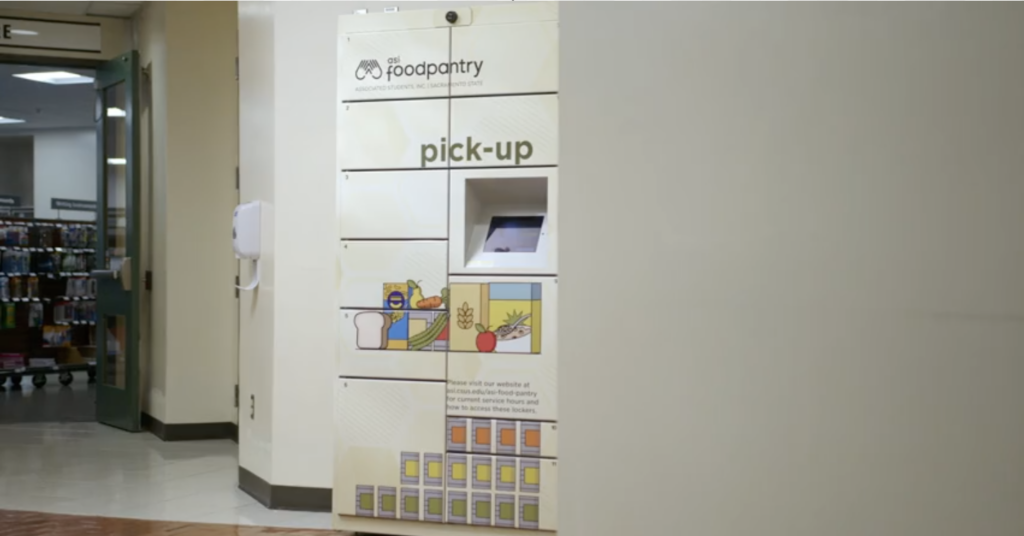
To address this challenge, many universities are using technology to expand access without increasing staffing. Smart Lockers, paired with an online ordering system, provide automated notifications and discreet pickup. Students can retrieve pantry orders when it fits their schedule, without waiting in line, giving staff more flexibility to prepare orders without working at a counter.
These solutions offer a greater level of privacy. Students can collect their groceries quickly and without notice, helping reduce the stigma that can sometimes prevent individuals from seeking assistance to begin with. With 24/7 pickup options, food is accessible to those who need it at any time, working with their busy school schedule.
Real-World Example
Sacramento State’s Food Pantry is one example of how technology can support campus food access. The university uses Luxer One smart lockers to provide students with a pickup experience that fits around their schedules.
- The pantry fulfills over 35 food pickups each month
- They are on track to fulfill over 400 orders this year
Funding Campus Food Pantry Improvements
Expanding a campus food pantry doesn’t always require a heavy financial lift. Many colleges fund pantry improvements through student success initiatives, alumni support, nonprofit partnerships, state grants, and federal funding opportunities focused on addressing basic needs insecurity.
For universities looking into smart locker food pantries, investing in technology that improves efficiency can often qualify for these funding sources. If your institution is exploring ways to support a food pantry, download our guide, How to Unlock Government Funding for Food Pantries! We break down funding opportunities that can help support new initiatives and technology investments.
Supporting Student Success Beyond the Classroom
Campus food pantries have become an essential resource for helping students thrive both academically and personally. By providing reliable access to food, universities can reduce barriers for students, and reduce staff workload behind the scenes.
As food insecurity continues to rise, many institutions are looking for new ways to make these services more accessible. Whether through expanded funding opportunities, improved operational processes, or technology that extends pantry access, the goal remains the same: ensure every student has access to the resources they need to succeed.
-
See Posts
Lauren Buote is a Marketing Coordinator at Luxer One who blends her fine arts background from North Carolina State University, with marketing experience in small businesses and museums. She specializes in content and design that support Luxer One’s storytelling and brand growth in the Commercial sector.