


Every June, the multifamily industry converges in one city to do something that doesn’t happen the rest of the year: slow down long enough to look up.
Apartmentalize 2026 brought that moment to New Orleans. And what the conversations, sessions, and hallway exchanges reflected was an industry in genuine transition. Not crisis nor boom, but something more nuanced than either of those words captures.
A sector that is recalibrating. Figuring out what works, what doesn’t, and what has to change.
Here is what stood out.
The Numbers Tell a Complicated Story
Before getting into what people were talking about, it helps to understand what the data is saying.
Nationally, multifamily occupancy sits at 91.7%. Average effective rent is holding near $1,721 per unit. On paper, those numbers look steady. But the full picture is more complicated.
The pipeline tells you why. There are currently nearly 3.9 million units in various stages of development across the country. More than a quarter of those are already under construction. That much new supply entering a market that is still absorbing the last wave creates real pressure, and operators and investors feel it.
The clearest evidence: properties built in the last five years are sitting at an average occupancy of 82.2%. Older communities, by comparison, are holding above 93%. New is not automatically winning. And that gap is forcing the industry to ask harder questions about what actually drives resident decisions.
Absorption turned negative in most markets late last year before beginning to recover through spring 2026. Concessions have climbed in high-supply metros. And in markets like Texas, where development has been particularly aggressive, occupancy has compressed to 88.5% with no quick resolution in sight.
The macro picture is not dire. But it is honest. And at Apartmentalize, that honesty shaped every conversation.
Supply Is the Story, But Retention Is the Strategy
When new supply is this significant, two things happen. Prospective residents have more options. And existing residents have more leverage.
That dynamic came up repeatedly in sessions and conversations across the show floor. The operators who are holding occupancy, or growing it, are not necessarily doing so through aggressive concessions or new amenity packages. They are doing it through consistency.
Residents are not just choosing a unit. They are choosing an experience they expect to repeat every day.
In a market where leaving is easier and alternatives are more visible, the friction of a poor experience matters more than it used to. Maintenance requests that go unanswered for too long. Processes that require too many steps. Services that work sometimes but not always. These are not small inconveniences anymore. They are the reasons people do not renew.
The multifamily trends emerging from this pressure point to something that sounds simple but is genuinely difficult: execution. Not the flashiest offerings, nor the longest amenity list, it’s the reliable delivery of what you already committed to. As we’ve explored before, reliable partners are often the difference between a community that retains and one that churns.
Staffing Volatility Is Real and Widely Felt
One of the most candid conversations happening in New Orleans centered on people. Specifically, on the churn that is reshaping how properties operate.
The data backs up what practitioners have been feeling. In a 90-day period, the industry saw more than 7,700 onsite manager changes and nearly 7,000 regional supervisor changes. More than 2,300 properties changed management companies in a single 60-day window.
That level of transition is not a blip. It is a structural condition that teams are working around every day.
Institutional knowledge walks out the door. And the residents who depend on continuity feel it.
This is part of why centralization has accelerated. If the person at the front desk changes every eight months, the systems they rely on cannot also require a specialist to run them. Operators are investing in infrastructure that holds up regardless of who is running it. Technology that is intuitive. Processes that are simple to hand off. Partnerships that don’t require constant re-onboarding.
It is also why regional managers came up so often in sessions focused on performance. The regional role has expanded significantly. More communities, more complexity, more remote oversight. And the expectation that they will catch problems before residents notice them. We covered this in detail following NMHC earlier this year, and the conversations in New Orleans confirmed the trend is only intensifying.
Technology Has to Earn Its Place
If the past few years were about adding technology, the conversation at Apartmentalize 2026 was about rationalizing it.
Operators are asking harder questions about their tech stacks. What is actually reducing friction? What is creating it? What requires so much staff attention to maintain that it offsets whatever efficiency it was supposed to deliver?
Vendor fatigue is real. It came up again and again across the show floor. Too many systems, too many logins, and too many separate support lines to call when something breaks. Properties that have stitched together a dozen point solutions often find that the coordination cost is its own operational burden.
The industry is moving away from the idea that more tools equal better performance. As one of our earlier contributors explored, successful property operations depend less on the number of tools in place and more on how effectively those tools are supported and maintained. The operators leading the conversation are talking about consolidation. They are choosing platforms that talk to each other with fewer vendor relationships that each carry more weight.
The question is no longer “does this tool work?” The question is “does this work without creating three new problems?”
This is particularly pronounced in access control and centralized operations, where the gap between a fragmented vendor stack and a unified solution can mean the difference between a regional manager who has visibility and one who is constantly chasing issues across systems.
For build-to-rent operators and developers making tech decisions today, the stakes are even higher. Distributed communities with no central leasing hub cannot afford the coordination overhead of a patchwork technology stack. The infrastructure either supports the operation or it fights against it.
Affordability Without Apology
Affordability was another thread running through Apartmentalize this year. Not just as a policy debate, but as a practical operating reality.
Residents are scrutinizing value more carefully than they were two or three years ago. They are comparing what they are paying to what they are getting. And they are increasingly clear about what they consider essential versus what feels like a premium they did not ask for.
For operators, that means being thoughtful about what is included at what price point. It means understanding which amenities residents actually use and value, versus which ones look good in a brochure but generate maintenance headaches. And it means having honest conversations about concessions as a short-term tool versus a long-term positioning problem.
The state of the multifamily industry on this front is one of recalibration. Not a race to the bottom on price, but a clearer-eyed conversation about value delivery.
What Comes Next
Apartmentalize conversations rarely produce tidy conclusions. They surface where the pressure is, and they point toward where the industry is leaning.
Right now, the multifamily industry is leaning toward operations. Toward reliability and the fundamentals that create resident confidence and staff stability. Impressive features at lease signing have taken a back seat.
The properties that will perform best over the next few years are not necessarily the ones with the highest-spec finishes or the most ambitious amenity programs. They are the ones where things simply work. Where residents trust that what they signed up for is what they will continue to get.
That trust is built one interaction at a time. One package delivered, one request resolved, one system that behaves the way it should. And it is lost the same way.
What We Took Away From New Orleans
At Luxer One, these conversations hit close to home. The pressure on centralization, the frustration with vendor fragmentation, the expectation that infrastructure simply works. These are not abstract industry concerns. They are the exact problems we show up to solve every day.
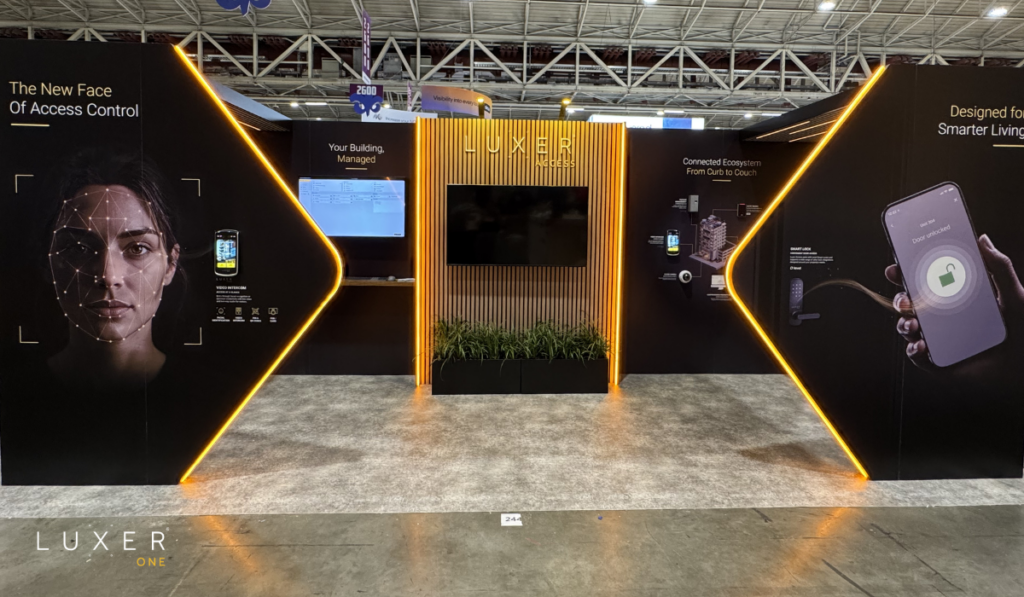
We were proud to bring Luxer Access to Apartmentalize this year. It is our answer to a question we kept hearing in sessions and on the show floor: how do we stop managing six vendors when one unified ecosystem could do the job?
Luxer Access is a proven, end-to-end access control platform built specifically for multifamily. Video intercom, smart locks, carrier and delivery access, parking management, resident app, self-guided tours. All integrated and supported by one team. It connects with existing property management solutions and adapts as the community’s needs change. No fragmented stack, no separate support lines, and no vendor fatigue.
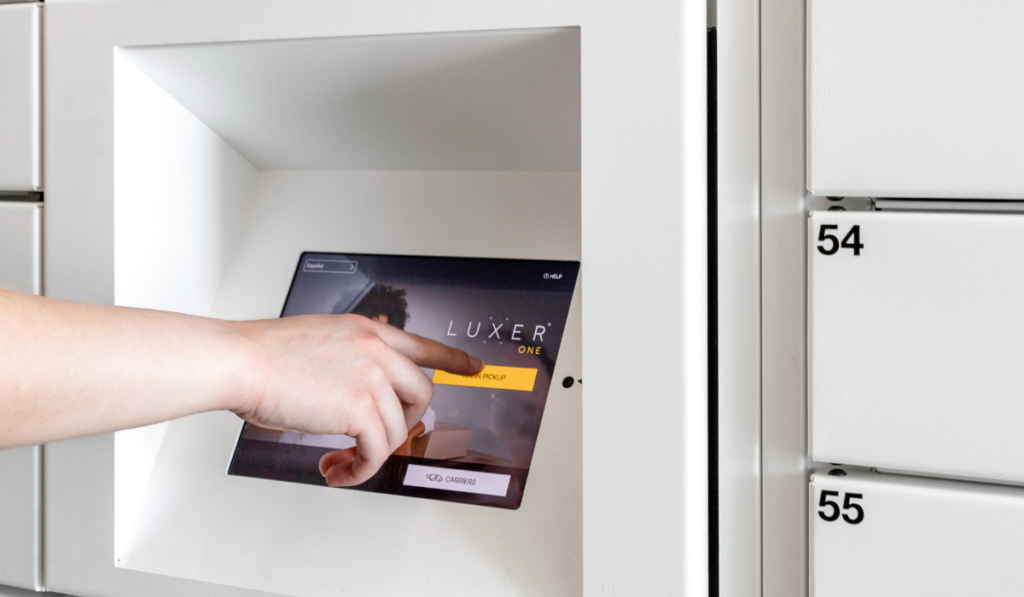
Alongside that, our package lockers, automated package rooms, and Luxer Liaison continue to be the kind of infrastructure that holds up across management transitions, staffing changes, and supply pressure. Reliable. Integrated. Built to run without constant intervention.
The industry questions are real, and we are already thinking about what comes next. Contact us today to learn more about future-ready solutions.
-
See Posts
Christina Draper, Marketing Content Manager at Luxer One, creates storytelling-driven content that connects with property management professionals and highlights innovations in multifamily package management. With a marketing background from UNC Charlotte, she develops cross-channel campaigns that showcase how Luxer One is redefining the resident experience.