



LUXER ONE BLOG

From Digital to Physical: The State of the Modern Workplace

From Digital to Physical: The State of the Modern Workplace

The modern workplace has entered a new era of complexity. Hybrid schedules have reshaped how teams use office space. Digital employee experience has become just as important as physical comfort. Asset visibility is now a daily operational challenge. Workplace leaders are being asked to deliver environments that are productive, flexible, and secure. Not to mention they often have fewer resources than before.

This report explores the most significant trends defining today’s office environment, backed by industry research from the past year. For office managers, facilities teams, and operations directors, understanding these shifts is essential to staying ahead.

Hybrid Work Has Stabilized, But Expectations Have Not

After several years of turbulence, hybrid work is no longer a temporary stage, but the new normal. The Flex Report shows that only about one-third of U.S. companies require full-time office attendance, with hybrid schedules remaining dominant. Meanwhile, “hybrid creep” continues to grow: surveys show that the share of workers required to be in the office four or more days per week jumped significantly over the past year.

Yet employee sentiment tells a different story. Appspace’s Workplace Experience Trends report found that more than half of employees feel that going to the office “isn’t worth it” when the space and tools don’t support meaningful work.

“Employees aren’t coming in for a desk, they’re coming in for an experience,” says Adam Waskewics, VP of Commercial Sales for Luxer One. “That puts the responsibility on workplace teams to make every in-office day feel intentional and frictionless.”

For workplace leaders, this means:

  • Ensuring shared resources are available on peak days

  • Coordinating collaboration spaces

  • Managing fluctuating demand for equipment and tools

  • Reducing points of friction, from access control to asset checkout

When teams are on-site unpredictably, systems that create order help ensure employees can get what they need. Many offices are implementing automated asset exchange lockers or package lockers to solve for rising challenges and improve efficiency.

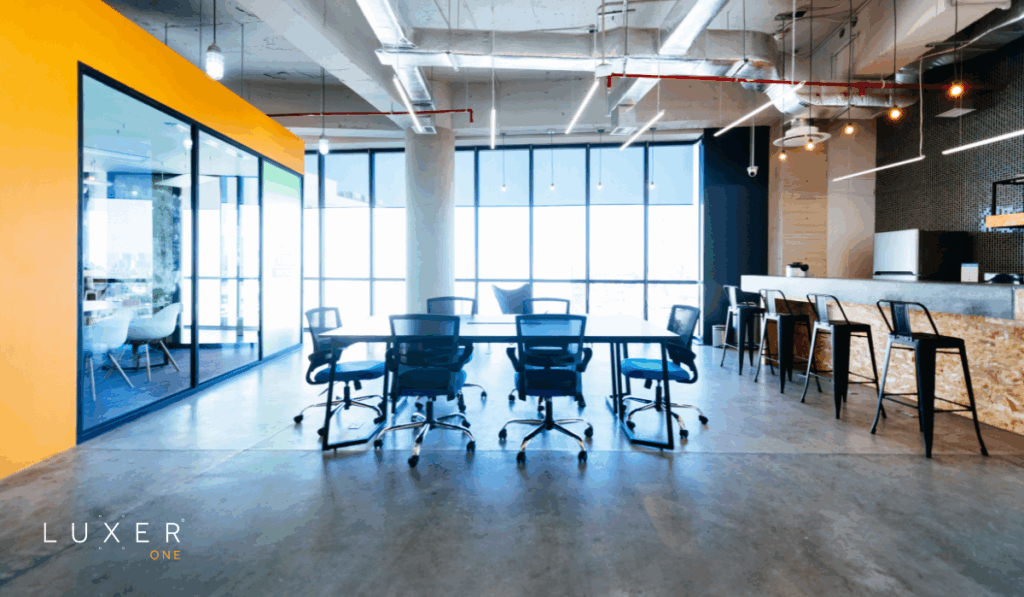
Modern workplace environment featuring a conference room setting

Occupancy and Utilization Are Under a Microscope

Real estate decisions have moved to the forefront of executive strategy. CBRE and JLL’s 2024–2025 workplace studies both highlight a shift toward deeper utilization analytics. Leaders want real-time data, not static seat counts, to inform portfolio decisions.

Key trends include:

  • Higher occupancy on Tuesdays and Wednesdays, often exceeding building service capacity

  • Increased adoption of sensors, badge data, and booking systems

  • A pivot toward “effective” space rather than efficient space

  • Growing pressure to justify every square foot

This scrutiny directly impacts operations teams. Higher midweek occupancy means adjusting cleaning, security, visitor flows, and equipment availability. Conference rooms and project spaces must be supported by reliable technology and clear ownership.

Workplace leaders can respond by:

  • Reviewing occupancy data weekly, not quarterly

  • Aligning staffing and services with known peak days

  • Creating flexible storage or “drop zones” to handle increased daily movement

  • Supporting shared environments with tools that provide clarity around who is using what and when

When multiple teams share the same equipment, automated storage and pickup systems help create structure without adding workload to facilities teams.

Digital Employee Experience and Device Sprawl Are Major Weak Points

As hybrid work expands, so does the number of devices circulating across the organization. Industry research from Ivanti, Forrester, and HP shows serious gaps:

  • Many companies lack complete visibility into employee devices

  • Shadow IT and BYOD behaviors are increasing

  • Missing equipment results in lost time, unclear ownership, and inflated IT costs

  • About 90 percent of ransomware incidents originate from unmanaged or unknown devices

This is causing a blurring of responsibilities between IT and workplace operations. If a laptop disappears during a hybrid workday, or if a headset goes missing from a shared meeting room, it becomes a physical workplace issue just as much as a digital one.

“Device sprawl has become one of the most overlooked operational risks. Hybrid work means assets are constantly in motion. Workplace and IT teams need systems that create accountability without slowing people down.”

– Adam Waskewics, VP of Commercial Sales, Luxer One

In response, companies are:

  • Increasing scheduled audits of high-value equipment

  • Implementing structured check-in/check-out workflows

  • Creating centralized hubs for IT pickups, returns, and exchanges

  • Using smart lockers to manage peripherals, loaner devices, and shared assets

Luxer One’s Asset Management Lockers directly support this need. These smart lockers provide 24/7 visibility into where assets are, who used them last, and when they were returned. All handled without requiring staff involvement.

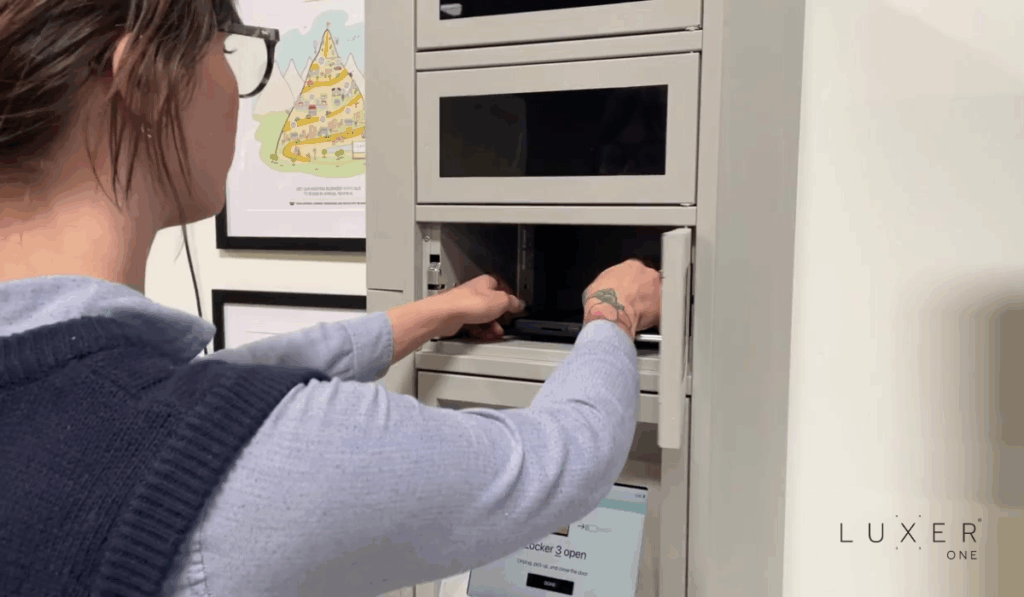
Employee removing handheld device from smart device management locker

Facilities and Operations Teams Are Moving Toward Data-Driven Workflows

Today’s facilities leaders are navigating a shift from traditional operations to a digitized, analytics-heavy model. IoT sensors, digital twins, smart booking systems, and automated service alerts are becoming the standard.

Recent industry research shows that:

  • Remote monitoring and real-time building data are now expected

  • Smaller teams are being asked to manage larger, more complex environments

  • Automation is increasingly viewed as essential infrastructure, not a luxury

  • Workplace data is being tied into employee experience metrics

For operations directors, the path forward doesn’t require massive investment. High-impact starting points include:

  • Automating manual workflows like mail, deliveries, or shared equipment returns

  • Using sensor data to adjust service schedules rather than relying on fixed routines

  • Centralizing workplace requests and asset access points

  • Leveraging simple digital tools to create visibility into daily movement patterns

Reducing repetitive tasks and freeing teams to focus on higher-value operational work is more important than ever. Solutions like Smart Package Rooms and Smart Package Lockers can play a role here, reducing repetitive tasks and freeing up teams time. This aligns with modern expectations that physical workplaces be supported by digital systems that streamline, not complicate, daily operations.

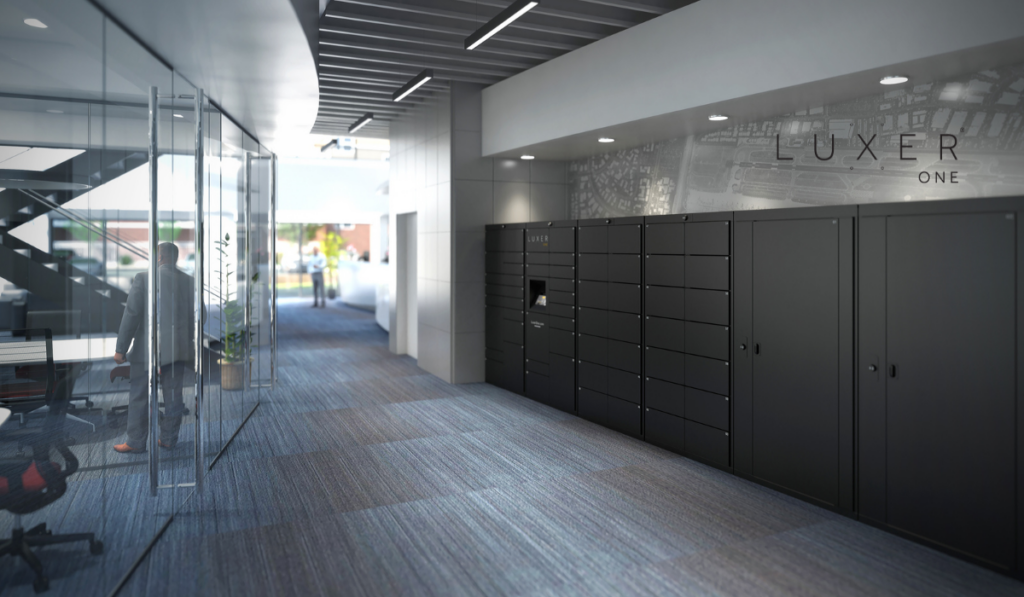
Luxer One Black Smart Lockers in an Office Setting

The Modern Workplace Is Flexible, Multi-Use, and Experience-Led

The era of assigned seating is fading. Most companies now favor multi-use, highly adaptable spaces. Focus rooms, collaboration zones, phone booths, project tables, and multifunction meeting rooms are increasingly commonplace. This shift enhances employee choice but dramatically increases operational complexity.

As people move throughout the building, so do their assets, tech accessories, and personal items. The result:

  • More lost or misplaced equipment

  • More requests for secure same-day storage

  • Higher demand for consistent space readiness

  • A growing need for workplace hospitality-style support

“Device sprawl has become one of the most overlooked operational risks. Hybrid work means assets are constantly in motion. Workplace and IT teams need systems that create accountability without slowing people down.”

– Adam Waskewics, VP of Commercial Sales, Luxer One

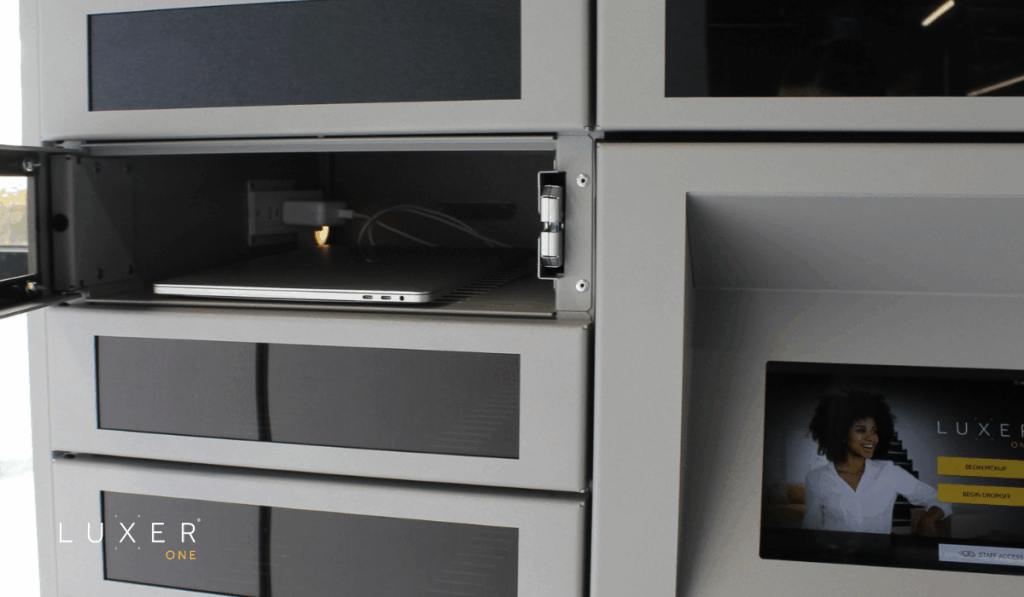
Open laptop on office desk in the workplace

To support this environment, workplace teams are:

  • Creating centralized, secure storage points for employees and contractors

  • Updating cleaning and restocking schedules to match real usage

  • Streamlining internal mail and interoffice package flows

  • Offering frictionless access to shared equipment

Workplace automation tools can help create this sense of ease. Offering secure pick-up, drop-off, and storage options that can reduce operational load. Learn more about how smart lockers are helping to automate exchanges and optimize the workplace.

Conclusion: Digital and Physical Must Work Together

The state of the modern workplace makes one thing clear: digital systems and physical infrastructure can no longer operate independently. Workplace leaders are expected to deliver environments that are efficient, data-driven, and human-centric. All while managing fluctuating attendance and unpredictable workflows.

Organizations that invest in smarter workplace solutions will be best positioned to deliver the seamless, flexible experiences employees now expect.

Contact us today to explore how Luxer One can support your workplace operations.

  • Adam Waskewics

    Adam Waskewics is the Vice President of Commercial Sales at Luxer One and a B2B leader with extensive experience in workplace technology and operational efficiency. Since joining Luxer One in 2017, he has helped drive national growth across commercial and multifamily markets. His background includes senior roles at Assurant, LexisNexis, and Yardi Systems, giving him a deep understanding of asset management, real estate operations, and modern workplace challenges.

    See Posts

RECENT POSTS

Best Practices For Package Locker Setup In Apartments

Best Practices For Package Locker Setup In Apartments

Package lockers have become an essential amenity in modern apartment communities. With daily delivery volumes rising and residents expecting secure self-service pickup, a well planned locker setup can make a major difference in resident satisfaction and staff efficiency. Below are the top questions property managers ask when planning a successful package locker deployment, along with practical best practices.

Read More »
The Future of Real Estate Technology: What Multifamily Leaders Should Prepare For Now

The Future of Real Estate Technology: What Multifamily Leaders Should Prepare For Now

Real estate tech is advancing faster than ever, and multifamily operators are feeling the shift across every corner of their portfolios. AI adoption is accelerating, centralized operations are becoming the standard, and residents expect more connected, digital-first experiences in their homes. Following recent industry conversations, including trends highlighted at OPTECH 2025, the future of real estate technology is taking shape around efficiency, data intelligence, automation, and resident expectations.
For multifamily leadership teams, understanding where the industry is heading is only half the challenge. The real task is identifying the practical steps to stay competitive today while preparing for what is next.
Below is a look at what is driving the future of real estate technology, supported by the latest industry data, along with actionable insights you can use to future-ready your operations.

Read More »
The Impact of Online Shopping on Multifamily and Why Package Management Matters More Than Ever

The Impact of Online Shopping on Multifamily and Why Package Management Matters More Than Ever

Online shopping continues to grow at a rapid pace, and multifamily communities are feeling the effects more than almost any other sector. In early 2025, U.S. e-commerce sales were up 5.3% year-over-year, reaching 15.5% of all retail spending, according to the U.S. Census Bureau. At the same time, global online shopping participation surpassed 2.7 billion digital buyers, reflecting a long-term shift toward online purchasing.
For multifamily operators, regional managers, and asset managers, this trend creates a daily operational reality: higher-than-ever delivery volume, greater pressure on staff, and the constant challenge of managing package piles at apartments. This blog breaks down how the surge in online shopping is reshaping multifamily communities and what forward-thinking properties are doing to keep up.

Read More »
How To Cut the Carbon Footprint From Package Deliveries in Your Community

How To Cut the Carbon Footprint From Package Deliveries in Your Community

As resident expectations rise and delivery volumes continue to grow, multifamily communities are looking for practical ways to cut the carbon footprint tied to daily package traffic. While sustainability efforts often focus on building operations or energy upgrades, last-mile delivery is an overlooked area where properties can make meaningful impact.
This guide answers common questions about where emissions come from, how operations contribute, and how modern tools including the sustainability of smart lockers can help communities reduce waste, streamline processes, and support broader ESG goals.

Read More »
How Smart Lockers Are Revolutionizing Asset Management in the Workplace

How Smart Lockers Are Revolutionizing Asset Management in the Workplace

Managing equipment in today’s workplace is more complex than ever. Between hybrid schedules, shared devices, rotating staff, and rising IT demands, many organizations are struggling to keep track of essential assets. Smart lockers for asset management are emerging as a powerful solution, offering automated, reliable, and secure workflows that support both traditional offices and modern hybrid environments.
Below, we break down the most common questions workplace managers ask about improving asset management in the workplace and how smart locker systems can help.

Read More »

TOPICS

Share: