

LUXER ONE BLOG

How To Cut the Carbon Footprint From Package Deliveries in Your Community

How To Cut the Carbon Footprint From Package Deliveries in Your Community

As resident expectations rise and delivery volumes continue to grow, multifamily communities are looking for practical ways to cut the carbon footprint tied to daily package traffic. While sustainability efforts often focus on building operations or energy upgrades, last-mile delivery is an overlooked area where properties can make meaningful impact.

This guide answers common questions about where emissions come from, how operations contribute, and how modern tools including the sustainability of smart lockers can help communities reduce waste, streamline processes, and support broader ESG goals.

Why do package deliveries create such a large carbon footprint?

Last-mile delivery is one of the most carbon-intensive steps in the supply chain. Recent studies from 2024 show that last-mile routes can account for up to 50 percent of total delivery emissions, largely due to repeated stops, idling, failed deliveries, and carrier inefficiencies.

In multifamily communities, this impact increases when packages pile up, carriers make multiple attempts, or staff manually handle deliveries. Even small inefficiencies scale quickly when a property sees dozens or hundreds of packages per day.

How can communities reduce unnecessary delivery trips?

Streamlining how packages arrive and are processed is one of the most effective ways for properties to reduce emissions. Simple operational shifts, like clear delivery routing and consistent access instructions, help carriers avoid repeat stops and wasted trips.

For example, communities that follow best practices from these carrier compliance tips often see smoother traffic flow, fewer failed deliveries, and less time idling on-site. That alone helps reduce fuel use and congestion around the building.

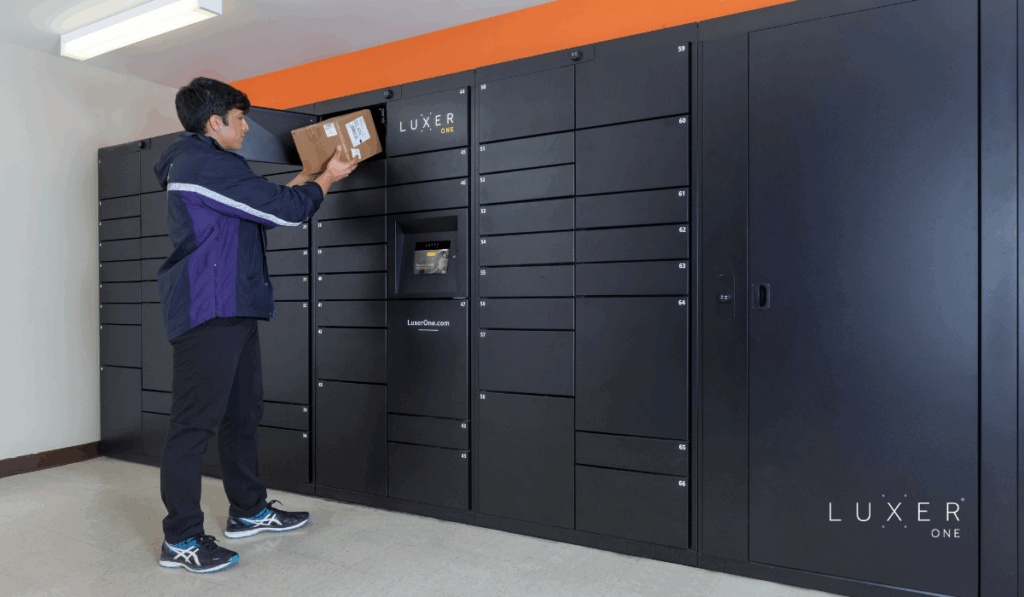
Carrier delivering package to smart parcel lockers from Luxer One

What role do smart lockers play in sustainability efforts?

A centralized system like smart lockers significantly reduces the amount of time carriers spend on-site. Instead of dropping off packages across multiple buildings, floors, or offices, carriers can deliver everything in one stop. This reduces:

  • Idling time

  • Repeated trips

  • Elevator or hallway traffic

  • Unnecessary interactions with staff

Many properties report improved delivery efficiency almost immediately after installation, helping cut down on emissions associated with disorganized or repeated deliveries.

Lockers also support consistent package pickup. Residents no longer rely on staff schedules or leave packages unattended. They retrieve items on their own time, which helps reduce crowding, staff involvement, and unnecessary energy use inside the community’s package storage areas.

Invest in USA made solutions like Luxer One's Package Management solutions

How does multi-package delivery help cut the carbon footprint even further?

Multi-package delivery is a growing best practice in package management because it allows carriers to place multiple items for the same resident into a single compartment. This creates a faster, streamlined workflow that reduces the time carriers spend searching for individual lockers and limits the number of compartments opened during each route.

When scaled across an entire community, multi-package delivery reduces idling, shortens time on-site, and helps lower the overall carbon impact of high-volume delivery days. It also supports more efficient locker usage, which can minimize unnecessary expansions and help communities maintain a smaller physical footprint.

Luxer One was the first in the industry to introduce this revolutionary feature. It remains one of the most effective ways to increase efficiency and support more sustainable delivery operations.

Multiple packages in an oversized Luxer One package locker

Can smart lockers support broader ESG or sustainability goals?

Yes. Smart package systems offer quantifiable benefits that align with common ESG metrics:

  • Reduced emissions from fewer repeated deliveries

  • Lower operational energy usage when rooms and storage areas operate more efficiently

  • Less material waste from lost packages, misplaced items, or re-delivery packaging

  • Improved data visibility that supports reporting and compliance goals

For multifamily teams working toward carbon-reduction targets, the sustainability of smart lockers provides a straightforward upgrade that improves operations and environmental performance simultaneously.

Automated smart lockers are just one of the multifamily solutions for sustainability. Find the best package solution for your community with this guide to multifamily package management.

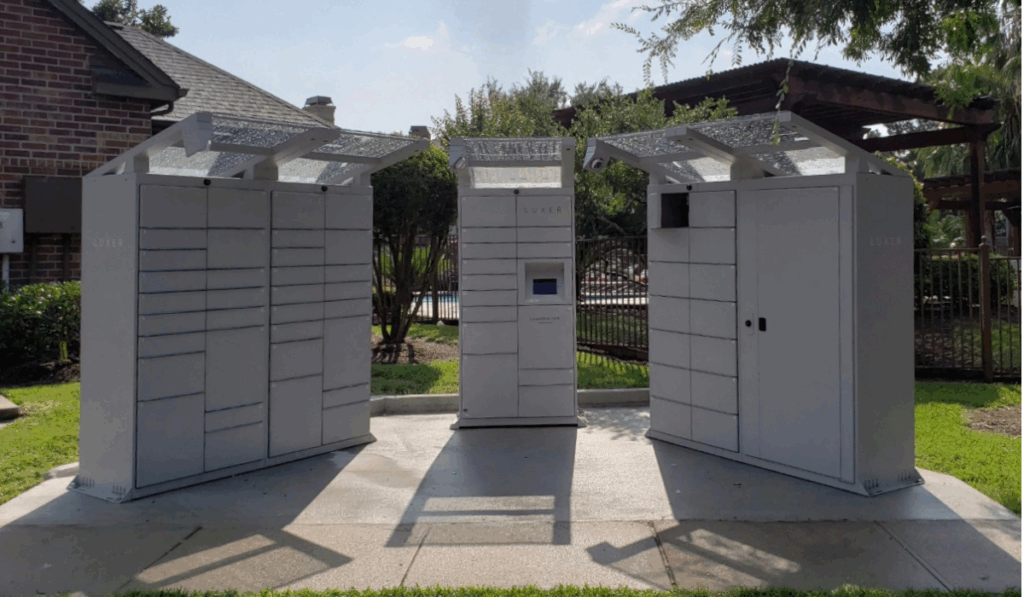
Outdoor Smart Lockers with roof kits from Luxer One after a rain storm

What practical steps can properties take to start cutting emissions now?

Even before installing smart package technology, properties can reduce delivery emissions by:

  • Establishing clear signage and routing to reduce confusion

  • Ensuring carriers have consistent access instructions

  • Offering designated drop-off areas to limit unnecessary circulation

  • Encouraging residents to pick up packages promptly to avoid crowding and re-delivery attempts

These steps create a smoother environment for carriers and help reduce the extra fuel and time associated with inefficient deliveries.

How can communities make the biggest impact with package sustainability?

The most effective long-term strategy is to modernize the delivery workflow itself. Smart lockers centralize the process, improve carrier efficiency, and reduce chaotic package handling. Adding features like multi-package delivery creates even greater carbon savings.

Communities looking to cut the carbon footprint in a meaningful, measurable way can start by evaluating their current package process. Tools like Luxer One’s combined locker and room ecosystems provide the streamlined, sustainable infrastructure that modern multifamily properties need.

To explore options or request guidance tailored to your community, contact Luxer One today.

  • Christina Draper

    Christina Draper, Marketing Content Manager at Luxer One, creates storytelling-driven content that connects with property management professionals and highlights innovations in multifamily package management. With a marketing background from UNC Charlotte, she develops cross-channel campaigns that showcase how Luxer One is redefining the resident experience.

    See Posts

RECENT POSTS

Best Practices For Package Locker Setup In Apartments

Best Practices For Package Locker Setup In Apartments

Package lockers have become an essential amenity in modern apartment communities. With daily delivery volumes rising and residents expecting secure self-service pickup, a well planned locker setup can make a major difference in resident satisfaction and staff efficiency. Below are the top questions property managers ask when planning a successful package locker deployment, along with practical best practices.

Read More »
The Future of Real Estate Technology: What Multifamily Leaders Should Prepare For Now

The Future of Real Estate Technology: What Multifamily Leaders Should Prepare For Now

Real estate tech is advancing faster than ever, and multifamily operators are feeling the shift across every corner of their portfolios. AI adoption is accelerating, centralized operations are becoming the standard, and residents expect more connected, digital-first experiences in their homes. Following recent industry conversations, including trends highlighted at OPTECH 2025, the future of real estate technology is taking shape around efficiency, data intelligence, automation, and resident expectations.
For multifamily leadership teams, understanding where the industry is heading is only half the challenge. The real task is identifying the practical steps to stay competitive today while preparing for what is next.
Below is a look at what is driving the future of real estate technology, supported by the latest industry data, along with actionable insights you can use to future-ready your operations.

Read More »
The Impact of Online Shopping on Multifamily and Why Package Management Matters More Than Ever

The Impact of Online Shopping on Multifamily and Why Package Management Matters More Than Ever

Online shopping continues to grow at a rapid pace, and multifamily communities are feeling the effects more than almost any other sector. In early 2025, U.S. e-commerce sales were up 5.3% year-over-year, reaching 15.5% of all retail spending, according to the U.S. Census Bureau. At the same time, global online shopping participation surpassed 2.7 billion digital buyers, reflecting a long-term shift toward online purchasing.
For multifamily operators, regional managers, and asset managers, this trend creates a daily operational reality: higher-than-ever delivery volume, greater pressure on staff, and the constant challenge of managing package piles at apartments. This blog breaks down how the surge in online shopping is reshaping multifamily communities and what forward-thinking properties are doing to keep up.

Read More »
From Digital to Physical: The State of the Modern Workplace

From Digital to Physical: The State of the Modern Workplace

The modern workplace has entered a new era of complexity. Hybrid schedules have reshaped how teams use office space. Digital employee experience has become just as important as physical comfort. Asset visibility is now a daily operational challenge. Workplace leaders are being asked to deliver environments that are productive, flexible, and secure. Not to mention they often have fewer resources than before.
This report explores the most significant trends defining today’s office environment, backed by industry research from the past year. For office managers, facilities teams, and operations directors, understanding these shifts is essential to staying ahead. Below, we break down the most common questions workplace managers ask about improving asset management in the workplace and how smart locker systems can help.

Read More »
How Smart Lockers Are Revolutionizing Asset Management in the Workplace

How Smart Lockers Are Revolutionizing Asset Management in the Workplace

Managing equipment in today’s workplace is more complex than ever. Between hybrid schedules, shared devices, rotating staff, and rising IT demands, many organizations are struggling to keep track of essential assets. Smart lockers for asset management are emerging as a powerful solution, offering automated, reliable, and secure workflows that support both traditional offices and modern hybrid environments.
Below, we break down the most common questions workplace managers ask about improving asset management in the workplace and how smart locker systems can help.

Read More »

TOPICS

Share: