




LUXER ONE BLOG

With Renewal Increases Slowing, Retention Starts With the Details

With Renewal Increases Slowing, Retention Starts With the Details

Key Takeaways

For the past few years, property teams could lean on one reliable lever: the rent increase at renewal. With asking rents soft on new leases, the modest increase a current resident accepted when staying put became a dependable source of growth. However, Yardi reports that average renewal rent growth dropped to 1.7% in September, its lowest point since before 2020.

Retention is now carrying more of the weight. This post looks at why renewal increases are doing less, what the most improved communities changed, and how package handling fits into a retention plan that works.

Why the renewal cushion is thinning

Advertised rents for new residents fell in many markets over the last three years. That left a gap between what new residents were offered and what current residents paid, and renewal increases helped close it. In some markets, existing rents have now caught up to advertised rents, leaving less room to grow.

Yardi also found that Q3 rents rose over Q2 for the first time since 2022, yet renewal growth kept softening. Operators are planning around this. In Multifamily Dive’s coverage of 2027 budgeting, CAPREIT’s president noted that healthy rent growth used to give operators room to absorb inefficiencies, and that daily execution counts for more today.

Meanwhile, residents are weighing that renewal offer against their own finances. The Urban Institute found that one in five renter households had a late or missed payment in 2025, the highest share since it began tracking in 2017. Middle-income renters saw the steepest jump, up from 14.3% to 21.6%.

A thinly-stretched household reads a renewal letter differently. Slow replies from property management, a confusing notice, or a missing package can be shrugged off when money is comfortable. When it isn’t, each mishap becomes a reason to start browsing other listings. Researcher Kathryn Reynolds urged owners to keep lines open with struggling residents and stay as flexible as the property’s finances permit, partly because turning over a unit is expensive.

Key Takeaway:

Even in a recovering market, renewal increases are shrinking, and a renewal offer lands harder on a stretched household.

Resident holding up key to new apartment

What does a lost renewal actually cost?

It helps to put a number on this. A simple way to estimate it:

  1. Lost rent while the unit sits empty: Divide monthly rent by 30, then multiply by the expected vacancy days.
  2. Turn costs: Add cleaning, paint, repairs, and any other make-ready work.
  3. Leasing costs: Add marketing costs, leasing time, and any concession needed to land the next resident.


Here’s an illustration with some example numbers. Say rent is $1,800 a month; $60 a day. Thirty vacant days cost you $1,800. Add $1,500 for turn work and $500 for marketing and concessions, and that one move-out costs about $3,800.

Now compare that with the upside of a renewal increase. At 1.7%, that same $1,800 lease gains about $31 a month, or roughly $367 a year. In this example, a single resident who leaves will cost the property about ten times that. Substitute your own figures, and you’ll likely find the proportions tell a similar story.

Key Takeaway:

A small renewal increase is easily outweighed by the cost of one move-out, making resident retention the stronger financial play.

Resident struggling with finances

What the fastest-improving communities did differently

J Turner Research’s 2026 Rising 1K honors 1,129 properties that meaningfully lifted their online reputation scores between January and August. It isn’t a retention study, but it clearly shows what improvement looks like in practice.

J Turner’s complaint index weighs both how many complaints a property receives per unit and how recent they are, so lower is better. Across those eight months, the index fell by more than a third at the Rising 1K properties, while it climbed by almost a third nationally:


Complaint type Rising 1K properties National

  • Security Down 52.3% Up 29.4%
  • Communication Down 44.4% Up 32%
  • Customer service Down 39.7% Up 27.7%


None of these categories are about amenities. They’re about whether residents feel safe, informed, and looked after. Developers are drawing the same conclusion: Woodfield Development’s Brett Bowden told Multifamily Dive that renters have gotten better at telling apart amenities that photograph well from those they’ll actually use, and Cortland’s Jennifer Glasgow said today’s renters want a home that smooths out the small hassles of daily life.

The lesson: fewer annoyances beat more amenities.

Key Takeaway:

The properties that improved fastest focused on safety, communication, and service, not adding more amenities.

Why packages belong near the top of your list

Deliveries are among the most frequent touchpoints a resident has with their community, which makes them one of the most visible places for things to go right or wrong. When parcels are handled well, residents barely notice. When they aren’t, the complaints cover several categories at once:

  • Communication: “Did my package arrive? Nobody told me.”
  • Customer service: Waiting at the leasing office’s limited hours to pick something up.
  • Security: Parcels left in hallways, lobbies, or at doors.


Those are the same categories where the Rising 1K properties made the biggest gains, so improving package handling can move several of those numbers at once. Glasgow also noted that established, higher-income renters are often drawn to package solutions.

Luxer One lockers and package rooms are built to take that work off your team and give residents a smoother experience:

  • Instant notification: Residents are alerted when a package arrives and can pick it up on their schedule.
  • Secure storage: Parcels stay protected and out of the leasing office, freeing your team’s time and space.
  • Refrigerated lockers: Groceries and other perishables stay cold until residents pick them up.


The scale behind this is meaningful. Luxer One has handled 8.9 million deliveries across 9,200 properties, saving an estimated 742,916 hours of package-management time. Our Net Promoter Score, which measures how likely residents are to recommend us, is 87, well above the +60 we consider world-class. For a property team, that means hours returned to work that builds relationships.

Key Takeaway:

Because deliveries are so frequent, package handling can shape perceptions of communication, service, and security all at once, and Luxer One gives your team time back while giving residents flexible, secure pickup.

Residents enjoying their time in apartment

How to review the resident experience at your properties

You don’t need a large initiative to begin. Try this over the next few weeks:

  1. Gather twelve months of feedback: Pull online reviews, work orders, and resident messages into one place.
  2. Sort by theme: Group items into maintenance, communication, security, noise, billing, and packages.
  3. Find the repeaters: Issues that come up again and again matter more than dramatic one-offs.
  4. Fix the simple ones first: Faster replies, clearer updates, and easier package pickup are all within reach.
  5. Close the loop: Tell residents what you changed. A fix nobody hears about can’t help at renewal time.
  6. Revisit quarterly: Run the same sort again and see which categories are shrinking.


If packages show up often in your review, we’d be glad to help you map out a plan.

Key Takeaway:

 Start with the complaints residents repeat most, fix them, and make sure residents hear about it.

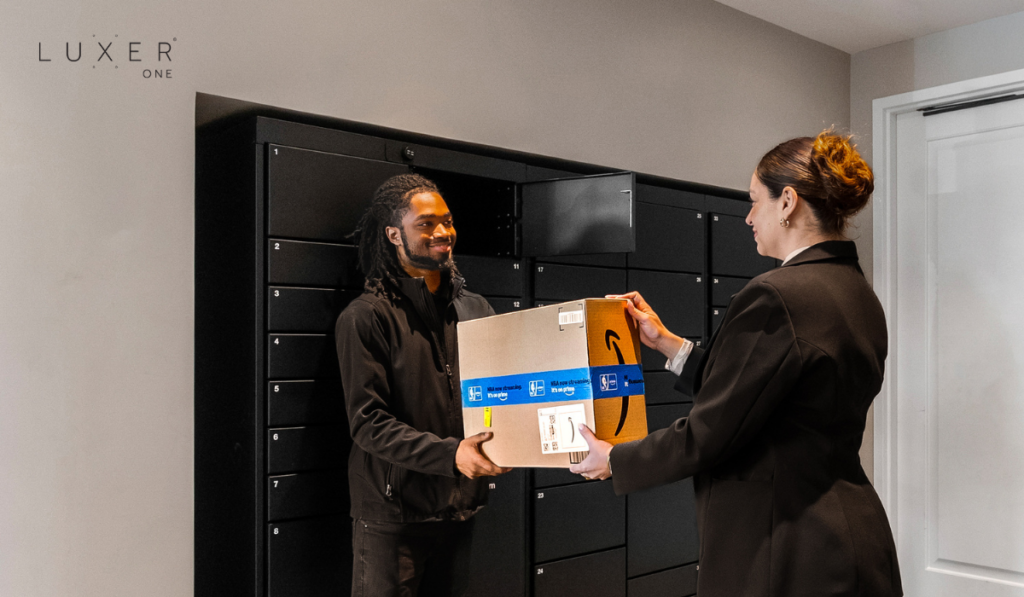
Person getting their Amazon delivery from black smart package lockers

Where to go from here

Strong retention comes from steady attention to the details residents experience every day, and from making sure they know when something has improved. Choose one or two recurring issues to solve and build from there. If you’d like to talk through your properties, our team is ready whenever you are.

  • Christina Draper

    Christina Draper, Marketing Content Manager at Luxer One, creates storytelling-driven content that connects with property management professionals and highlights innovations in multifamily package management. With a marketing background from UNC Charlotte, she develops cross-channel campaigns that showcase how Luxer One is redefining the resident experience.

    See Posts

RECENT POSTS

Vendor Fatigue Is Real, Here's How to Consolidate

Vendor Fatigue Is Real, Here’s How to Consolidate

Vendor evaluation is not seasonal. Contracts come up for renewal year-round, and a tool that is not earning its spot does not wait for a convenient month to become a problem. But budget season puts it in sharper focus than usual, since every vendor on the books gets a harder look right as 2027 technology budgets lock in.

Read More »
How to Prepare Your Community for Incoming Holiday Package Piles

How to Prepare Your Community for Incoming Holiday Package Piles

Holiday cheer is coming, but so are the holiday package piles. Every year, November and December bring a spike in online shopping that puts pressure on even the most organized communities.
Without the right systems in place, this seasonal surge can lead to overwhelmed package rooms, rising operational costs, and frustrated residents. If you’re not planning ahead now, the holidays will plan themselves right into your budget and staff bandwidth.

Read More »
What Your Mid-Year Multifamily Market Report Reveals About 2026 Multifamily Market Trends

What Your Mid-Year Multifamily Market Report Reveals About 2026 Multifamily Market Trends

Budget season is here, and with it comes the same question every property manager, owner, and developer is asking: what does the rest of 2026 actually look like, and what should that mean for 2027?
That’s why we built the Mid-Year Multifamily Market Report: a data-backed snapshot of the multifamily market trends shaping occupancy, pricing, supply, and operations right now, with a clear “what it means” takeaway for every finding.

Read More »
Budget Season Is Here. What the Market Is Actually Telling You.

Budget Season Is Here. What the Market Is Actually Telling You.

August marks the start of budget season for most of the multifamily industry. Over the next 60 to 90 days, property managers are reviewing vendor contracts, owners are stress-testing their 2027 revenue assumptions, and developers are making go or no-go decisions on projects they have been holding.

Everyone is asking the same question: what kind of market are we actually planning into?

Read More »

TOPICS

Share: