


LUXER ONE BLOG

Are Electronic Drop Boxes Secure for Government Offices?

Are Electronic Drop Boxes Secure for Government Offices?

Electronic drop boxes have long been used by agencies to collect documents, payments, and sensitive materials after hours. But as security expectations evolve, many administrators are asking a critical question: are electronic drop boxes secure for government offices today?

Quick Answer: Are Electronic Drop Boxes Secure for Government Offices?

Electronic drop boxes provide basic physical security, but they often lack the tracking, accountability, and visibility required for modern government operations.

However, it’s important to note that not all “secure drop boxes” are the same. Today’s secure smart lockers for item exchange represent an advanced version of the traditional drop box, one that adds digital security, tracking, and full accountability to the process.

Laptop and clipboard on a desk with colleagues talking in the background in an office

What Are Electronic Drop Boxes?

Electronic drop boxes are typically locked compartments or secured slots where individuals can submit items outside of business hours. Commonly used in:

  • Tax offices for payments and forms
  • Municipal buildings for permits and applications
  • Police departments for evidence or property exchange
  • Administrative offices for document collection

These systems are designed for convenience, but many lack the modern security features needed for government use.

Where Electronic Drop Boxes Fall Short for Government Offices

When evaluating whether electronic drop boxes are secure for government offices, it’s important to look beyond physical locks. Security today requires visibility, accountability, and control.

1. Limited Tracking and Accountability

Most systems do not provide a digital record of submissions, making it difficult to verify:

  • Who dropped off an item
  • When it was submitted
  • Whether it was received or processed


This lack of documentation can create compliance challenges and increase operational risk.

2. Vulnerability to Tampering or Unauthorized Access

Traditional drop boxes operate as passive systems, meaning staff are not alerted when:

  • Items are deposited
  • Urgent materials arrive
  • Capacity is reached


This can delay response times and create inefficiencies in daily operations.

Wood-wrapped, secure smart lockers with door open showing package

3. No Real-Time Visibility

Traditional drop boxes operate as passive systems, meaning staff are not alerted when:

  • Items are deposited
  • Urgent materials arrive
  • Capacity is reached


This can delay response times and create inefficiencies in daily operations.

4. Lack of Chain of Custody

For departments handling sensitive materials, such as law enforcement or tax offices, maintaining a clear chain of custody is essential.

Most electronic drop boxes do not offer:

  • Verified user authentication
  • Time-stamped transaction logs
  • Controlled, trackable handoffs


Without these, accountability gaps can arise.

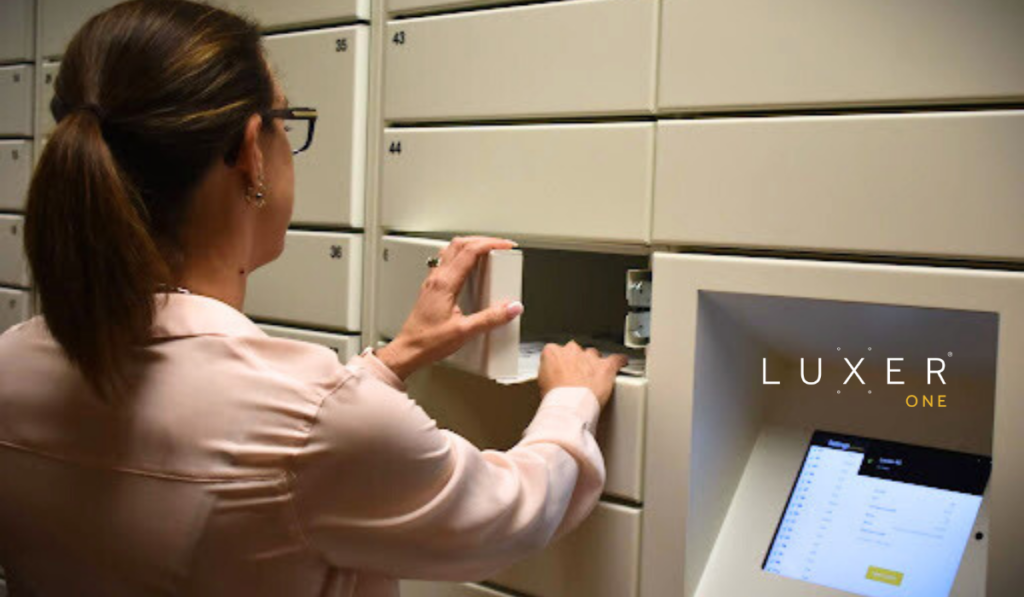
Woman picking up item from Luxer One smart lockers

What Makes a Drop Box Truly Secure Today?

To truly determine whether electronic drop boxes are secure for government offices, it helps to understand how modern solutions have evolved.

Today’s most secure “drop box” systems are actually smart locker-based solutions that build on the traditional concept and enhance it with technology.

These advanced systems, often referred to as secure smart lockers for item exchange, include:

  • User authentication (PIN, mobile access, or credentials)
  • Real-time notifications for deposits and pickups
  • Digital audit trails for every transaction
  • Role-based access controls for staff
  • Individual, secure compartments to prevent cross-access


In other words, they function as digitally managed drop boxes, offering the same convenience with significantly stronger security.

How Government Agencies Are Evolving Their Approach

Government offices are increasingly replacing outdated systems with secure smart lockers for item exchange, recognizing them as the modern evolution of the drop box.

For example, Escambia County modernized its tax operations by implementing a more secure and trackable way to manage document and payment submissions. This reduced manual processes and improved visibility across the entire workflow.

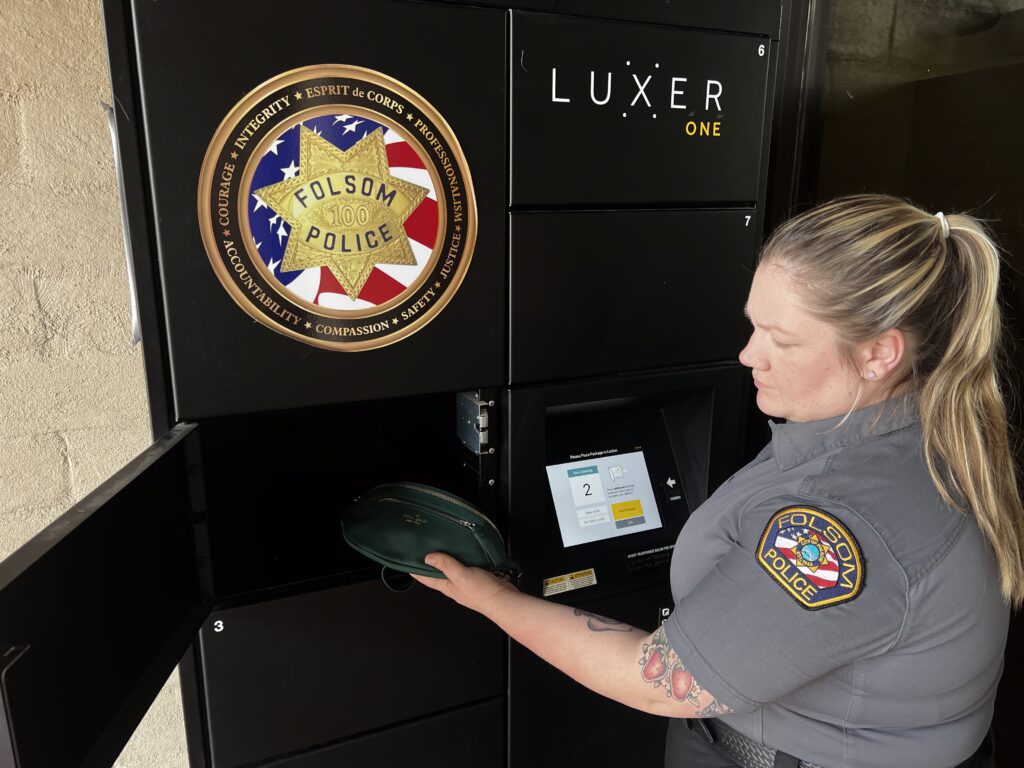
Similarly, the Folsom Police Department streamlined its evidence exchange process by adopting a system that provides secure access, time-stamped tracking, and a clear chain of custody.

In both cases, the agencies didn’t eliminate the concept of a drop box. They upgraded it.

Asset Exchange Lockers used by police officer for evidence exchange

The Modern Standard: Smart Lockers as Secure Drop Boxes

Today, when government agencies look for “secure drop boxes,” they are increasingly turning to smart locker systems.

Solutions like those offered by Luxer One act as secure, digital drop boxes for item exchange, providing:

  • Secure, individual compartments for each transaction
  • Automated notifications for both staff and users
  • Full tracking and reporting capabilities
  • 24/7 access without sacrificing control


This approach maintains the simplicity of a drop box while adding the security infrastructure required for government use.

Final Takeaway

So, are electronic drop boxes secure for government offices?

Traditional versions may be sufficient for low-risk use cases, but they often fall short when it comes to modern security expectations.

The more important takeaway is this: Today’s most secure drop boxes are no longer just boxes. They are smart, trackable systems.

Explore a More Secure Approach

If your agency is still relying on traditional drop boxes, it may be time to upgrade.

Explore secure smart locker solutions for item exchange and see how a modern drop box can deliver the security, visibility, and accountability your operations require.

  • Christina Draper

    Christina Draper, Marketing Content Manager at Luxer One, creates storytelling-driven content that connects with property management professionals and highlights innovations in multifamily package management. With a marketing background from UNC Charlotte, she develops cross-channel campaigns that showcase how Luxer One is redefining the resident experience.

    See Posts

RECENT POSTS

Partner Spotlight: Craig Meddin, Postal Solutions

At Luxer One, our VAR (Value Added Reseller) partners are a big part of what makes our solutions work in the real world. Our Partner Spotlights highlight the people solving real operational challenges every day.

This month, we’re featuring Craig Meddin, Founder and CEO of Postal Solutions. With more than 25 years in the industry, Craig has built a business centered on helping properties simplify mail and package management, not just with technology, but with the right systems behind it.
Read More »
Spring Cleaning: How to Audit Package Lockers for More Efficient Deliveries

Spring Cleaning: How to Audit Package Lockers for More Efficient Deliveries

Package volume isn’t slowing down. It’s accelerating.
In 2025, nearly 24 billion packages were delivered in the U.S., averaging more than 90 million deliveries every weekday. For multifamily communities, that translates to one reality: more deliveries, more pressure, and more opportunities for breakdowns in your package system.
That’s why understanding how to audit package lockers is no longer optional. It is essential to maintaining efficient deliveries, satisfied residents, and controlled operational costs.

Read More »
Supply chain on the edge josh middlebrooks

Supply Chain on the Edge: The Final 100 Feet of Logistics

What happens after the carrier arrives? Luxer One President Josh Middlebrooks recently joined Rodney Apple and Mike Ogle on the Supply Chain Careers Podcast, thanks to Supply Chain Management (SCM). The outcome was a discussion of an emerging challenge in modern logistics: the final 100 feet of delivery.

Read More »
university package report 2025 data luxer one

University Package Volume Report: 2025 Academic Year

As universities modernize campus operations, smart lockers are increasingly part of the conversation. But while the hardware often gets the spotlight, experienced decision makers know the real long term value lies in integration. That’s why institutions evaluating smart locker solutions should focus just as heavily on integration capabilities as on physical design.
So what should universities actually look for when evaluating smart locker system integrations? In this blog, we’re answering the key questions universities should ask, and how Luxer One supports those requirements.

Read More »
Multifamily Tech Stack Optimization: Why Execution Matters More Than Tools

Multifamily Tech Stack Optimization: Why Execution Matters More Than Tools

When people ask me about multifamily tech stack optimization, they usually expect me to recommend a tool. Which platform is best? What AI solutions should we pilot? Are we missing any features?
But the real challenge in multifamily today is not choosing the right technology. It is executing on it. In my experience, multifamily does not have a knowledge problem. We have an execution problem. In the blog below we’ll navigate tech stack optimization and executing solutions well across your portfolio.

Read More »

TOPICS

Share: