



LUXER ONE BLOG

The Growing Demand for Package Management in Multifamily Communities

The demand for package management has been steadily rising for years, but over the past twelve months, it has shifted from a convenience issue to an operational imperative. For property managers, owners, and developers alike, package volume is no longer a temporary side effect of peak ecommerce seasons. It is a permanent fixture of modern multifamily living.

Residents expect fast, secure delivery. Carriers expect efficient drop-off. On-site teams are expected to keep everything moving without adding labor or liability. As ecommerce behavior continues to evolve and staffing pressures remain tight, communities are being forced to rethink how they manage last-mile delivery at scale.

This is where multifamily package management solutions have moved from “nice-to-have” amenities to core infrastructure.

Why the Demand for Package Management Keeps Accelerating

Over the past year, ecommerce growth has stabilized compared to the explosive surge of the pandemic era, but consumer delivery habits have not reversed. Industry reporting throughout 2025 shows that residents are ordering more frequently, even if individual order values fluctuate. Subscriptions, same-day delivery, groceries, and oversized items are all contributing to a steady, high-volume delivery environment.

For multifamily operators, this creates three compounding pressures:

  • Volume consistency: Packages arrive every day, and tend to pile up during holidays.

  • Operational strain: Leasing offices and package rooms were not designed to function as distribution centers.

  • Resident expectations: Missed packages, long wait times, or cluttered pickup areas directly impact satisfaction and renewals.

These pressures are why many operators are revisiting how they approach package infrastructure and why the demand for package management continues to rise across all asset classes, from garden-style communities to high-density urban developments.

Package piles in multifamily communities

The Hidden Cost of Doing Nothing

One of the most common mistakes communities make is treating package challenges as a temporary inconvenience rather than a structural issue. Without a scalable system in place, on-site teams often absorb the workload manually, tracking deliveries, coordinating pickups, and fielding resident complaints.

This reactive approach leads to higher labor costs, increased burnout, and greater exposure to loss or disputes. It also pulls staff away from leasing, resident engagement, and property upkeep. Over time, the operational drag becomes far more expensive than investing in a long-term solution.

The final step of delivery is often the most complex, especially when it intersects with shared residential spaces and limited staffing.

Property manager stressed and overwhelmed at computer

What Modern Multifamily Package Management Solutions Must Deliver

As demand grows, so does the sophistication of available solutions. Today’s multifamily package management solutions are expected to do far more than store boxes. Operators evaluating options should focus on systems that address five critical areas:

  1. Capacity and flexibility
    Package volume is not static. Solutions must handle peak days, oversized deliveries, and evolving resident behavior without creating bottlenecks.

  2. Security and accountability
    With package theft still a top resident concern, systems should provide controlled access, tracking, and visibility. This is especially important given ongoing questions about liability, as discussed in this breakdown of how secure package lockers really are.

  3. Operational efficiency
    Automation should reduce staff involvement, not add new steps. Smart systems streamline carrier drop-off and resident pickup while minimizing manual handling.

  4. Resident experience
    Package management has become part of the broader amenity conversation. Communities investing in upgrades that improve the daily life of residents consistently see stronger engagement and satisfaction.

  5. Long-term ROI
    Smart infrastructure should protect NOI by reducing labor strain, limiting losses, and supporting retention. When evaluated holistically, the ROI on smart lockers for apartments becomes clear.

Sustainability Is Becoming Part of the Conversation

Another emerging factor shaping the demand for package management is sustainability. Carriers, municipalities, and residents are increasingly focused on reducing unnecessary trips, failed deliveries, and inefficiencies at the property level.

Centralized package solutions help minimize repeat delivery attempts and support greener last-mile practices. For communities with ESG goals or sustainability initiatives, package management plays a more meaningful role than many realize.

Planning Ahead Instead of Catching Up

For owners and developers, the conversation often starts during planning or capital improvement cycles. Retrofitting a community under pressure is far more difficult than designing for scale from the outset. Resources like this guide on how to write a proposal to get smart lockers can help stakeholders align operational needs with budget planning and long-term asset strategy.

Similarly, education remains critical. Many operators underestimate how quickly package demand can overwhelm existing infrastructure. Learn more in this comprehensive package management guide to assess your current challenges and find the best solution for you.

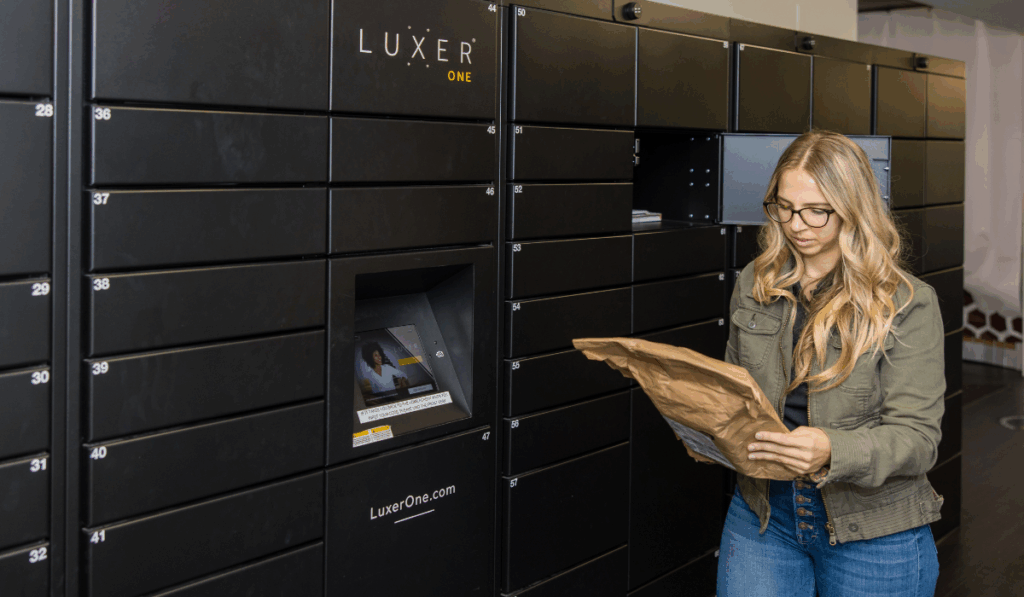
Happy resident removing Amazon package from black Luxer One smart lockers

Why Luxer One Is Built for the Future of Package Management

As the demand for package management continues to grow, the difference between short-term fixes and long-term solutions becomes more apparent. Luxer One was built specifically to meet the evolving needs of multifamily communities. Their solutions combine smart lockers, package rooms, and service support into a cohesive system.

Rather than forcing properties into a one-size-fits-all approach, Luxer One offers flexible configurations designed to scale with volume, improve security, and reduce operational strain. The result is a package management experience that supports staff, satisfies residents, and protects asset performance.

For communities navigating rising delivery volumes and higher resident expectations, investing in the right system is no longer optional. It is foundational.

Ready to add long-term value with a package management solution designed for multifamily? Contact Luxer One to learn how our solutions can support your community today and into the future.

  • Christina Draper

    Christina Draper, Marketing Content Manager at Luxer One, creates storytelling-driven content that connects with property management professionals and highlights innovations in multifamily package management. With a marketing background from UNC Charlotte, she develops cross-channel campaigns that showcase how Luxer One is redefining the resident experience.

    See Posts

RECENT POSTS

The Hidden Cost of Off-Site Package Models

The Hidden Cost of Off-Site Package Models

At first glance, some package management solutions seem like a win for property teams. They promise fewer packages on-site, less clutter, and less day-to-day handling.
But what looks convenient on the surface often comes with hidden tradeoffs. While these models may reduce visibility on the property, they do not eliminate the problem. They shift it somewhere else.
And in many cases, they shift it directly onto residents.

Read More »

Luxens on the Rise: Employee Highlight | Saular Moaddeli

At Luxer One, growth is part of the job. We prioritize promoting from within, provide clear paths for advancement, and encourage every team member to explore new opportunities! Our Luxens on the Rise series highlights team members who have carved their own paths within the company, taking on new challenges and evolving their careers along the way.

Read More »
The Middleman Problem: Why More Delivery Logistics Creates More Problems

The Middleman Problem: Why More Delivery Logistics Creates More Problems

On paper, adding more steps to a delivery process can sound like progress. More coordination, more handling, and more structure.
But in reality, more logistics often leads to more problems.
This is the core issue facing today’s multifamily delivery logistics strategies. In an effort to manage growing package volume, many systems have introduced additional layers between the carrier and the resident.
And while those layers are meant to help, they often create the opposite effect.
Because every extra step is another opportunity for something to go off track.

Read More »
food pantry access

From Food Banks to Food Access Networks: How Distribution Is Evolving

Modern food pantries are being asked to do more with less. They need to serve more people, offer greater flexibility, and operate with fewer staff and volunteers. As organizations look for ways to expand access without increasing overhead, many are wondering: Is there a better way to distribute food?
This Q&A explores the kinds of questions partners are already asking, and how smart locker solutions are helping provide answers.

Read More »
Scalable Package Management Solutions that Work for Every Community

Luxer Liaison: Scalable Package Management Solutions That Work for Every Community

From boutique properties to high rise luxury buildings, every community faces a different mix of challenges. Limited space, growing delivery volume, resident expectations, and staffing constraints all play a role. The common thread is the need for scalable package management solutions that adapt instead of overwhelm.
That’s where the Luxer Liaison package service stands out. By combining on site expertise with flexible service models, Liaison supports communities of all sizes without forcing them into rigid systems or delayed delivery models.

Read More »

TOPICS

Share: