LUXER ONE BLOG

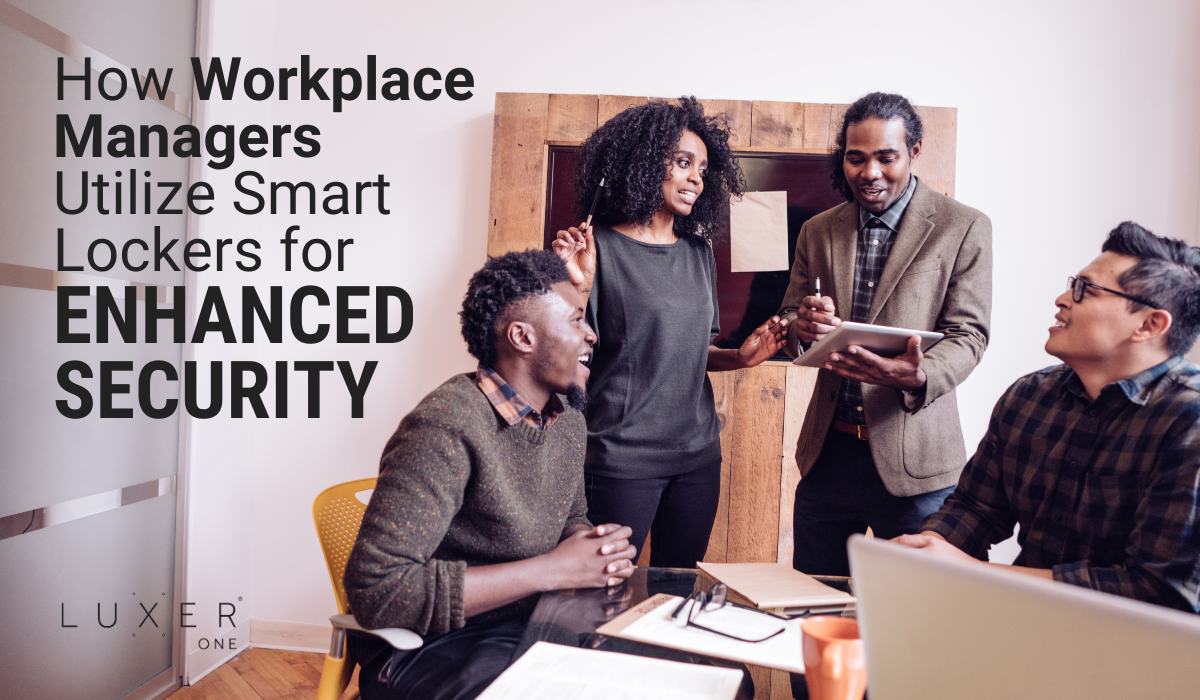
How Workplace Managers Utilize Smart Lockers for Enhanced Security

How Workplace Managers Utilize Smart Lockers for Enhanced Security

The realm of office security extends beyond mere safeguarding of premises and company resources. In today’s multifaceted business landscape, it touches on everything from data protection to ensuring employee well-being and happiness. Workplace managers are feeling the burden of ensuring enhanced security while maintaining employee satisfaction.

As businesses adapt to more flexible work arrangements, the role of these managers becomes paramount. They orchestrate a secure environment that fosters trust and productivity, ultimately contributing to happier employees.

Among the tools and strategies they employ, smart lockers have emerged as a game changer. We delve into the intricate role of workplace managers, demonstrating how the use of smart lockers can bolster office security and enhance the overall working environment.


The Role of Workplace Managers: A Holistic View on Office Security

Workplace managers wear many hats, each playing a crucial role in promoting a comprehensive approach to office security. Here are key areas under their stewardship:

Physical Security

The foundation of office security lies in the protection of physical assets – premises, infrastructure and assets. Workplace managers have the duty of managing access controls, surveillance systems, alarm systems, and ensuring overall employee safety.

Data Security

As businesses become increasingly digital, the protection of sensitive data is a pressing issue. Workplace managers must oversee the implementation of robust cybersecurity measures, which includes managing firewalls, antivirus software, and secure networks.

Employee Safety and Satisfaction

Workplace managers have a hand in shaping the overall work environment. They ensure ergonomics in the workplace, foster a healthy work culture, and respond to employee concerns in a timely manner.

Regulatory Compliance

Workplace managers are tasked with ensuring the company adheres to local and national safety regulations. This encompasses fire safety, building codes, and data protection rules.


The Intersection of Smart Lockers, Office Security and Employee Satisfaction

Smart lockers, leveraging advanced technologies, have proven to be a crucial asset in reinforcing office security and enriching employee experiences.

Enhanced Security

Smart lockers offer superior security compared to their traditional counterparts. Through the implementation of unique codes or RFID cards, they significantly minimize the chances of unauthorized access or theft.

Flexibility and Convenience

In a business landscape where hybrid work models are common, smart lockers provide employees with a flexible and secure storage solution for their personal items and company assets.

Increased Efficiency

Smart lockers come with integrated software that allows for streamlined locker usage management. Workplace managers can track locker assignments, monitor usage and even receive alerts for suspicious activity, boosting security and operational efficiency.

Elevated Employee Experience

By providing employees with a personal, secure space for their belongings, smart lockers contribute to a cleaner, more organized work environment, thereby reducing stress and enhancing employee satisfaction.


The role of workplace managers in ensuring office security and promoting employee satisfaction is multifaceted, and smart lockers serve as a powerful tool in their repertoire. These technologically advanced lockers significantly augment office security, streamline operations, and make for a more pleasant and satisfying work environment.

In an era where the boundaries between physical and digital workspaces are increasingly becoming blurred, adopting such innovative solutions is not just beneficial – it’s crucial for the future success of businesses.

Looking to elevate your office security? Contact our team!

  • Christina Draper

    Christina Draper, Marketing Content Manager at Luxer One, creates storytelling-driven content that connects with property management professionals and highlights innovations in multifamily package management. With a marketing background from UNC Charlotte, she develops cross-channel campaigns that showcase how Luxer One is redefining the resident experience.

    See Posts

RECENT POSTS

Luxer Liaison: A Familiar Face & Trusted Community Partner

A Familiar Face: How Luxer Liaison Adds a Human Touch to Package Management

Modern package management systems have transformed how communities handle deliveries. Smart lockers and centralized package rooms bring security, organization, and automation to an increasingly complex last-mile environment. But at larger communities, technology alone isn’t always enough to deliver the experience residents and onsite teams expect.
That’s where expert support for package management systems makes a meaningful difference.
At many Luxer One communities, that difference comes in the form of a familiar, trusted face. For one property, that person is Val: a Luxer Liaison whose presence has helped turn an already strong package system into a smoother, more human-centered experience.

Read More »

The Growing Demand for Package Management in Multifamily Communities

The demand for package management has been steadily rising for years, but over the past twelve months, it has shifted from a convenience issue to an operational imperative. For property managers, owners, and developers alike, package volume is no longer a temporary side effect of peak ecommerce seasons. It is a permanent fixture of modern multifamily living.
Residents expect fast, secure delivery. Carriers expect efficient drop-off. On-site teams are expected to keep everything moving without adding labor or liability. As ecommerce behavior continues to evolve and staffing pressures remain tight, communities are being forced to rethink how they manage last-mile delivery at scale.
This is where multifamily package management solutions have moved from “nice-to-have” amenities to core infrastructure.

Read More »
Value Messaging Is the Key to Preventing Long-Term Concessions in Multifamily

Value Messaging Is the Key to Preventing Long-Term Concessions in Multifamily

Concessions have become a familiar fixture across the multifamily landscape. As operators move through 2026, the question is no longer whether incentives belong in the leasing toolbox, but how to use them without sacrificing long-term revenue performance. This is where value messaging plays a critical role.
When concessions are paired with clear, consistent value messaging, they can support occupancy without resetting renter expectations. When they are not, they risk becoming a long-term drag on effective rents, renewals, and overall NOI. In today’s market, preventing long-term concessions is less about eliminating discounts altogether and more about ensuring price is never the only thing prospects remember.

Read More »
The State of the Multifamily Market: Stability Is Returning, but Discipline Still Matters

The State of the Multifamily Market: Stability Is Returning, but Discipline Still Matters

After several years of volatility, the state of the multifamily market entering 2026 feels more predictable than it has since the early post-pandemic period. Rent growth has normalized, supply pressures are beginning to ease in many metros, and demand fundamentals are slowly strengthening. However, this is not a return to the high-growth environment operators experienced earlier in the decade.
Instead, the Q1 2026 outlook reflects a market where stability is returning, but performance depends heavily on operational discipline, cost control, and resident experience. Properties that adapt to this reality are finding steadier footing. Those that rely on outdated assumptions or inefficient systems may struggle to keep pace.
This Q1 2026 multifamily market report breakdown explores what the latest data is telling operators and what it means for day-to-day decision-making.

Read More »
Smart Lockers for Asset Exchange and Package Management in the Modern Workplace

Smart Lockers for Asset Exchange and Package Management in the Modern Workplace

Workplace operations have changed dramatically in recent years. Hybrid schedules, distributed teams, and higher expectations for speed and accountability have reshaped how offices manage equipment, documents, and deliveries. As a result, many organizations are rethinking how assets move through the workplace.
That shift is driving increased demand for smart lockers for asset exchange and package management, a secure and automated solution designed to reduce loss, streamline workflows, and scale with enterprise operations. For workplace managers and operations directors, smart lockers are no longer a convenience. They are becoming a core infrastructure tool for the modern workplace.

Read More »

TOPICS

Share: