
LUXER ONE BLOG

How Rear Loading Lockers Are Revolutionizing BOPIS for the Retail Industry

How Rear Loading Lockers Are Revolutionizing BOPIS for the Retail Industry

The Buy Online, Pick Up In Store (BOPIS) model has gone from “nice to have” to a cornerstone of modern retail fulfillment, driven by consumer demand for convenience, speed, and flexibility. As retailers scale omnichannel efforts, not all BOPIS solutions perform equally well. Enter rear loading lockers, a smart locker innovation that is reshaping how retailers fulfill pickup orders while improving the customer experience and operational efficiency.

Here is how rear loading lockers are redefining BOPIS and why they are becoming a must have in the retail landscape.

BOPIS Is Bigger Than Ever and Still Growing

Recent industry data shows that click-and-collect has become a mainstream shopping behavior. In 2024, over 68% of shoppers in the United States used BOPIS services at least once, up from 57% in 2022.

Globally, the BOPIS market is forecast to grow substantially in the coming decade, reflecting customer preference for faster pickup, reduced delivery costs, and a seamless blend of online and in store shopping experiences.

These trends underscore a simple truth. BOPIS is not a fad. It is fundamental to omnichannel retailing.

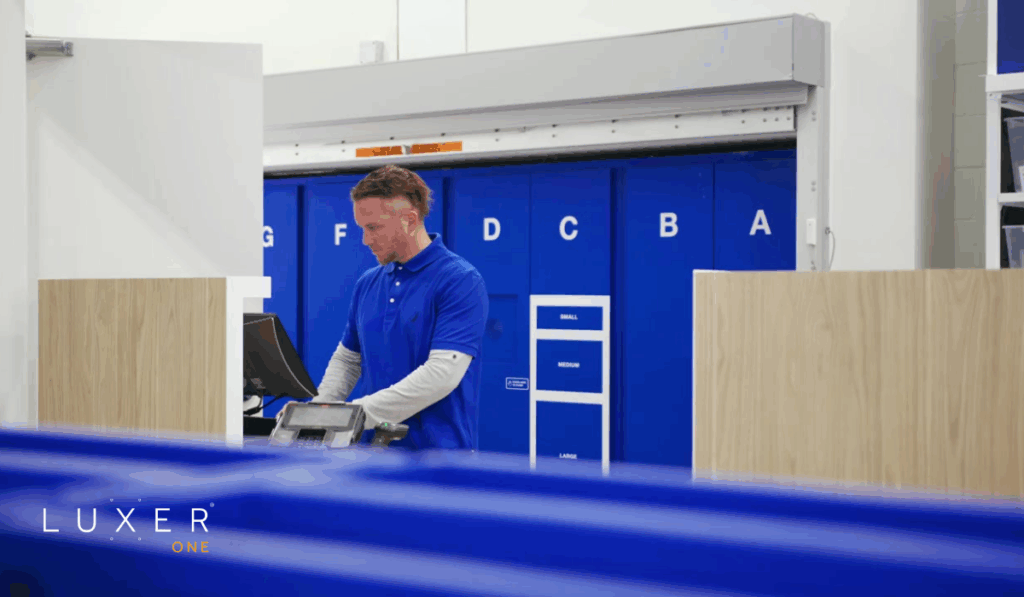
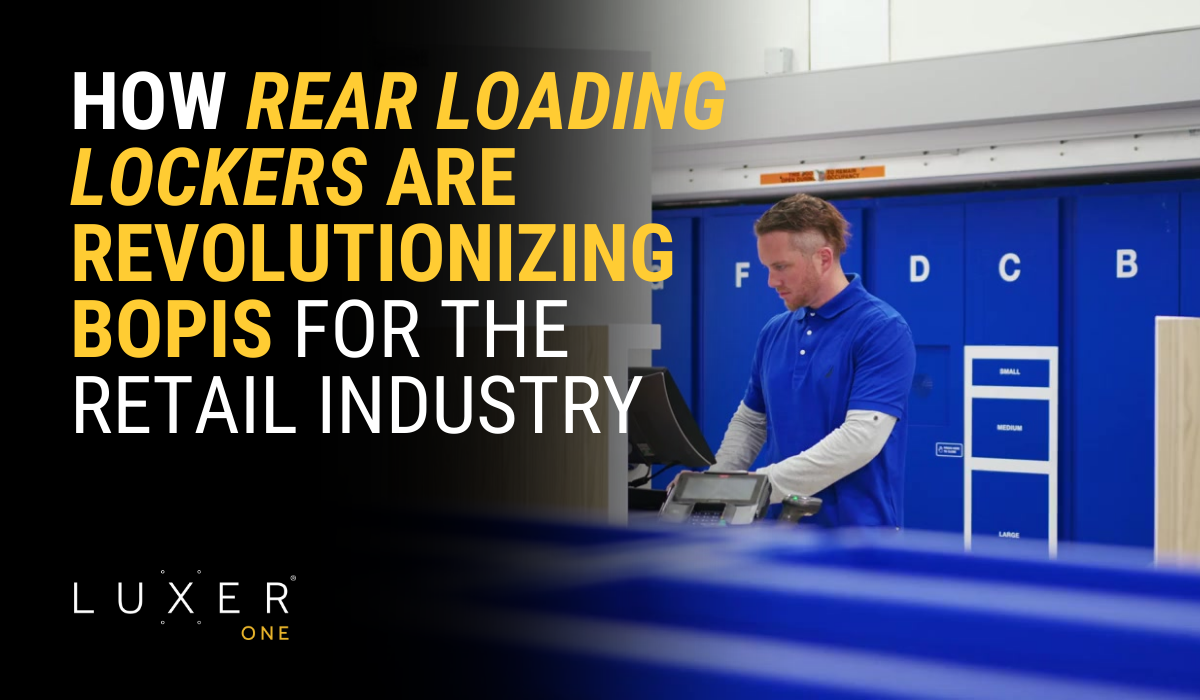
Fulfillment staff at retail store working on computer with rear loading BOPIS lockers in the background

The Locker Problem Many Retailers Face

Traditional BOPIS fulfillment often relies on:

  • Customer service counters

  • Employee managed pickup shelves

  • Outdoor locker banks that employees load from the front

While these methods work, they come with challenges.

Labor strain occurs as associates juggle stocking shelves, assisting in store customers, and managing BOPIS orders. Security concerns arise when front loaded systems require employees to enter customer zones or step away from service areas. Inefficient workflows force associates to backtrack between back rooms and front counters, wasting valuable time.

Retailers need a better way to bridge efficient fulfillment with a great customer experience, especially as order volumes rise.

What Makes Rear Loading Lockers Different

Rear loading lockers change the traditional smart locker design by allowing employees to load orders from behind the locker bank rather than from the customer facing side. Orders are staged directly from a secure back of store area or fulfillment zone.

This design shift unlocks meaningful operational benefits.


Streamlined Labor Flow

Associates no longer need to step onto the sales floor to place orders into lockers or interrupt customer interactions to fetch BOPIS packages. Inventory moves directly from the back room into lockers, reducing touch points and fulfillment time.


Enhanced Security and Loss Prevention

Rear loading keeps order staging behind the scenes, reducing customer access to secure pickup areas and minimizing the risk of misplaced, lost, or tampered orders.


Faster, More Reliable Customer Pickup

Customers retrieve orders through a secure interface while associates handle backend fulfillment. The result is less wait time, fewer errors, and a smoother pickup experience.

Fulfillment staff loading packing into the backend of the rear loading lockers

Why Rear Loading Lockers Are Especially Valuable for Retailers

Retail performance increasingly hinges on speed and experience. Rear loading lockers support both.


Reduce Fulfillment Bottlenecks

As BOPIS demand climbs, retailers face pressure to fulfill orders quickly. Rear loading lockers automate part of the process, allowing staff to focus on high value tasks like merchandising and customer engagement rather than fulfillment logistics.


Improve Operational Efficiency

Because loading and pickup occur independently, retailers can optimize staffing, reduce queues at service counters, and process more BOPIS orders with the same team.


Support Omni Fulfillment Strategies

Retailers are also exploring new ways to meet customer expectations, including third party delivery partnerships and flexible pickup options. Smart lockers support these strategies across multiple fulfillment methods. For example, this article on how third party delivery drivers use smart lockers highlights how lockers extend beyond traditional pickup use cases.

Customer Experience Still Drives Results

BOPIS success is not just about convenience. It is about delivering a friction free experience from checkout to pickup.

Rear loading lockers support that experience by reducing wait times, offering secure access, and creating a consistent pickup flow. It’s easy to see how smart lockers make the BOPIS process easier, especially when backend operations are optimized for speed and accuracy.

When customers can rely on a simple, predictable pickup experience, they are more likely to return.

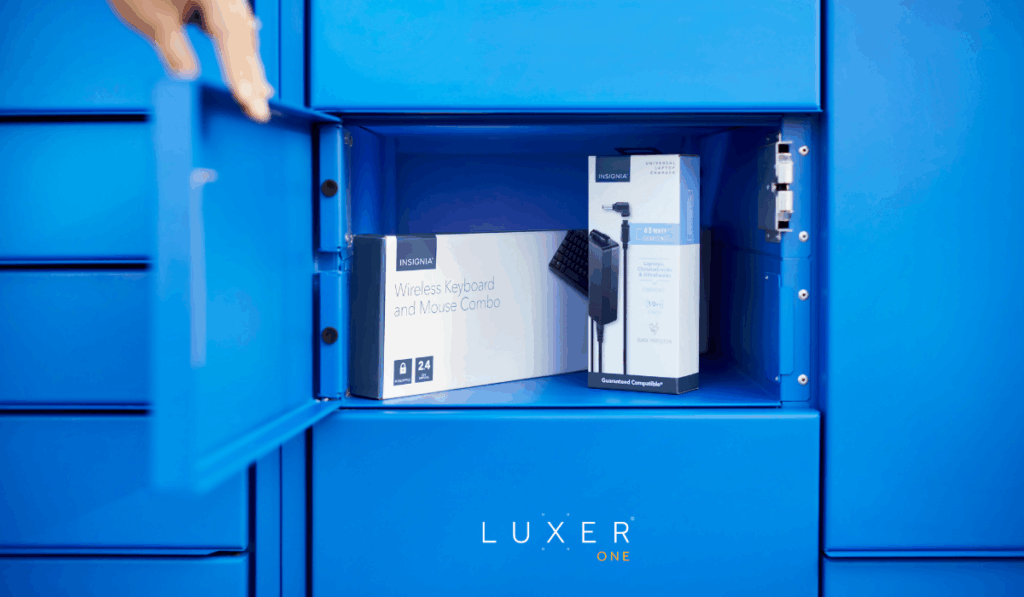
Customer picking up BOPIS order from smart lockers

A Competitive Advantage for Modern Retailers

Retailers that invest in rear loading lockers are better positioned to:

  • Fulfill more BOPIS orders with fewer labor hours

  • Increase in store traffic and incremental purchases

  • Improve order accuracy and security

  • Build customer loyalty through convenience

As BOPIS continues to move further into the mainstream, fulfillment design becomes a competitive differentiator. Rear loading lockers represent a practical innovation that supports both operational goals and customer expectations.

Conclusion: Smarter Fulfillment for the Future of Retail

In an environment where customer expectations continue to rise, retailers cannot rely on outdated fulfillment workflows. Rear loading lockers provide a scalable, secure, and efficient solution that helps retail teams keep pace with BOPIS growth.

If your organization is looking to improve BOPIS operations and elevate the pickup experience, rear loading smart lockers can deliver measurable impact.

Contact Luxer One to learn how rear loading lockers can support your retail strategy with reliable technology, streamlined operations, and a better customer experience.

  • Christina Draper

    Christina Draper, Marketing Content Manager at Luxer One, creates storytelling-driven content that connects with property management professionals and highlights innovations in multifamily package management. With a marketing background from UNC Charlotte, she develops cross-channel campaigns that showcase how Luxer One is redefining the resident experience.

    See Posts

RECENT POSTS

How to Launch Package Lockers in Your Community

How to Launch Package Lockers in Your Community

Installing a package locker system is a major upgrade for your community. But knowing how to launch package lockers properly is what turns a new system into a retention-driving amenity.
In today’s market, where residents are evaluating renewals earlier and weighing value more carefully, a smooth rollout can reinforce convenience, security, and operational excellence from day one.
If you are preparing to introduce lockers at your property, here are five strategic package locker launch ideas that protect your investment and elevate resident experience.
Read More »
What’s the Difference Between Electronic and Smart Lockers?

What’s the Difference Between Electronic and Smart Lockers?

If you’re researching package management solutions, you’ve likely come across both electronic lockers and smart lockers. While the terms are sometimes used interchangeably, they are not the same.
The main difference between electronic and smart lockers is connectivity and system intelligence.
Electronic lockers use digital access methods instead of traditional keys. Smart lockers go further by using cloud-based software, real-time tracking, integrations, and advanced management tools to automate and optimize the entire package workflow.
For multifamily property managers and owners, that distinction matters more than ever.

Read More »
Onsite vs Offsite Package Management: What Multifamily Leaders Need to Know

Onsite vs Offsite Package Management: What Multifamily Leaders Need to Know

Package volume has fundamentally reshaped multifamily operations. What used to be a convenience has become a daily operational responsibility, a resident satisfaction driver, and in some cases, a liability risk.
As properties evaluate solutions, many are weighing onsite vs offsite package management models. Both promise convenience. Both aim to reduce staff burden. But the operational realities and resident experience can look very different.
Below we discuss what you should consider before deciding.

Read More »
The Rise of Build-to-Rent: What It Means for Proptech and the Future of Amenities

The Rise of Build-to-Rent: What It Means for Proptech and the Future of Amenities

Build-to-rent is no longer a niche concept. It is quickly becoming one of the most important shifts in the multifamily industry.
This is not a temporary response to interest rates or a passing housing cycle. We are watching the formation of a distinct asset class. And like any new asset class, it comes with a new operating model, new resident expectations, and new requirements for technology.
The mistake I see most often is treating build-to-rent as simply horizontal multifamily. It is not. The physical layout may resemble single-family homes, but the operational philosophy has to be entirely different.
Read More »
UL Certified Smart Lockers: Why Safety Certifications Matter More Than Ever

UL Certified Smart Lockers: Why Safety Certifications Matter More Than Ever

When evaluating package management systems, UL certified smart lockers should be at the top of your checklist.
In today’s regulatory environment, safety certifications are not optional. They protect residents, reduce liability for owners, streamline approvals for developers, and ensure long-term performance for operators. Understanding which smart locker safety certifications matter and why can help you make a more informed investment decision.

Read More »

TOPICS

Share: