



LUXER ONE BLOG

The Rise of Build-to-Rent: What It Means for Proptech and the Future of Amenities

The Rise of Build-to-Rent: What It Means for Proptech and the Future of Amenities

Build-to-rent is no longer a niche concept. It is quickly becoming one of the most important shifts in the multifamily industry.

This is not a temporary response to interest rates or a passing housing cycle. We are watching the formation of a distinct asset class. And like any new asset class, it comes with a new operating model, new resident expectations, and new requirements for technology.

The mistake I see most often is treating build-to-rent as simply horizontal multifamily. It is not. The physical layout may resemble single-family homes, but the operational philosophy has to be entirely different.

Why Build-to-Rent Is Here to Stay

If you step back and look at the macro environment, the drivers are clear. Housing affordability remains a challenge. The barrier to entry for homeownership is significant. Down payments are simply becoming out of reach for many households.

At the same time, there is strong demand for space, privacy, and flexibility. Many residents want the feeling of a home without planting permanent roots. They want a backyard. They want room for a family or a large dog. But they may not want a 30-year mortgage tied to a single location.

We saw something similar decades ago with the rise of purpose-built student housing. The market responded to unmet demand. Build-to-rent is doing the same thing today.

The residents choosing these communities are not compromising. They are making a calculated decision. They want privacy, security, and convenience, but without the financial and maintenance burden of ownership. That mindset shapes everything that follows.

[Residents] want privacy, security, and convenience, but without the financial and maintenance burden of ownership.

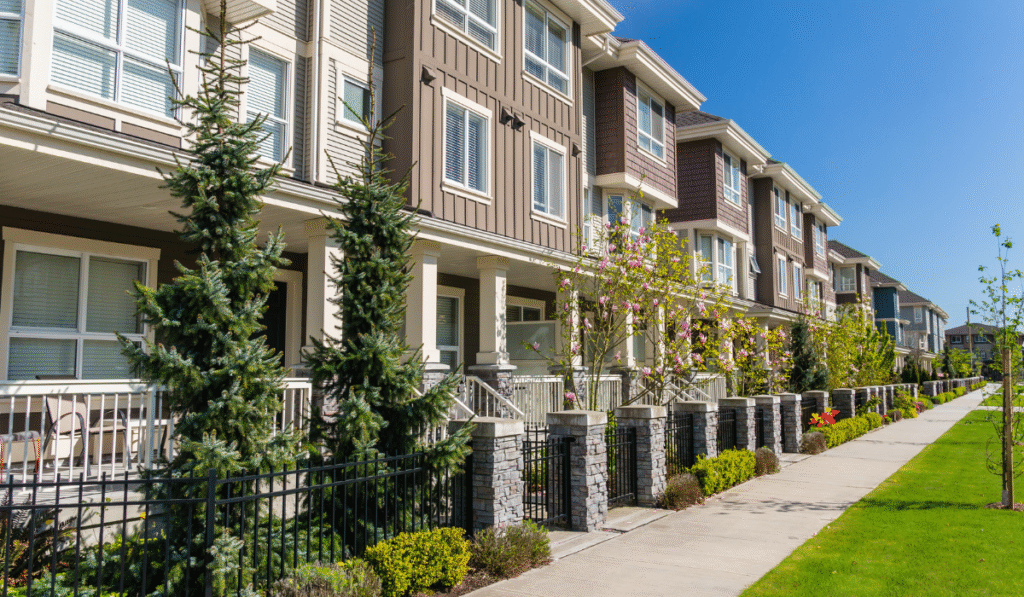
Build-to-Rent Multifamily Community

A Different Operating Model

One of the biggest misunderstandings about build-to-rent is assuming that you can manage it the same way you manage a mid-rise or garden-style community.

Traditional multifamily benefits from proximity and density. You have centralized leasing offices. There are teams on site. Essentially, you have eyes on the ground. If something goes wrong, there is usually someone nearby to address it.

Build-to-rent removes that centralized safety net.

Operators that underestimate this complexity often learn quickly how expensive that oversight can become.

You are managing a distributed neighborhood. Windshield time becomes real. Maintenance coordination becomes more complex. Service expectations remain high, but the infrastructure to deliver those services is more challenging to execute.

In this environment, getting things right the first time is critical. You cannot afford repeated service calls or inefficient workflows across scattered homes. Operators that underestimate this complexity often learn quickly how expensive that oversight can become.

Technology Is the Glue

In a distributed community, technology is not a perk. It is the literal glue holding the operation together.

Managed connectivity, in-unit devices, access control, leak detection, smart thermostats, and centralized dashboards are not about novelty. They are about operational stability.

If a network fails in a high-rise building, it is disruptive. If it fails in a build-to-rent community, it can undermine the entire operating model. Access systems, monitoring tools, and digital infrastructure are what allow operators to scale across multiple neighborhoods without losing control.

You cannot manage what you cannot see. Centralized visibility is essential. A regional operator overseeing multiple communities must be able to monitor performance, track work orders, and maintain service standards from a single vantage point.

That level of oversight turns what could be a labor-heavy expense into a streamlined operation.

Person holding internet router in apartment setting

The Shift From Amenities to Infrastructure

Perhaps the most interesting shift in build-to-rent is how the concept of “amenity” is evolving.

In traditional multifamily, amenities often center on shared spaces. Pools, fitness centers, clubhouses, and lounges have long been part of the leasing narrative.

In build-to-rent, the calculus changes.

Residents are not primarily choosing these communities for a resort-style pool. They are choosing them for the experience inside their own home and the reliability of the services surrounding it.

A community with a modest gym but world-class digital infrastructure and seamless service delivery can outperform a property with beautiful landscaping and underdeveloped operational systems.

Infrastructure becomes the amenity.

A community with a modest gym but world-class digital infrastructure and seamless service delivery can outperform a property with beautiful landscaping and underdeveloped operational systems.

Connectivity, secure access, delivery management, proactive maintenance alerts, and reliable automation create peace of mind. And in a rental home environment, peace of mind is often more valuable than visual appeal.

We also have to acknowledge the delivery-heavy lifestyle many residents now lead. Groceries, household goods, and everyday essentials arrive at the door. When a package goes missing, the resident does not think about the technical boundaries between public and private space. They simply associate the failure with their community.

In a review-driven world, these operational breakdowns can quickly become reputation issues. That is why delivery and logistics infrastructure must be part of the core design, not an afterthought.

Plan for Technology Early or Pay for It Later

One of the most common mistakes I see is waiting too long to define the technology strategy.

If you are breaking ground on a build-to-rent project tomorrow, your tech plan should already be finalized. Ideally, it should be integrated during the initial design phase, alongside plumbing and electrical.

Failing to do so creates what I would call tech debt. Retrofitting infrastructure later is more expensive, more disruptive, and often less effective. It also limits your ability to compete with communities that embedded these systems from day one.

In an asset class where net operating income and operational efficiency are measured closely, missing that early opportunity can be costly.

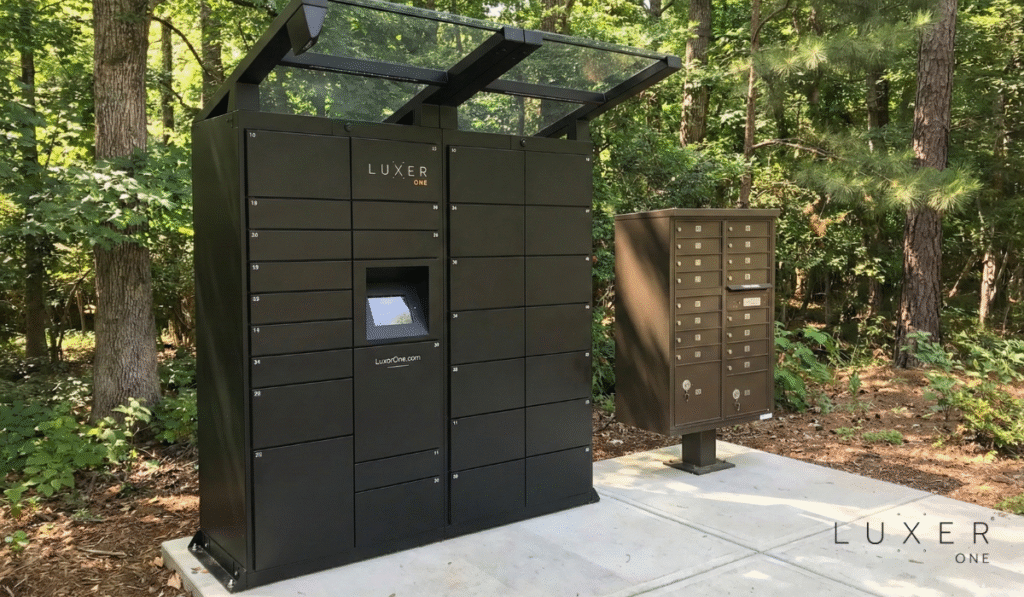
Luxer One outdoor smart package lockers in a build-to-rent community

Where the Industry Goes From Here

One thing worth recognizing is that many build-to-rent operators have already embraced elements of proptech. Access control systems, smart thermostats, appliance sensors, managed connectivity, and proactive maintenance tools are not new to this space. In many ways, BTR was an early adopter out of necessity.

What I have observed, however, is that these systems are often implemented in pieces. A lock here. A sensor there. Connectivity layered in to support it all. Each decision makes sense on its own.

The next evolution is not about adding more tools. It is about tying the constellation together.

Build-to-rent communities are uniquely positioned to think beyond individual devices and toward neighborhood-wide infrastructure. When connectivity, access, delivery logistics, maintenance automation, and resident communication operate as an integrated backbone, the operator gains efficiency, visibility, and resilience. More importantly, the resident experiences consistency.

The communities that pause to evaluate how their systems interact, rather than simply adding new ones, will be better positioned as expectations continue to rise.

Technology in this sector is moving quickly. The communities that pause to evaluate how their systems interact, rather than simply adding new ones, will be better positioned as expectations continue to rise.

Build-to-rent is still in its formative years as an asset class. That creates opportunity. Not to chase every new solution, but to be deliberate about how technology supports the long-term operating model.

The real advantage will not come from having the most devices. It will come from having a cohesive infrastructure that quietly enables everything else to work the way residents expect it to.

To learn how Luxer One smart package solutions can help set build-to-rent communities up for long-term success, contact our team today.

  • Christian Diener

    Christian is a highly accomplished sales and management professional with 25 years of experience in business-to-business and direct-to-consumer technology sales. His expertise spans a wide range of products, from computer/network hardware to residential video, internet solutions, IoT, and SaaS. He helps multifamily, BTR, HOA, and condo owners make sense of the rapidly shifting world of community infrastructure, connectivity, and PropTech.

    See Posts

RECENT POSTS

university package report 2025 data luxer one

University Package Volume Report: 2025 Academic Year

As universities modernize campus operations, smart lockers are increasingly part of the conversation. But while the hardware often gets the spotlight, experienced decision makers know the real long term value lies in integration. That’s why institutions evaluating smart locker solutions should focus just as heavily on integration capabilities as on physical design.
So what should universities actually look for when evaluating smart locker system integrations? In this blog, we’re answering the key questions universities should ask, and how Luxer One supports those requirements.

Read More »
Multifamily Tech Stack Optimization: Why Execution Matters More Than Tools

Multifamily Tech Stack Optimization: Why Execution Matters More Than Tools

When people ask me about multifamily tech stack optimization, they usually expect me to recommend a tool. Which platform is best? What AI solutions should we pilot? Are we missing any features?
But the real challenge in multifamily today is not choosing the right technology. It is executing on it. In my experience, multifamily does not have a knowledge problem. We have an execution problem. In the blog below we’ll navigate tech stack optimization and executing solutions well across your portfolio.

Read More »
What’s Included in a Smart Locker System?

What’s Included in a Smart Locker System?

Smart lockers have become one of the most effective ways for multifamily communities to manage growing package volumes while improving resident convenience. But if you’re evaluating solutions, one of the first questions you may ask is: what’s actually included in a smart locker system?
Below is a high-level breakdown of the core smart locker system features, what property managers should look for when evaluating solutions, and how leading systems like Luxer One are designed to support reliable package management.

Read More »
smart locker integrations for universities

What Should Universities Look for in a Smart Locker System Integration?

As universities modernize campus operations, smart lockers are increasingly part of the conversation. But while the hardware often gets the spotlight, experienced decision makers know the real long term value lies in integration. That’s why institutions evaluating smart locker solutions should focus just as heavily on integration capabilities as on physical design.
So what should universities actually look for when evaluating smart locker system integrations? In this blog, we’re answering the key questions universities should ask, and how Luxer One supports those requirements.

Read More »
How to Launch Package Lockers in Your Community

How to Launch Package Lockers in Your Community

Installing a package locker system is a major upgrade for your community. But knowing how to launch package lockers properly is what turns a new system into a retention-driving amenity.
In today’s market, where residents are evaluating renewals earlier and weighing value more carefully, a smooth rollout can reinforce convenience, security, and operational excellence from day one.
If you are preparing to introduce lockers at your property, here are five strategic package locker launch ideas that protect your investment and elevate resident experience.

Read More »

TOPICS

Share: