
LUXER ONE BLOG

How To Write A Proposal To Get Smart Lockers Approved For Your Community

How To Write A Proposal To Get Smart Lockers Approved For Your Community

Getting smart lockers approved often has less to do with the technology itself and more to do with how the proposal is framed. Ownership groups, asset managers, and regional leaders are not looking for another amenity request. They are evaluating investments based on operational impact, cost control, and long-term value.

This guide walks through exactly how to write a proposal that speaks their language and positions smart lockers as a strategic improvement, not a nice-to-have.

What Is the Goal of a Smart Locker Proposal?

The goal is not to explain how smart lockers work. Most decision makers already understand the concept at a high level.

The goal is to clearly show how smart lockers:

  • Reduce operating costs

  • Protect NOI

  • Improve operational consistency across portfolios

  • Support resident satisfaction and retention

  • Create optional revenue opportunities

Your proposal should read less like an amenity pitch and more like a business case.

What Should Be Included in a Smart Locker Proposal?

A strong proposal typically includes five core sections:

  1. The operational problem

  2. The financial opportunity

  3. The resident and market impact

  4. Risk reduction and reliability

  5. Why now

Each section should tie back to outcomes leadership cares about.

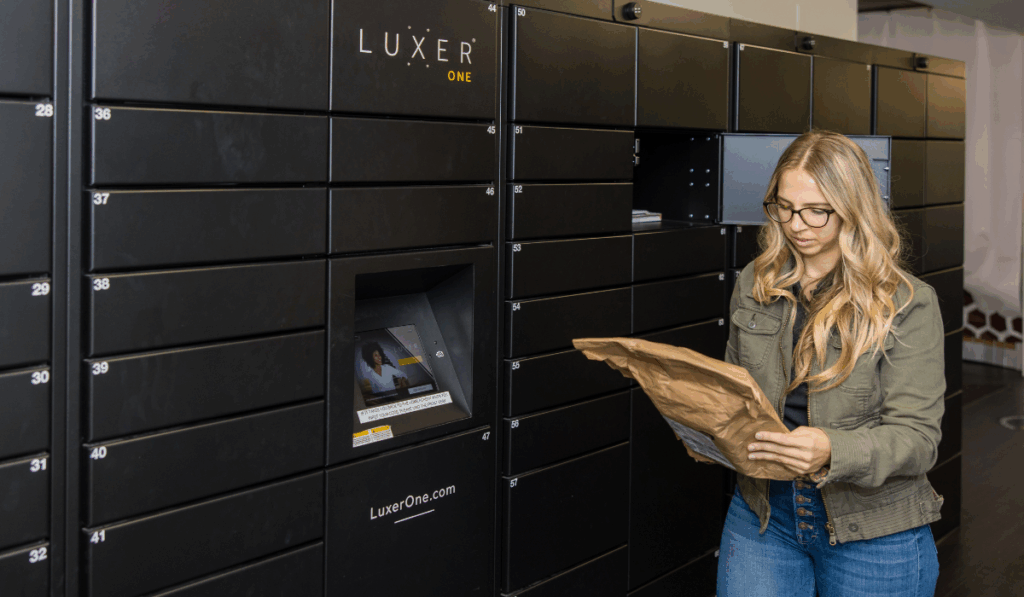
Black smart locker system from Luxer One in apartment setting

How Do You Frame the Operational Problem Without Sounding Negative?

Start with scale and consistency, not complaints. Instead of focusing on day-to-day frustrations, frame the issue as a system that no longer scales with package volume or staffing realities.

Key points to include:

  • Package volume continues to rise year over year across multifamily

  • Manual package handling creates inconsistent processes across teams and properties

  • Staff time spent managing packages pulls attention away from leasing, retention, and service

  • Package rooms without automation still require labor and oversight

This positions smart lockers as a solution to an operational mismatch rather than a reaction to inconvenience.

If helpful, reference broader industry context using a resource like a guide to multifamily package management to reinforce that this is a systemic challenge, not a property-specific failure.

Multiple packages in an oversized Luxer One package locker

How Should You Talk About Cost and ROI at a High Level?

Decision makers want financial framing, not line-item math. You’ll want to focus on labor efficiency, time reallocation, and avoiding future costs.

Examples of high-level framing:

  • Reducing staff time spent on package intake and retrieval

  • Minimizing overtime or coverage gaps tied to package delivery peaks

  • Avoiding future retrofits or staffing increases as volume grows

  • Standardizing package operations across properties

You can reinforce this section by linking to a more detailed discussion on the ROI on smart lockers for apartments, without recreating the math inside the proposal itself.

The goal is to show financial logic, not run a spreadsheet.

How Do You Position Smart Lockers as a Revenue Opportunity?

This is often overlooked and can be a differentiator in approval conversations.

Smart lockers can support revenue or value creation through:

  • Optional amenity or convenience fees

  • Premium package access for residents

  • Reduced resident churn tied to delivery frustration

  • Stronger amenity positioning during lease-up or renewals

Even if a community does not plan to charge fees immediately, framing lockers as a flexible platform with future revenue potential helps leadership view the investment as adaptable rather than fixed.

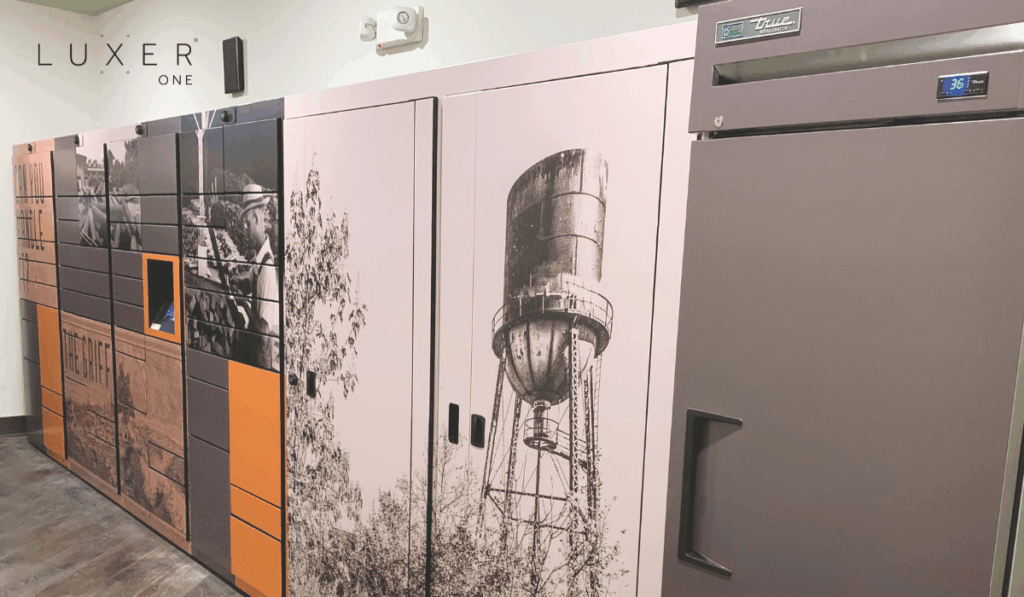
Smart lockers with colorful, branded wrap from Luxer One

Should Risk and Liability Be Addressed?

Yes, but briefly and strategically. Rather than leading with theft or complaints, position risk reduction as part of operational resilience.

Examples include:

  • Clear package accountability and audit trails

  • Reduced disputes between residents and onsite teams

  • Fewer unsecured packages in common areas

  • More predictable processes regardless of staffing changes

This supports confidence in long-term reliability without leaning too heavily on fear-based messaging.

How Do You Address Vendor Reliability Without Naming Brands?

Focus on principles, not logos. Leadership teams care about:

  • Proven reliability over time
     
  • U.S.-based manufacturing and supply chain stability 

  • Scalable service and support models 

  • Technology that integrates cleanly into operations 

You can frame this as a requirement section in the proposal, outlining what the ownership group should expect from any smart locker provider. This subtly aligns with stronger vendors without appearing biased.

Why Is Timing Important in a Smart Locker Proposal?

End the proposal by explaining why this decision makes sense now.

Common timing drivers include:

  • Growing package volume without corresponding staffing increases

  • Renovations or capital planning cycles


  • Portfolio standardization initiatives


  • Competitive pressure from nearby communities offering better package experiences


This reinforces urgency while staying grounded in operational logic.

Happy resident removing Amazon package from black Luxer One smart lockers

What Is the Best Way to Close the Proposal?

Summarize the business case in one paragraph:

  • Smart lockers improve efficiency

  • They support resident satisfaction

  • They protect operational margins

  • They scale with future demand

Then outline next steps such as evaluating capacity needs, understanding space requirements, and reviewing implementation timelines.

Final Tip: You Do Not Have to Write This Alone

A strong smart locker proposal balances operations, finance, and resident experience. Getting that balance right can significantly improve approval odds.

If you want help drafting or validating a proposal, or pressure-testing your messaging before it goes to ownership or asset management, contact Luxer One. Our team works with multifamily leaders every day to build proposals that get approved and perform long-term.

  • Christina Draper

    Christina Draper, Marketing Content Manager at Luxer One, creates storytelling-driven content that connects with property management professionals and highlights innovations in multifamily package management. With a marketing background from UNC Charlotte, she develops cross-channel campaigns that showcase how Luxer One is redefining the resident experience.

    See Posts

RECENT POSTS

The ROI of Order Pickup Smart Lockers: How Retailers Turn BOPIS Efficiency Into Revenue

The ROI of Order Pickup Smart Lockers: How Retailers Turn BOPIS Efficiency Into Revenue

Buy Online, Pick Up In Store (BOPIS) has become a core revenue driver for big-box retailers, but it has also introduced new operational pressure. As pickup volumes rise, retailers are navigating tighter labor availability, crowded service desks, and rising customer expectations for speed and convenience. In that environment, understanding the ROI of order pickup smart lockers is no longer a theoretical exercise. It is a practical question tied directly to revenue performance, cost control, and customer satisfaction.
Smart lockers are emerging as one of the most effective ways retailers are improving BOPIS economics at scale. When deployed strategically, they do not just save time. They unlock measurable revenue from smart lockers for retail by improving order completion, throughput, and customer experience.

Read More »
Smart Locker Solutions for University Campuses: A Smarter Way to Support Students, Staff, and Operations

Smart Locker Solutions for University Campuses: A Smarter Way to Support Students, Staff, and Operations

University campuses are more complex than ever. Between growing student populations, expanded campus footprints, and rising expectations around convenience and accessibility, higher-ed institutions are under increasing pressure to modernize operations without adding staffing strain.
That’s why smart locker solutions for university campuses have evolved from a “nice-to-have” amenity into a campus-wide operational advantage. Today’s smart lockers do far more than manage packages: they support housing, academics, athletics, dining, and administrative services across the entire university ecosystem.

Read More »
How Does Luxer One Handle Installation From Start to Finish?

How Does Luxer One Handle Installation From Start to Finish?

When evaluating a new package management system, one of the most common questions property teams ask is simple: How does Luxer One handle installation from start to finish?
The short answer: with full ownership, clear communication, and ongoing support well beyond launch.
The long answer is that the Luxer One installation process is designed to remove friction at every stage. From early planning through day-to-day operations we ensure your team is never left figuring things out alone.
This end-to-end approach is what turns a new system installation into a long-term operational improvement, not just a hardware upgrade.

Read More »
Solving the Growing Challenge of Package Management for Multi-Tenant Offices

Solving the Growing Challenge of Package Management for Multi-Tenant Offices

Managing packages in multi-tenant office buildings has become one of the most overlooked operational challenges for building managers and owners. With hybrid work patterns reshaping how space is used and surging delivery expectations from tenants and employees alike, traditional manual processes are simply not keeping pace.
In this new era, package management for multi-tenant offices isn’t just about catching parcels at the door. It’s a core part of delivering seamless tenant experiences, maintaining secure buildings, and optimizing operational workflows.

Read More »
Luxer One at NRF 2026.Javits Center NYC

NRF 2026 Recap: Trends From This Year’s Show & The Next Now

The National Retail Federation (NRF) Retail’s Big Show, once again proved why it’s the defining kickoff to the retail year! Held January 11–13 in New York City, the event brought together thousands of retail leaders, innovators, and solution providers to explore the technologies and strategies shaping the industry’s “Next Now.”

This year’s theme was clear: Artificial intelligence, automation, and robotics are transforming how retailers operate today.

Read More »

TOPICS

Share: