

LUXER ONE BLOG

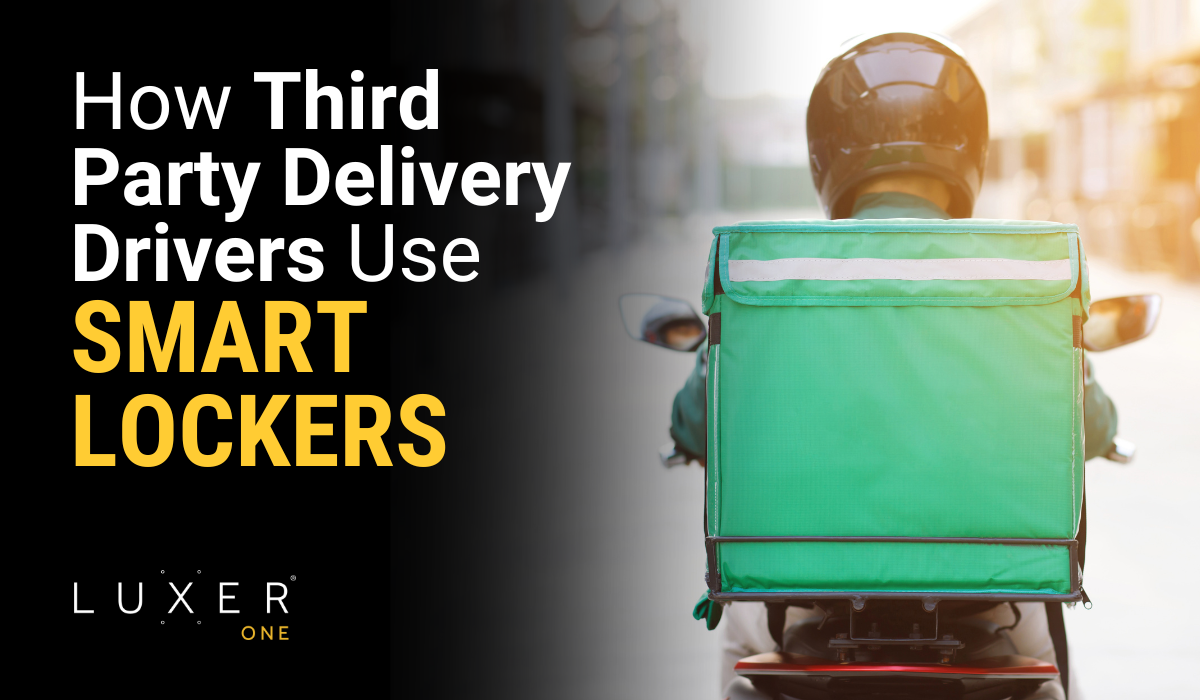
How Third Party Delivery Drivers Use Smart Lockers

How Third Party Delivery Drivers Use Smart Lockers

Third party delivery has become a permanent fixture in both retail and quick-service restaurants. As delivery volumes increase and customer expectations tighten, operations leaders are rethinking not just how orders are fulfilled, but how they are handed off. One of the most overlooked friction points in this process is the delivery driver pickup experience.

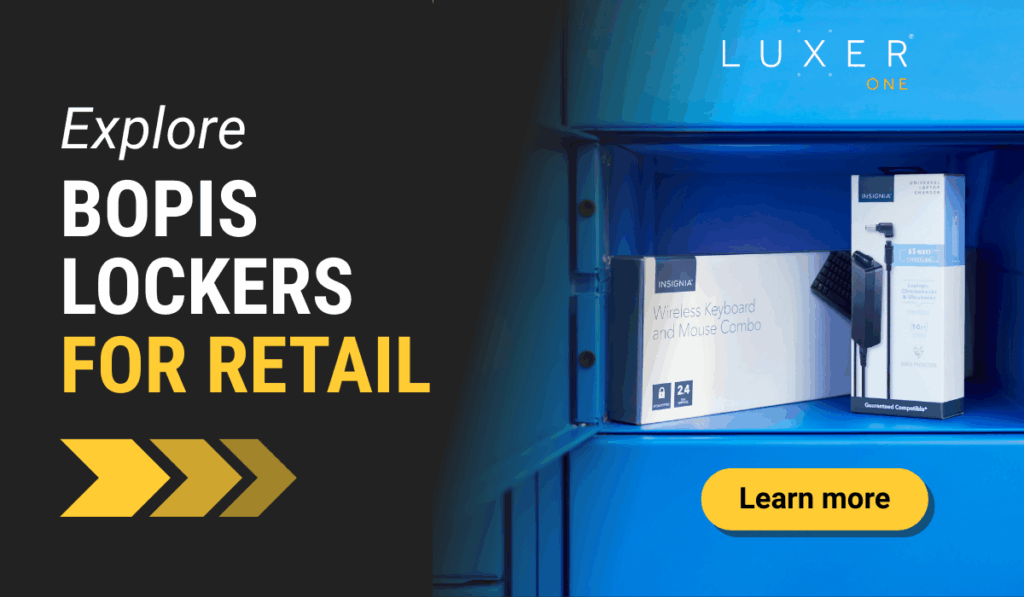
Smart lockers, originally designed for customer pickup, are increasingly being used as a reliable handoff point for third party delivery drivers. When implemented as part of a BOPIS strategy, smart lockers simplify pickup, reduce in-store congestion, and create a faster, more predictable workflow for everyone involved.

Delivery Is Growing, and So Is Operational Pressure

Recent retail data shows that delivery has not replaced pickup entirely, but it has permanently changed how fulfillment works. Delivery volume continues to rise alongside BOPIS, forcing retailers and restaurants to manage multiple fulfillment channels at once. As outlined in our analysis of retail’s next chapter, fulfillment strategies that rely heavily on staff coordination alone are becoming harder to sustain as order volume scales.

For operations leaders, this creates a new challenge. Orders must be staged accurately, drivers must arrive and depart quickly, and in-store teams cannot afford to be pulled away from customers or food preparation every time a driver arrives.

This is where smart lockers quietly step in.

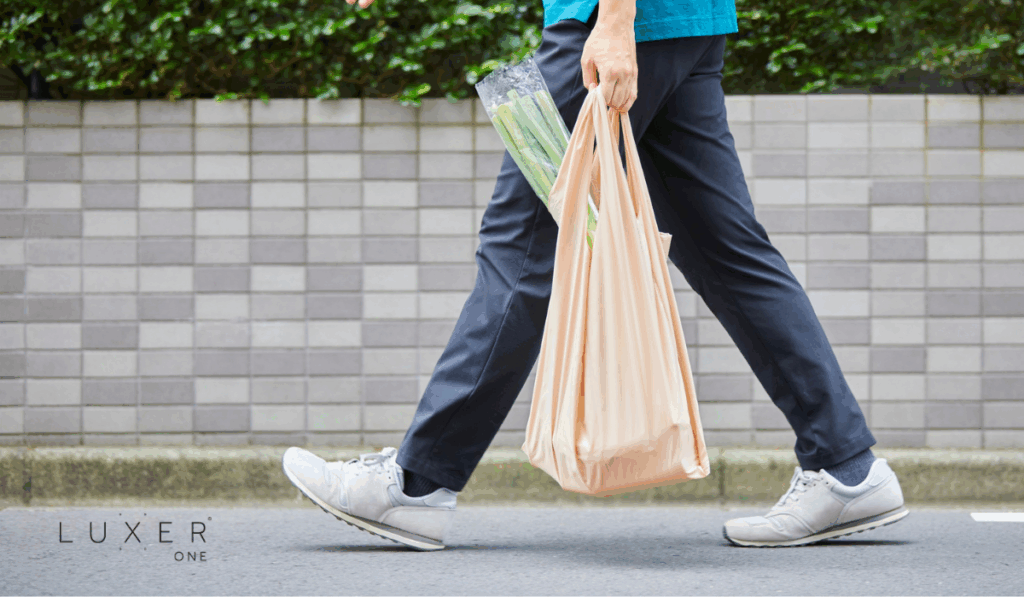
Third-Party delivery driver carrying grocery bag to customer

How Third Party Delivery Drivers Use Smart Lockers in Practice

When third party delivery drivers use smart lockers, the process mirrors customer BOPIS workflows but with a few operational advantages.

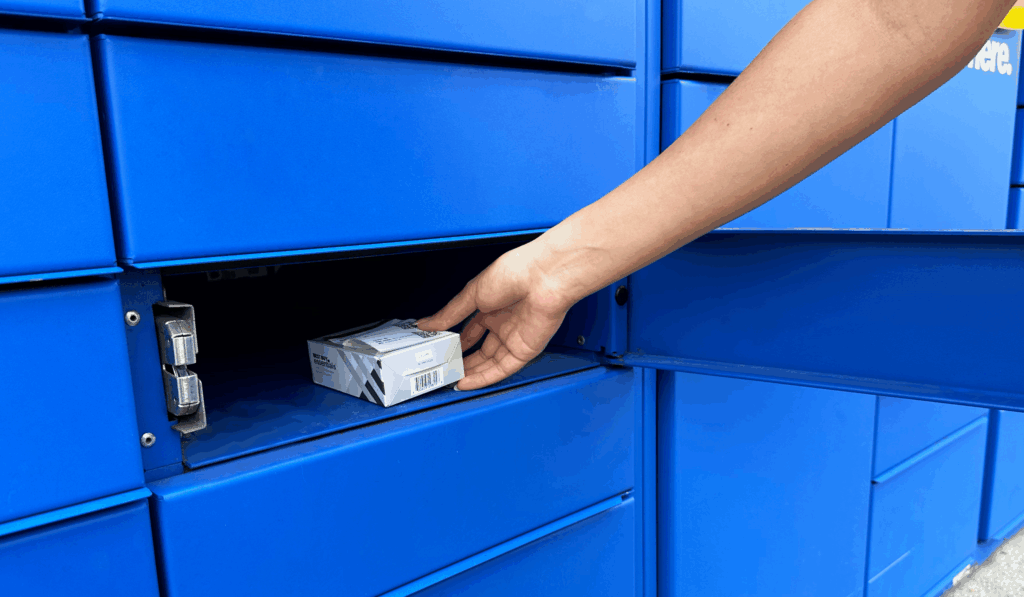
Once an order is prepared, staff place it into a designated locker compartment. The system then sends a secure access code or QR-based credential to the delivery platform or directly to the driver. When the driver arrives, they retrieve the order themselves without waiting in line, flagging down staff, or navigating a crowded counter.

For drivers, this means:

  • Faster pickups

  • Fewer missed orders

  • Less downtime between deliveries

For stores and restaurants, it means fewer interruptions, cleaner handoffs, and better control over order accuracy.

Why BOPIS Smart Lockers Work Especially Well for Delivery Drivers

BOPIS smart lockers for delivery drivers solve a problem that traditional pickup counters were never designed to handle. Counters assume human coordination and availability. Lockers assume volume, variability, and speed.

Smart lockers provide:

  • 24/7 accessibility, even during peak hours

  • Contactless pickup, reducing friction and liability

  • Clear order ownership, eliminating confusion over which order belongs to which driver

  • Predictable workflows, regardless of staffing levels

In retail environments, this is particularly valuable during peak fulfillment periods like evenings and weekends. In quick-service restaurants, it prevents delivery drivers from overwhelming front-of-house teams during rush periods.

Retail Use Case: High-Volume, Multi-Order Pickup

In retail locations, delivery drivers often arrive to collect multiple orders at once. Without lockers, this can mean long waits, miscommunication, or staff scrambling to locate staged items.

Smart lockers streamline this process. Orders are pre-staged, digitally tracked, and ready for pickup the moment the driver arrives. Drivers spend less time inside the store, and staff maintain focus on in-store customers and order preparation.

Operations leaders benefit from improved throughput without expanding labor.

Quick-Service Restaurants: Speed Without Disruption

For QSRs, speed is everything. Delivery drivers frequently arrive during the busiest parts of the day, exactly when staff bandwidth is most limited.

Smart lockers allow restaurants to:

  • Stage completed orders without blocking counters

  • Avoid driver queues in dining areas

  • Reduce order handoff errors during peak times
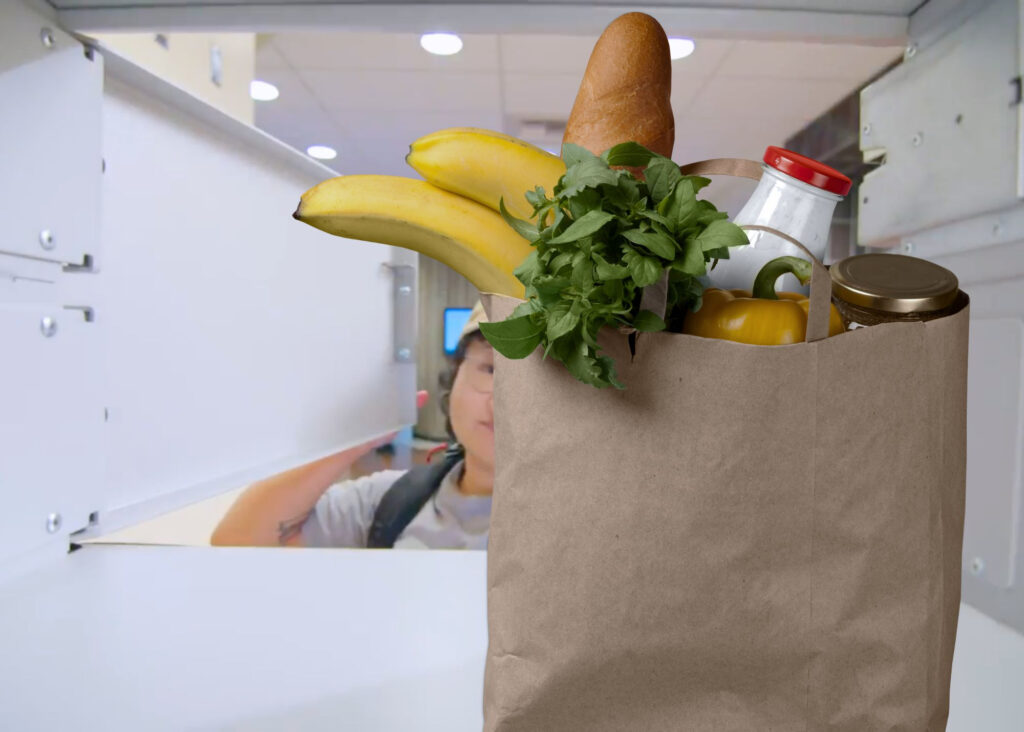
Customer picking up grocery order from smart lockers

The Driver Experience Matters More Than You Think

Third party delivery drivers are under constant pressure to complete more deliveries in less time. When pickup experiences are slow or inconsistent, drivers may deprioritize certain locations or experience higher error rates.

By standardizing pickup through lockers, businesses create a consistent, driver-friendly experience. Drivers know exactly where to go, what to do, and how long pickup will take. Over time, this predictability supports better delivery performance and fewer fulfillment issues downstream.

Looking Ahead: Smart Lockers as a Fulfillment Standard

As outlined in this retail industry trends for 2026, successful operations are moving toward automation that reduces dependency on manual processes. Smart lockers align perfectly with this shift.

They are not just a convenience feature. They are an operational tool that scales with delivery volume, supports multiple fulfillment models, and adapts as customer and driver expectations continue to evolve.

For retailers and restaurants balancing in-store traffic, BOPIS, and third party delivery, lockers offer a future-proof way to keep fulfillment efficient without sacrificing experience.

Why More Operations Leaders Are Paying Attention

When third party delivery drivers use smart lockers, the benefits extend well beyond faster pickups. Teams experience fewer interruptions, customers see more consistent service, and fulfillment workflows become easier to manage at scale.

As delivery continues to grow alongside pickup, smart lockers are becoming a quiet but powerful piece of modern retail and QSR infrastructure.

​​Ready to see how smart lockers can support delivery driver pickups at your locations?

Contact us to learn how a locker-based BOPIS strategy can streamline operations and scale with demand.

  • Christina Draper

    Christina Draper, Marketing Content Manager at Luxer One, creates storytelling-driven content that connects with property management professionals and highlights innovations in multifamily package management. With a marketing background from UNC Charlotte, she develops cross-channel campaigns that showcase how Luxer One is redefining the resident experience.

    See Posts

RECENT POSTS

The State of the Multifamily Market: Stability Is Returning, but Discipline Still Matters

The State of the Multifamily Market: Stability Is Returning, but Discipline Still Matters

After several years of volatility, the state of the multifamily market entering 2026 feels more predictable than it has since the early post-pandemic period. Rent growth has normalized, supply pressures are beginning to ease in many metros, and demand fundamentals are slowly strengthening. However, this is not a return to the high-growth environment operators experienced earlier in the decade.
Instead, the Q1 2026 outlook reflects a market where stability is returning, but performance depends heavily on operational discipline, cost control, and resident experience. Properties that adapt to this reality are finding steadier footing. Those that rely on outdated assumptions or inefficient systems may struggle to keep pace.
This Q1 2026 multifamily market report breakdown explores what the latest data is telling operators and what it means for day-to-day decision-making.

Read More »
Smart Lockers for Asset Exchange and Package Management in the Modern Workplace

Smart Lockers for Asset Exchange and Package Management in the Modern Workplace

Workplace operations have changed dramatically in recent years. Hybrid schedules, distributed teams, and higher expectations for speed and accountability have reshaped how offices manage equipment, documents, and deliveries. As a result, many organizations are rethinking how assets move through the workplace.
That shift is driving increased demand for smart lockers for asset exchange and package management, a secure and automated solution designed to reduce loss, streamline workflows, and scale with enterprise operations. For workplace managers and operations directors, smart lockers are no longer a convenience. They are becoming a core infrastructure tool for the modern workplace.

Read More »
How to Save Time and Money with Package Management at Apartments

How to Save Time and Money with Package Management at Apartments

Smart lockers and package rooms have become essential infrastructure for modern apartment communities. They create secure, self-service delivery workflows, reduce front office congestion, and give residents flexibility to pick up packages on their own schedule.
For many communities, these systems already do most of the heavy lifting. But at larger properties or across growing portfolios, even the best package management technology benefits from consistent human support.
That is where onsite package management staff come in. When paired with smart lockers and package rooms, they help communities save time and money with package management by ensuring systems are used properly, residents are supported, and onsite teams stay focused on higher-value work.

Read More »
Unlocking Revenue with Smart Lockers: A Strategic Response to Online Cart Abandonment

Unlocking Revenue with Smart Lockers: A Strategic Response to Online Cart Abandonment

Online cart abandonment is not a new problem, but it is becoming a more expensive one.
As ecommerce has matured, shopper expectations have risen just as fast. Convenience, flexibility, and control now play as large a role in conversion as price or product availability. When those expectations are not met, shoppers hesitate, leave, and often do not return.
For retail operations leaders, cart abandonment should no longer be viewed as just a marketing or UX issue alone. It’s also a fulfillment and operational challenge, and one that demands a more strategic response.

Read More »

TOPICS

Share: