

LUXER ONE BLOG

How To Write A Proposal To Get Smart Lockers Approved For Your Community

How To Write A Proposal To Get Smart Lockers Approved For Your Community

Getting smart lockers approved often has less to do with the technology itself and more to do with how the proposal is framed. Ownership groups, asset managers, and regional leaders are not looking for another amenity request. They are evaluating investments based on operational impact, cost control, and long-term value.

This guide walks through exactly how to write a proposal that speaks their language and positions smart lockers as a strategic improvement, not a nice-to-have.

What Is the Goal of a Smart Locker Proposal?

The goal is not to explain how smart lockers work. Most decision makers already understand the concept at a high level.

The goal is to clearly show how smart lockers:

  • Reduce operating costs

  • Protect NOI

  • Improve operational consistency across portfolios

  • Support resident satisfaction and retention

  • Create optional revenue opportunities

Your proposal should read less like an amenity pitch and more like a business case.

What Should Be Included in a Smart Locker Proposal?

A strong proposal typically includes five core sections:

  1. The operational problem

  2. The financial opportunity

  3. The resident and market impact

  4. Risk reduction and reliability

  5. Why now

Each section should tie back to outcomes leadership cares about.

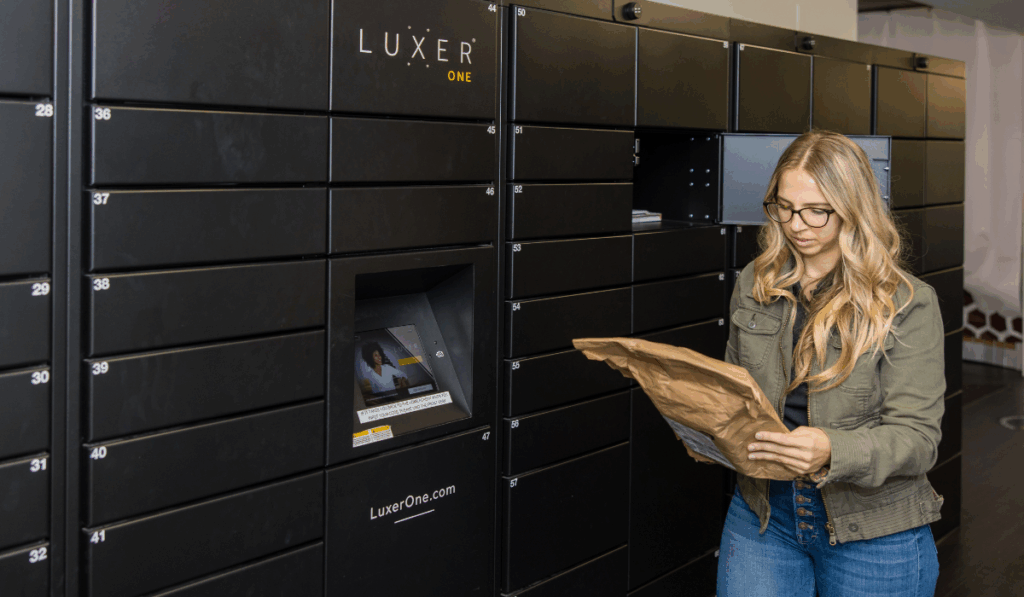
Black smart locker system from Luxer One in apartment setting

How Do You Frame the Operational Problem Without Sounding Negative?

Start with scale and consistency, not complaints. Instead of focusing on day-to-day frustrations, frame the issue as a system that no longer scales with package volume or staffing realities.

Key points to include:

  • Package volume continues to rise year over year across multifamily

  • Manual package handling creates inconsistent processes across teams and properties

  • Staff time spent managing packages pulls attention away from leasing, retention, and service

  • Package rooms without automation still require labor and oversight

This positions smart lockers as a solution to an operational mismatch rather than a reaction to inconvenience.

If helpful, reference broader industry context using a resource like a guide to multifamily package management to reinforce that this is a systemic challenge, not a property-specific failure.

Multiple packages in an oversized Luxer One package locker

How Should You Talk About Cost and ROI at a High Level?

Decision makers want financial framing, not line-item math. You’ll want to focus on labor efficiency, time reallocation, and avoiding future costs.

Examples of high-level framing:

  • Reducing staff time spent on package intake and retrieval

  • Minimizing overtime or coverage gaps tied to package delivery peaks

  • Avoiding future retrofits or staffing increases as volume grows

  • Standardizing package operations across properties

You can reinforce this section by linking to a more detailed discussion on the ROI on smart lockers for apartments, without recreating the math inside the proposal itself.

The goal is to show financial logic, not run a spreadsheet.

How Do You Position Smart Lockers as a Revenue Opportunity?

This is often overlooked and can be a differentiator in approval conversations.

Smart lockers can support revenue or value creation through:

  • Optional amenity or convenience fees

  • Premium package access for residents

  • Reduced resident churn tied to delivery frustration

  • Stronger amenity positioning during lease-up or renewals

Even if a community does not plan to charge fees immediately, framing lockers as a flexible platform with future revenue potential helps leadership view the investment as adaptable rather than fixed.

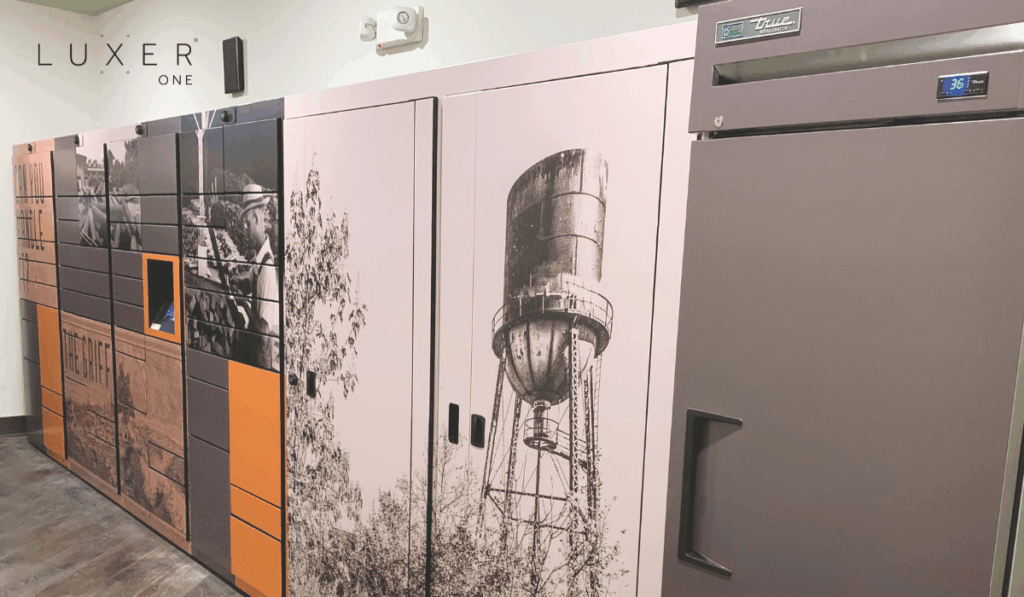
Smart lockers with colorful, branded wrap from Luxer One

Should Risk and Liability Be Addressed?

Yes, but briefly and strategically. Rather than leading with theft or complaints, position risk reduction as part of operational resilience.

Examples include:

  • Clear package accountability and audit trails

  • Reduced disputes between residents and onsite teams

  • Fewer unsecured packages in common areas

  • More predictable processes regardless of staffing changes

This supports confidence in long-term reliability without leaning too heavily on fear-based messaging.

How Do You Address Vendor Reliability Without Naming Brands?

Focus on principles, not logos. Leadership teams care about:

  • Proven reliability over time
     
  • U.S.-based manufacturing and supply chain stability 

  • Scalable service and support models 

  • Technology that integrates cleanly into operations 

You can frame this as a requirement section in the proposal, outlining what the ownership group should expect from any smart locker provider. This subtly aligns with stronger vendors without appearing biased.

Why Is Timing Important in a Smart Locker Proposal?

End the proposal by explaining why this decision makes sense now.

Common timing drivers include:

  • Growing package volume without corresponding staffing increases

  • Renovations or capital planning cycles


  • Portfolio standardization initiatives


  • Competitive pressure from nearby communities offering better package experiences


This reinforces urgency while staying grounded in operational logic.

Happy resident removing Amazon package from black Luxer One smart lockers

What Is the Best Way to Close the Proposal?

Summarize the business case in one paragraph:

  • Smart lockers improve efficiency

  • They support resident satisfaction

  • They protect operational margins

  • They scale with future demand

Then outline next steps such as evaluating capacity needs, understanding space requirements, and reviewing implementation timelines.

Final Tip: You Do Not Have to Write This Alone

A strong smart locker proposal balances operations, finance, and resident experience. Getting that balance right can significantly improve approval odds.

If you want help drafting or validating a proposal, or pressure-testing your messaging before it goes to ownership or asset management, contact Luxer One. Our team works with multifamily leaders every day to build proposals that get approved and perform long-term.

  • Christina Draper

    Christina Draper, Marketing Content Manager at Luxer One, creates storytelling-driven content that connects with property management professionals and highlights innovations in multifamily package management. With a marketing background from UNC Charlotte, she develops cross-channel campaigns that showcase how Luxer One is redefining the resident experience.

    See Posts

RECENT POSTS

The State of the Multifamily Market: Stability Is Returning, but Discipline Still Matters

The State of the Multifamily Market: Stability Is Returning, but Discipline Still Matters

After several years of volatility, the state of the multifamily market entering 2026 feels more predictable than it has since the early post-pandemic period. Rent growth has normalized, supply pressures are beginning to ease in many metros, and demand fundamentals are slowly strengthening. However, this is not a return to the high-growth environment operators experienced earlier in the decade.
Instead, the Q1 2026 outlook reflects a market where stability is returning, but performance depends heavily on operational discipline, cost control, and resident experience. Properties that adapt to this reality are finding steadier footing. Those that rely on outdated assumptions or inefficient systems may struggle to keep pace.
This Q1 2026 multifamily market report breakdown explores what the latest data is telling operators and what it means for day-to-day decision-making.

Read More »
Smart Lockers for Asset Exchange and Package Management in the Modern Workplace

Smart Lockers for Asset Exchange and Package Management in the Modern Workplace

Workplace operations have changed dramatically in recent years. Hybrid schedules, distributed teams, and higher expectations for speed and accountability have reshaped how offices manage equipment, documents, and deliveries. As a result, many organizations are rethinking how assets move through the workplace.
That shift is driving increased demand for smart lockers for asset exchange and package management, a secure and automated solution designed to reduce loss, streamline workflows, and scale with enterprise operations. For workplace managers and operations directors, smart lockers are no longer a convenience. They are becoming a core infrastructure tool for the modern workplace.

Read More »
How to Save Time and Money with Package Management at Apartments

How to Save Time and Money with Package Management at Apartments

Smart lockers and package rooms have become essential infrastructure for modern apartment communities. They create secure, self-service delivery workflows, reduce front office congestion, and give residents flexibility to pick up packages on their own schedule.
For many communities, these systems already do most of the heavy lifting. But at larger properties or across growing portfolios, even the best package management technology benefits from consistent human support.
That is where onsite package management staff come in. When paired with smart lockers and package rooms, they help communities save time and money with package management by ensuring systems are used properly, residents are supported, and onsite teams stay focused on higher-value work.

Read More »
Unlocking Revenue with Smart Lockers: A Strategic Response to Online Cart Abandonment

Unlocking Revenue with Smart Lockers: A Strategic Response to Online Cart Abandonment

Online cart abandonment is not a new problem, but it is becoming a more expensive one.
As ecommerce has matured, shopper expectations have risen just as fast. Convenience, flexibility, and control now play as large a role in conversion as price or product availability. When those expectations are not met, shoppers hesitate, leave, and often do not return.
For retail operations leaders, cart abandonment should no longer be viewed as just a marketing or UX issue alone. It’s also a fulfillment and operational challenge, and one that demands a more strategic response.

Read More »

TOPICS

Share: