


LUXER ONE BLOG

The ROI of Order Pickup Smart Lockers: How Retailers Turn BOPIS Efficiency Into Revenue

The ROI of Order Pickup Smart Lockers: How Retailers Turn BOPIS Efficiency Into Revenue

Buy Online, Pick Up In Store (BOPIS) has become a core revenue driver for big-box retailers, but it has also introduced new operational pressure. As pickup volumes rise, retailers are navigating tighter labor availability, crowded service desks, and rising customer expectations for speed and convenience. In that environment, understanding the ROI of order pickup smart lockers is no longer a theoretical exercise. It is a practical question tied directly to revenue performance, cost control, and customer satisfaction.

Smart lockers are emerging as one of the most effective ways retailers are improving BOPIS economics at scale. When deployed strategically, they do not just save time. They unlock measurable revenue from smart lockers for retail by improving order completion, throughput, and customer experience.

Why BOPIS ROI Is Under Pressure

BOPIS success depends on two variables working together: operational efficiency and customer follow-through. When either breaks down, ROI suffers.

Retailers frequently see challenges such as:

  • Staff congestion during peak pickup windows 
  • Long wait times that frustrate customers and drivers 
  • Higher rates of abandoned or delayed pickups 
  • Labor hours pulled away from higher-value in-store tasks 


These challenges directly impact revenue. Industry research consistently shows that friction in the pickup experience increases the likelihood of lost or abandoned orders, especially when customers are balancing speed against convenience. As explored in Luxer One’s breakdown of a strategic response to online cart abandonment, fulfillment friction can undo even the strongest digital conversion strategies.

This is where smart lockers fundamentally change the equation.

woman online shopping with credit card

How Smart Lockers Improve the Economics of BOPIS

Order pickup smart lockers streamline the final handoff, which is the most labor-intensive and time-sensitive part of the BOPIS journey. Instead of relying on staffed counters or backroom handoffs, lockers create a secure, self-service pickup flow that works for customers, associates, and third-party drivers alike.

From an ROI perspective, the impact shows up in several ways:

  • Staff time savings during peak hours
    Associates spend less time locating orders, coordinating handoffs, and managing lines, especially during evenings, weekends, and seasonal surges.

  • Higher pickup throughput
    Multiple customers can retrieve orders simultaneously, increasing the number of orders completed per hour.

  • Improved order completion rates
    Faster, more predictable pickups reduce the friction that often leads customers to delay or abandon orders altogether.

  • Better third-party delivery coordination
    Smart lockers simplify handoff for gig drivers and courier services, as detailed in how third-party delivery drivers use smart lockers, reducing missed pickups and store-level bottlenecks.

Individually, these improvements may seem operational. Collectively, they drive measurable financial outcomes.

Proof in Practice: Big-Box Retailer ROI With Smart Lockers

The strongest case for the ROI of order pickup smart lockers comes from real-world deployment. A national big-box retailer partnered with Luxer One to modernize its BOPIS operations using smart lockers, and the results were tangible.

As outlined in this customer story, the retailer saw:

  • Meaningful reductions in average pickup time per order

  • Fewer staff touchpoints required to complete each pickup

  • Increased pickup capacity during high-volume periods

  • More consistent order flow throughout the day

Rather than tying up associates at service desks, the retailer was able to redirect staff time to in-store customer support and fulfillment tasks that directly support sales. The result was not just cost containment, but improved order velocity, which is an essential driver of BOPIS revenue.

Importantly, these gains were most pronounced during peak seasons, when traditional pickup models struggle to scale efficiently.

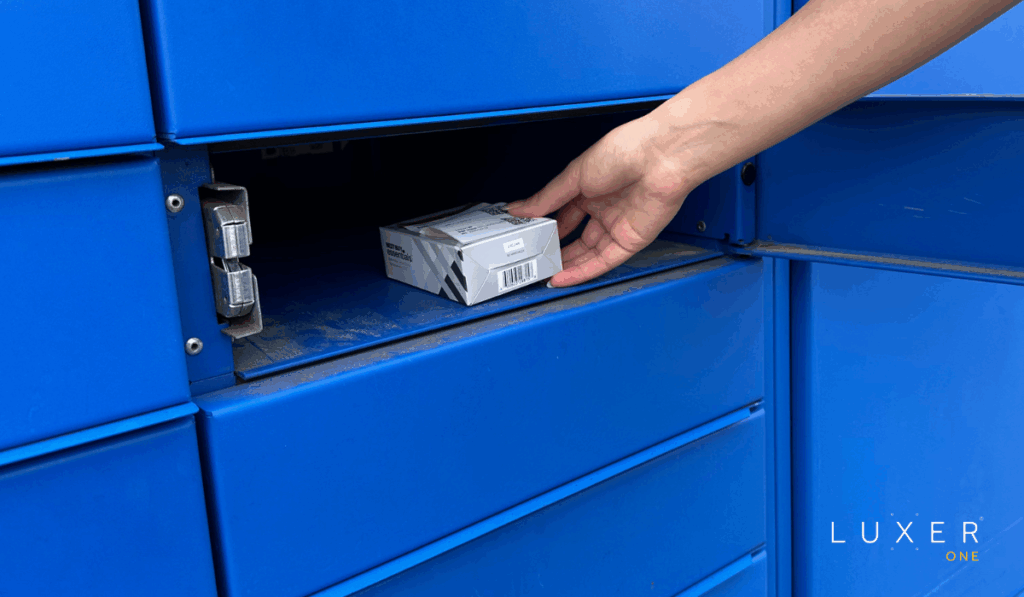
Customer picking up online retail purchase from Luxer One BOPIS smart lockers

Revenue Impact Goes Beyond Labor Savings

While labor efficiency is a critical component of ROI, it is only part of the picture. Smart lockers also influence revenue through customer behavior.

A faster, more predictable pickup experience increases the likelihood that customers actually complete their orders. When pickup is easy and flexible, customers are more willing to choose BOPIS over shipping and more likely to repeat the behavior.

This matters even more for younger shoppers, who increasingly expect self-service and mobile-first retail experiences. Convenience and autonomy play a major role in brand loyalty and channel preference among younger generations.

In that context, smart lockers act as both an operational tool and a revenue enabler, supporting repeat purchases, higher order confidence, and stronger omnichannel engagement.

Locker Design Plays a Direct Role in ROI

Not all locker deployments deliver the same results. Layout and configuration matter, especially at scale.

Many big-box retailers are turning to rear-loading locker designs to further improve efficiency. Rear-loading systems allow associates to load orders from the back of the locker bank while customers retrieve items from the front, reducing congestion and speeding up fulfillment. As detailed in how rear-loading lockers are revolutionizing BOPIS, this design can significantly increase daily pickup capacity without expanding store footprints or staffing levels.

When retailers evaluate ROI, these design considerations often make the difference between incremental improvement and transformational impact.

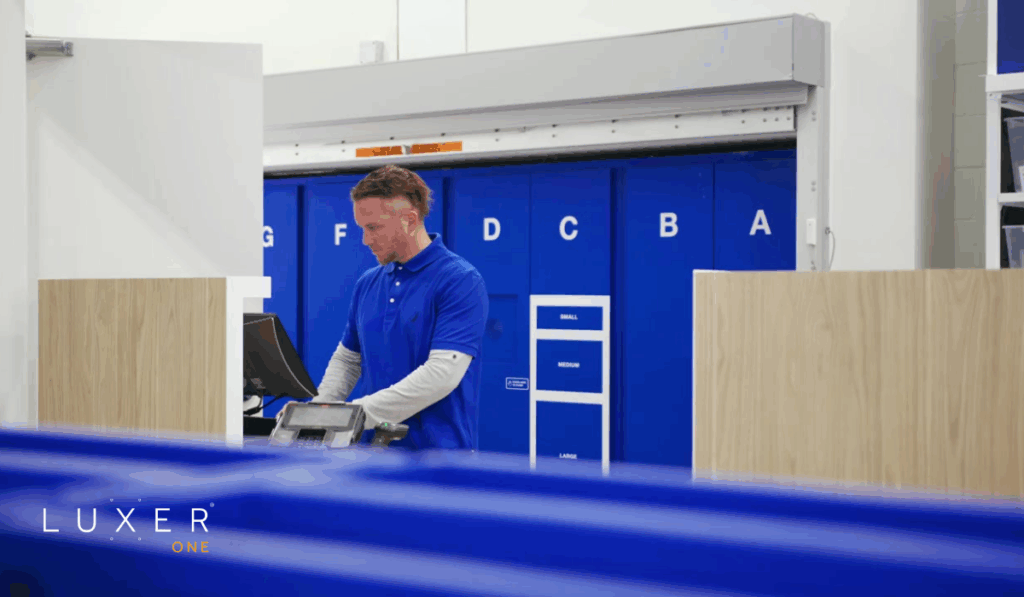
Fulfillment staff at retail store working on computer with rear loading BOPIS lockers in the background

Third-Party Validation Strengthens the Business Case

For retailers building an internal investment case, third-party research can be just as important as internal metrics. Independent analysis reinforces what many operators are already seeing in practice: smart lockers deliver measurable returns when applied to BOPIS workflows.

Luxer One’s Guide to Retail BOPIS Lockers, based on Forrester research, provides additional insight into how retailers quantify ROI, assess labor impact, and evaluate long-term performance. For leadership teams weighing capital investment decisions, this kind of validation helps bridge the gap between operational wins and financial confidence.

Turning BOPIS Into a Revenue Advantage

The ROI of order pickup smart lockers is not theoretical, and it is not limited to cost savings. When implemented strategically, lockers improve fulfillment speed, reduce friction, and support higher order completion rates, all of which contribute to sustainable revenue from smart lockers for retail.

Talk to our team about revenue from smart lockers and explore how Luxer One can help you unlock measurable ROI from your BOPIS strategy.

  • Christina Draper

    Christina Draper, Marketing Content Manager at Luxer One, creates storytelling-driven content that connects with property management professionals and highlights innovations in multifamily package management. With a marketing background from UNC Charlotte, she develops cross-channel campaigns that showcase how Luxer One is redefining the resident experience.

    See Posts

RECENT POSTS

How to Prepare Your Community for Incoming Holiday Package Piles

How to Prepare Your Community for Incoming Holiday Package Piles

Holiday cheer is coming, but so are the holiday package piles. Every year, November and December bring a spike in online shopping that puts pressure on even the most organized communities.
Without the right systems in place, this seasonal surge can lead to overwhelmed package rooms, rising operational costs, and frustrated residents. If you’re not planning ahead now, the holidays will plan themselves right into your budget and staff bandwidth.

Read More »
What Your Mid-Year Multifamily Market Report Reveals About 2026 Multifamily Market Trends

What Your Mid-Year Multifamily Market Report Reveals About 2026 Multifamily Market Trends

Budget season is here, and with it comes the same question every property manager, owner, and developer is asking: what does the rest of 2026 actually look like, and what should that mean for 2027?
That’s why we built the Mid-Year Multifamily Market Report: a data-backed snapshot of the multifamily market trends shaping occupancy, pricing, supply, and operations right now, with a clear “what it means” takeaway for every finding.

Read More »
Budget Season Is Here. What the Market Is Actually Telling You.

Budget Season Is Here. What the Market Is Actually Telling You.

August marks the start of budget season for most of the multifamily industry. Over the next 60 to 90 days, property managers are reviewing vendor contracts, owners are stress-testing their 2027 revenue assumptions, and developers are making go or no-go decisions on projects they have been holding.

Everyone is asking the same question: what kind of market are we actually planning into?

Read More »
luxens on the rise employee highlight

Luxens on the Rise: Employee Highlight | Ryan Hellwig

At Luxer One, growth is part of the job. We prioritize promoting from within, provide clear paths for advancement, and encourage every team member to explore new opportunities! Our Luxens on the Rise series highlights team members who have carved their own paths within the company, taking on new challenges and evolving their careers along the way.

Read More »

TOPICS

Share: