

LUXER ONE BLOG

Modernizing Food Pantries: How Smart Lockers Are Feeding Communities

food lockers

Food insecurity is a persistent and growing challenge across the United States. In 2023 alone, more than 50 million Americans depended on food pantries and meal programs. The need for reliable and flexible distribution methods has never been greater. Traditional pantries are essential, but they can be constrained by limited hours, staffing shortages, and logistical inefficiencies that can create barriers for the people who need help the most. Luxer One’s food distribution lockers offer a breakthrough solution that works with food banks, stores, and restaurants to provide nourishment for their communities.

food pantry

Meeting People Where They Are, When They Need It

Whether it’s a college student juggling night classes, or a parent working multiple jobs, it can be challenging for some people to make it to traditional pantries during their hours. One of the greatest advantages of smart food lockers is their ability to serve people on their own terms. Luxer One’s 24/7 access eliminates the stress of scheduling conflicts and offers a dignified experience by allowing individuals to collect food when it works for them, and out of the public line of sight. In some cases, providing this kind of flexibility can be the difference between someone receiving the support they need or going without.

For organizations managing food distribution, smart lockers are a game changer behind the scenes. Instead of staffing volunteers to hand out groceries or manage lines, teams can preload lockers with assigned packages. Once filled, the system handles everything else, from notifying recipients to tracking pickup and maintaining records. The entire process becomes more efficient, freeing up time and energy to focus on broader goals like outreach and donor engagement. Additionally, the built-in reporting and security features boost confidence among funders and sponsors, demonstrating transparency and accountability at every step.

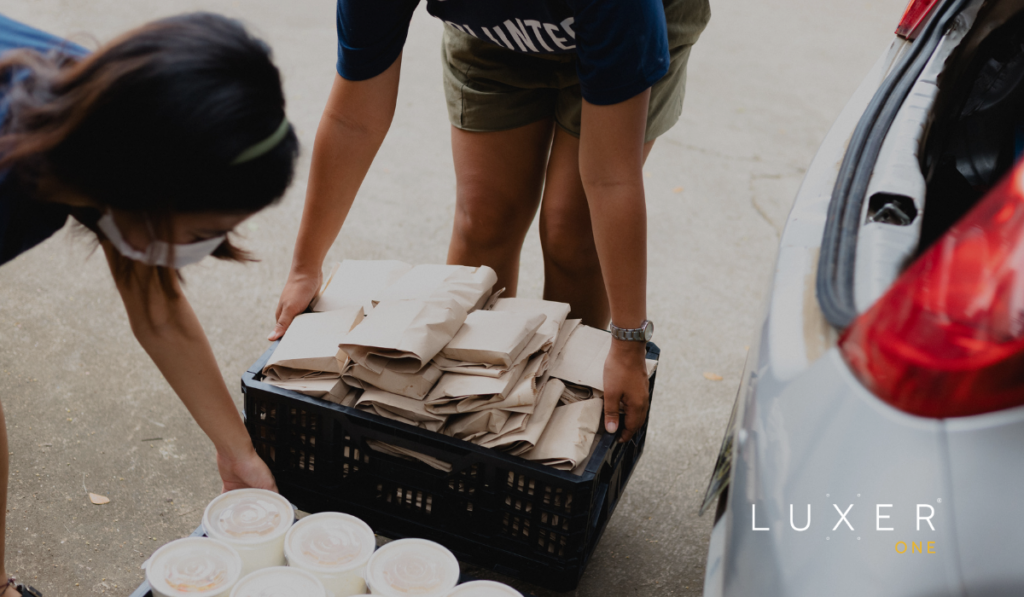
Staffer loading food pantry locker with grocery items for distribution

Sustainability and reducing food waste

About 30 percent of food in American grocery stores is thrown away. In that includes food that is perfectly fine to eat, but won’t sell. And food waste doesn’t stop there. Millions of pounds of edible food are discarded each year by restaurants and food service providers as well. Instead of throwing out unsold meals, close to expired items, or excess inventory, businesses can partner with local food banks or nonprofits to stock lockers with fresh items for community pickup. This not only reduces landfill waste, but ensures that perfectly good food reaches individuals and families who need it most.

food lockers

Designed for Real Impact

Luxer One lockers are engineered with durability, reliability, and flexibility in mind. Constructed from 12-gauge American-made steel, they’re built to last in both indoor and outdoor environments. Our lockers can include refrigerated compartments, ensuring that perishable goods remain fresh and safe until collected. And because every community has different needs, lockers can be customized in size, color, and configuration to align with the local environment and user base. Whether you’re outfitting a university pantry or launching a citywide food access initiative, these systems are adaptable and scalable.

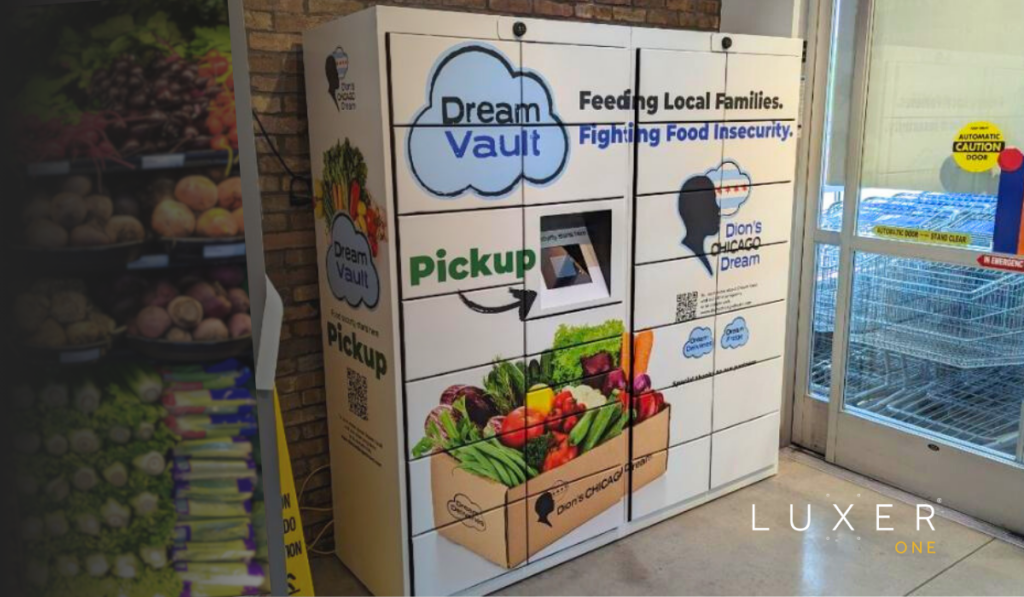
Deon's Dream Food Pantry Lockers in Chicago

funding opportunities

To support the installation of food distribution lockers, many organizations are turning to public and private funding sources aimed at reducing food insecurity. Federal programs like the Community Development Block Grant (CDBG) and USDA’s TEFAP offer funding for infrastructure that improves food access. Additionally, nonprofits and universities often find support through private foundations, including Feeding America and campus wellness grants. These funding opportunities make it easier for organizations to adopt technology that delivers food efficiently and equitably.

A New Standard for Food Access

The future of food assistance lies in meeting people where they are, respecting their time, and offering support in a way that is sustainable, inclusive, and secure. Luxer One’s food distribution lockers are helping cities, schools, and nonprofits build stronger food access programs that reflect the realities of modern life. They are more than a convenience, they are a transformative tool for equity and dignity.

If you’re part of an organization looking to make a bigger impact in your community, now is the time to consider how smart lockers can elevate your food access strategy. From reducing barriers to increasing efficiency, Luxer One is ready to help you deliver meaningful, measurable change.

Connect with our team and explore how food lockers can serve your community.

  • Lauren Buote

    Lauren Buote is a Marketing Coordinator at Luxer One who blends her fine arts background from North Carolina State University, with marketing experience in small businesses and museums. She specializes in content and design that support Luxer One’s storytelling and brand growth in the Commercial sector.

    See Posts

RECENT POSTS

The Middleman Problem: Why More Delivery Logistics Creates More Problems

The Middleman Problem: Why More Delivery Logistics Creates More Problems

On paper, adding more steps to a delivery process can sound like progress. More coordination, more handling, and more structure.
But in reality, more logistics often leads to more problems.
This is the core issue facing today’s multifamily delivery logistics strategies. In an effort to manage growing package volume, many systems have introduced additional layers between the carrier and the resident.
And while those layers are meant to help, they often create the opposite effect.
Because every extra step is another opportunity for something to go off track.

Read More »
food pantry access

From Food Banks to Food Access Networks: How Distribution Is Evolving

Modern food pantries are being asked to do more with less. They need to serve more people, offer greater flexibility, and operate with fewer staff and volunteers. As organizations look for ways to expand access without increasing overhead, many are wondering: Is there a better way to distribute food?
This Q&A explores the kinds of questions partners are already asking, and how smart locker solutions are helping provide answers.

Read More »
Scalable Package Management Solutions that Work for Every Community

Luxer Liaison: Scalable Package Management Solutions That Work for Every Community

From boutique properties to high rise luxury buildings, every community faces a different mix of challenges. Limited space, growing delivery volume, resident expectations, and staffing constraints all play a role. The common thread is the need for scalable package management solutions that adapt instead of overwhelm.
That’s where the Luxer Liaison package service stands out. By combining on site expertise with flexible service models, Liaison supports communities of all sizes without forcing them into rigid systems or delayed delivery models.

Read More »
Delivered Should Mean Delivered: The Problem with Delayed Package Models

Delivered Should Mean Delivered: The Problem with Delayed Package Models

There was a time when “delivered” meant something simple. A package arrived and a resident picked it up, end of story. Today, that definition is not so clear.
In some communities, “delivered” no longer means a package is in a resident’s hands. It means it is somewhere in the process. Waiting. Moving. Delayed. And that shift is exactly where frustration begins.

Read More »
What to Look for in a Package Management Solution for Multifamily Communities

Package Management Solution Tips: What Multifamily Communities Should Look for Today

Package management is no longer a behind-the-scenes operation. For multifamily communities, it has become a defining part of the resident experience.
Properties are facing a surge in deliveries, increasing pressure on staff, and rising expectations from residents who want fast, secure, and convenient package access. What used to be a minor operational task is now a major decision point for property performance.
That’s why having the right strategy matters. This guide to package management will walk through the most important factors to consider so your property can stay efficient, competitive, and resident-focused.

Read More »

TOPICS

Share: