LUXER ONE BLOG

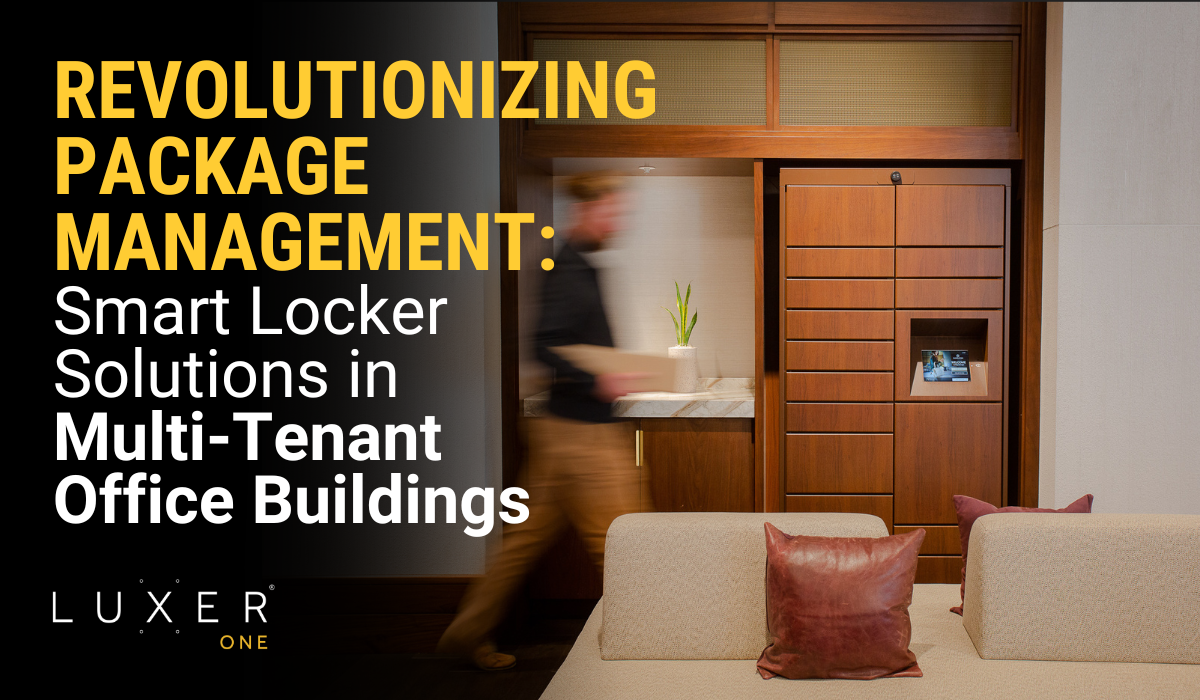
Revolutionizing Package Management: Smart Locker Solutions in Multi-Tenant Office Buildings

Revolutionizing Package Management: Smart Locker Solutions in Multi-Tenant Office Buildings

In today’s fast-paced world, efficient package management is essential for multi-tenant office buildings. With the rise of e-commerce and remote work, the volume of inbound and outbound packages has increased significantly.

Traditional mailrooms are no longer sufficient to handle this surge. Enter smart locker solutions – a modern, tech-driven approach to streamline package management for both employees and outbound shipping. 

The Growing Challenge of Package Management

Multi-tenant office buildings are bustling hubs of activity, with numerous employees and businesses operating under one roof. Managing incoming and outgoing packages can be a logistical nightmare. Traditional methods, such as centralized mailrooms or front desk reception, are often overwhelmed, leading to delays, lost packages, and frustrated occupants.

Employees who are expecting personal deliveries also face inconvenience. They must time their breaks or lunch hours to coincide with package deliveries, causing disruptions to their workday. Furthermore, businesses often need to ship items via various carriers, necessitating multiple drop-off points, which can be chaotic and inefficient.

Smart Locker Solutions: A Game-Changer

Smart locker solutions provide an elegant answer to these challenges. These systems leverage technology, automation, and secure compartments to optimize the package management process. Here’s how they work and the benefits they bring:

  1. Centralized Package Pickup: Smart lockers provide a centralized location for both incoming and outgoing packages. Carriers have access to a single drop-off and pickup point, simplifying their operations. This central hub is accessible 24/7, ensuring packages are always secure and accessible.
  2. Employee Convenience: For employees, smart lockers offer unparalleled convenience. When a package arrives, they receive a notification via email or a smartphone app. They can then visit the locker system at their convenience to retrieve their package, eliminating the need to time breaks around deliveries.
  3. Enhanced Security: Smart lockers are equipped with robust security features. Each locker is electronically locked and can only be accessed using a unique PIN code or QR code, ensuring the safety of packages. Moreover, there are surveillance cameras in place to monitor activity.
  4. Efficient Space Utilization: Traditional mailrooms can consume a considerable amount of space. Smart locker systems are compact and efficiently designed, maximizing available real estate.
  5. Reduced Labor Costs: Automation reduces the need for manual sorting and distribution, saving businesses money on labor costs associated with package management.
  6. Data Analytics: Many smart locker systems provide analytics on package flow, which can be invaluable for optimizing operations, predicting peak delivery times, and improving tenant satisfaction.

Adoption of Carriers and the Power of Integration

One of the key advantages of smart locker solutions is their adaptability and integration capabilities. Building managers can choose to collaborate with a variety of carriers, including major shipping companies like FedEx, UPS, Amazon, and local courier services.

By integrating with these carriers, packages can be delivered directly to the smart locker system, reducing the burden on mailrooms and front desk staff. These systems can be connected to building access control systems, making it easier to manage and monitor who has access to the lockers. This level of control enhances security and ensures that only authorized personnel can access the lockers.

Smart locker solutions are revolutionizing package management in multi-tenant office locations. They offer convenience, security, and efficiency for both employees and building managers. By providing a centralized hub for all inbound and outbound packages and integrating with various carriers, these systems are transforming the way we handle packages in the modern workplace.

As the demand for efficient package management continues to grow, smart lockers are likely to become an essential feature of multi-tenant office buildings, ensuring a smooth and hassle-free experience for all occupants.

Connect with us to learn more!

  • Christina Draper

    Christina Draper, Marketing Content Manager at Luxer One, creates storytelling-driven content that connects with property management professionals and highlights innovations in multifamily package management. With a marketing background from UNC Charlotte, she develops cross-channel campaigns that showcase how Luxer One is redefining the resident experience.

    See Posts

RECENT POSTS

Best Practices For Package Locker Setup In Apartments

Best Practices For Package Locker Setup In Apartments

Package lockers have become an essential amenity in modern apartment communities. With daily delivery volumes rising and residents expecting secure self-service pickup, a well planned locker setup can make a major difference in resident satisfaction and staff efficiency. Below are the top questions property managers ask when planning a successful package locker deployment, along with practical best practices.

Read More »
The Future of Real Estate Technology: What Multifamily Leaders Should Prepare For Now

The Future of Real Estate Technology: What Multifamily Leaders Should Prepare For Now

Real estate tech is advancing faster than ever, and multifamily operators are feeling the shift across every corner of their portfolios. AI adoption is accelerating, centralized operations are becoming the standard, and residents expect more connected, digital-first experiences in their homes. Following recent industry conversations, including trends highlighted at OPTECH 2025, the future of real estate technology is taking shape around efficiency, data intelligence, automation, and resident expectations.
For multifamily leadership teams, understanding where the industry is heading is only half the challenge. The real task is identifying the practical steps to stay competitive today while preparing for what is next.
Below is a look at what is driving the future of real estate technology, supported by the latest industry data, along with actionable insights you can use to future-ready your operations.

Read More »
The Impact of Online Shopping on Multifamily and Why Package Management Matters More Than Ever

The Impact of Online Shopping on Multifamily and Why Package Management Matters More Than Ever

Online shopping continues to grow at a rapid pace, and multifamily communities are feeling the effects more than almost any other sector. In early 2025, U.S. e-commerce sales were up 5.3% year-over-year, reaching 15.5% of all retail spending, according to the U.S. Census Bureau. At the same time, global online shopping participation surpassed 2.7 billion digital buyers, reflecting a long-term shift toward online purchasing.
For multifamily operators, regional managers, and asset managers, this trend creates a daily operational reality: higher-than-ever delivery volume, greater pressure on staff, and the constant challenge of managing package piles at apartments. This blog breaks down how the surge in online shopping is reshaping multifamily communities and what forward-thinking properties are doing to keep up.

Read More »
How To Cut the Carbon Footprint From Package Deliveries in Your Community

How To Cut the Carbon Footprint From Package Deliveries in Your Community

As resident expectations rise and delivery volumes continue to grow, multifamily communities are looking for practical ways to cut the carbon footprint tied to daily package traffic. While sustainability efforts often focus on building operations or energy upgrades, last-mile delivery is an overlooked area where properties can make meaningful impact.
This guide answers common questions about where emissions come from, how operations contribute, and how modern tools including the sustainability of smart lockers can help communities reduce waste, streamline processes, and support broader ESG goals.

Read More »
From Digital to Physical: The State of the Modern Workplace

From Digital to Physical: The State of the Modern Workplace

The modern workplace has entered a new era of complexity. Hybrid schedules have reshaped how teams use office space. Digital employee experience has become just as important as physical comfort. Asset visibility is now a daily operational challenge. Workplace leaders are being asked to deliver environments that are productive, flexible, and secure. Not to mention they often have fewer resources than before.
This report explores the most significant trends defining today’s office environment, backed by industry research from the past year. For office managers, facilities teams, and operations directors, understanding these shifts is essential to staying ahead. Below, we break down the most common questions workplace managers ask about improving asset management in the workplace and how smart locker systems can help.

Read More »

TOPICS

Share: