

LUXER ONE BLOG

Rising Rents, Turnover, and Vacancy Rates: Navigating Multifamily Challenges in 2025

Rising Rents, Turnover, and Vacancy Rates: Navigating Multifamily Challenges in 2025

The economic pressures that dominated the multifamily housing landscape in 2024 are extending into 2025. Although rent growth has slowed in many areas, property managers are still grappling with high vacancy rates in certain markets, driven by oversupply and shifting demand. Meanwhile, resident turnover remains a persistent issue as renters continue to seek more affordable housing options amidst rising costs.

Recent reports reveal that nearly 51% of the top 100 metro areas saw rent declines in 2024. This trend has forced property managers to adopt more creative strategies to retain residents, such as offering attractive renewal incentives and prioritizing fee transparency. These efforts are critical to maintaining occupancy rates in a competitive and cost-sensitive market.

Boosting Resident Retention

Increasing Resident Retention: A Top Priority

At the forefront of these efforts is the growing emphasis on resident retention. This was a central theme at Apartmentalize, the multifamily industry’s premier event, where experts and thought leaders highlighted the importance of bringing value to residents while adhering to tight budgets. In this environment, delivering meaningful benefits and cost-effective amenities has become essential to keeping residents satisfied and renewing their leases.

Budget-Friendly Solutions with Big Impact

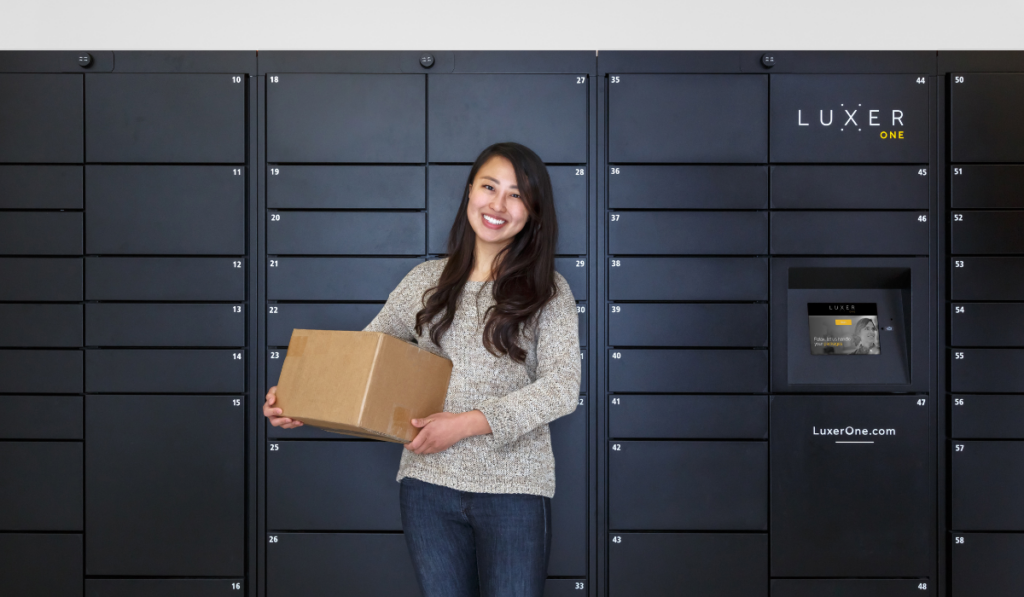
One standout trend is the shift toward premium amenities that balance value and affordability. For example, companies like Luxer One, known for their innovative smart locker and package room solutions, are increasingly tailoring their offerings to meet the financial constraints of property managers.

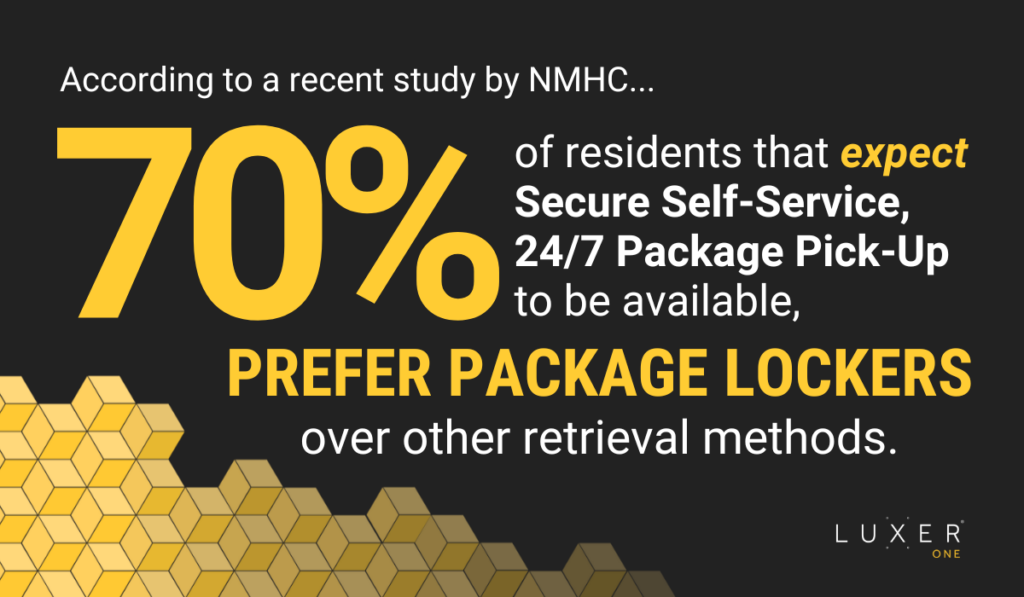
Did you know, according to the 2024 renter study by NMHC, 67% of residents expect 24/7 secure self-serve package pick up to be available at their property? Of these residents, 70% prefer package lockers over other retrieval methods. Not only are they highly requested but these solutions address a critical pain point in today’s multifamily communities: the surge in package deliveries and the need for secure, convenient, and efficient management.

By implementing budget-conscious amenities such as package lockers, property managers can not only enhance the resident experience but also position their properties as forward-thinking and responsive to modern lifestyle demands. These types of investments pay dividends in the form of increased resident satisfaction and loyalty, ultimately improving retention rates.

Moving Forward in 2025

As economic pressures persist, the multifamily industry must continue to evolve. By focusing on resident retention, embracing transparency, and investing in cost-effective solutions, property managers can mitigate the challenges of rising rents, turnover, and vacancy rates. 

By making strategic choices, property managers can navigate these uncertain times while providing residents with the value and experience they expect. The challenges of 2025 are significant, but with the right tools and mindset, they are far from insurmountable.

Luxer One Package Management Solutions for Package Management Amenities in Multifamily

Forward-thinking companies like Luxer One are leading the charge, helping properties thrive in an increasingly complex market. Learn more about how their budget-friendly solutions can help you battle rising rents and vacancy rates when you contact us today.

  • Christina Draper

    Christina Draper, Marketing Content Manager at Luxer One, creates storytelling-driven content that connects with property management professionals and highlights innovations in multifamily package management. With a marketing background from UNC Charlotte, she develops cross-channel campaigns that showcase how Luxer One is redefining the resident experience.

    See Posts

RECENT POSTS

Package Rooms vs. Package Lockers: Which Is Better?

Package Rooms vs. Package Lockers: Which Is Better?

Finding the best package management systems for multifamily communities often comes down to one key question: package rooms vs. package lockers. Both solutions help properties handle rising delivery volumes, reduce staff workload, and improve the resident experience, but each one serves a different operational need.
The right choice depends on your building style, delivery patterns, available space, and long term goals. This guide breaks down the differences, benefits, and limitations of each option to help you make an informed decision.

Read More »
The Upgrades That Actually Make Renters Happier

The Upgrades That Actually Make Renters Happier

When you strip away the fancy brochures and amenity checklists, most residents are asking one simple question:
“Does living here actually make my life easier and happier?”
The upgrades that make residents happier are not always the flashiest. In 2025, renters consistently gravitate toward improvements that protect their time, reduce friction in daily life, and make them feel safe, supported, and understood.
Recent renter surveys show a clear pattern. Tech-enabled conveniences, smart design, and practical comfort often outperform luxury features in driving satisfaction.
Here is what truly matters to residents and where smart package lockers naturally fit into the story.

Read More »
What’s The ROI on Smart Lockers for Apartments?

What’s The ROI on Smart Lockers for Apartments?

When apartment communities evaluate new amenities, few generate clearer operational and financial returns than automated package systems. Between time saved and improvement to operational efficiency it’s no wonder that properties see significant ROI on smart lockers. Below is a simple breakdown of how to evaluate the return on investment for smart lockers in today’s multifamily environment.

Read More »
The Global Shift Toward Smart Lockers: Why Automated Delivery Is Becoming the Backbone of Last Mile Logistics

The Global Shift Toward Smart Lockers: Why Automated Delivery Is Becoming the Backbone of Last Mile Logistics

For more than fifteen years, I have worked with locker networks across Europe and beyond, and have seen firsthand how quickly delivery systems can transform when economic pressure meets technological readiness. Today, the global last mile is approaching that same kind of tipping point. Parcel volumes are still rising, labor is becoming more expensive and harder to find, and urban security issues continue to grow. All of this is putting the traditional door to door model under unprecedented strain.
What comes next is not a mystery. It is already unfolding around the world. Smart lockers are becoming essential infrastructure for modern delivery, not a niche add on. In several countries, this shift is already well underway. In others, it is just beginning. But everywhere, the direction is clear.
The next decade of delivery will not be defined by faster vans or more expensive convenience. It will be defined by smarter, more efficient systems that allow carriers, retailers, and consumers to regain control of the last mile.
Smart lockers will be at the center of that shift.

Read More »
Retail Industry Trends for 2026: What Operations Leaders Should Prepare For

Retail Industry Trends for 2026: What Operations Leaders Should Prepare For

After a turbulent few years of shifting consumer confidence, supply chain recalibration and nonstop digital innovation, retail is entering 2026 with more clarity and more pressure. The last 12 months revealed a shopper who is simultaneously value driven and convenience obsessed, pushing retailers to rethink how stores operate, how fulfillment happens and how technology drives profitability instead of complexity.
As leaders head into the NRF Big Show in New York, the message is clear. 2026 will reward retailers who streamline operations, modernize fulfillment and build flexible omnichannel experiences rooted in real, measurable efficiency. Here is what the latest data, forecasts and industry analyses tell us about the retail landscape ahead.

Read More »

TOPICS

Share: