

LUXER ONE BLOG

The State of the Hospitality Industry: Key Takeaways from The Hospitality Show 2025

The State of the Hospitality Industry: Key Takeaways from The Hospitality Show 2025

The hospitality industry is shifting fast. At The Hospitality Show 2025 in Denver, the signal was clear: growth isn’t coming from the same old playbook. Instead, hotels and resorts are doubling down on efficiency, guest-journeys, and strategic infrastructure. Here’s what the show revealed and what it means for operators heading into 2026.

From Recovery Mode to Strategic Growth

According to the American Hotel & Lodging Association (AHLA) 2025 report, the U.S. hotel industry is past the “bounce-back” phase and confronting rising costs, labour pressure, and evolving guest expectations. Travel volumes are near pre-pandemic levels, but occupancy gains alone won’t drive competitiveness anymore. Efficiency, differentiation, and technology must carry the next wave.

Guest Experience Is Now a Tech + People Balance

The buzz at the show heavily emphasised personalisation, automation, and the human touch. For example:

In short: the guest journey now spans digital check-in, app-driven services, seamless locker access or luggage drop-off, and human moments that can’t be automated. The winners will be the hotels that get this mix right.

Front desk staffer handing over access key card to guest at hotel

Operational Efficiency = Revenue Opportunity

One big theme at the show: efficiency isn’t just about cost-cutting. It’s about freeing your team to do higher-value work, using infrastructure smarter, and turning operations into revenue enablers. The AHLA report stresses that technology is “the single most powerful force driving the future of hospitality.”

Case in point: handling guest-packages, storage, luggage, and drop-offs are areas where manual workflows often drag down speed, satisfaction and margin. Investing in infrastructure that automates or streamlines these flows multiplies value: better guest experience + lower cost + new revenue possibilities.

The “Physical-Infrastructure Upgrade” Moment

At The Hospitality Show 2025, more focus than ever went to hardware-infrastructure not just software. The show floor unveiled modular locker systems, secure self-service storage, smart kiosks and integrated mobile access. According to the main show website this year, the floor was redesigned with “interactive zones” and “hundreds of innovative suppliers” to explore the latest tools across guest experience, operations and profitability.

This shift matters because while guest-apps and digital keys are critical, the physical infrastructure (lockers, storage, smart spaces) is what supports them. For example: a guest arriving early who wants to drop a bag might expect a self-service option. Having a modern locker infrastructure becomes part of your guest promise.

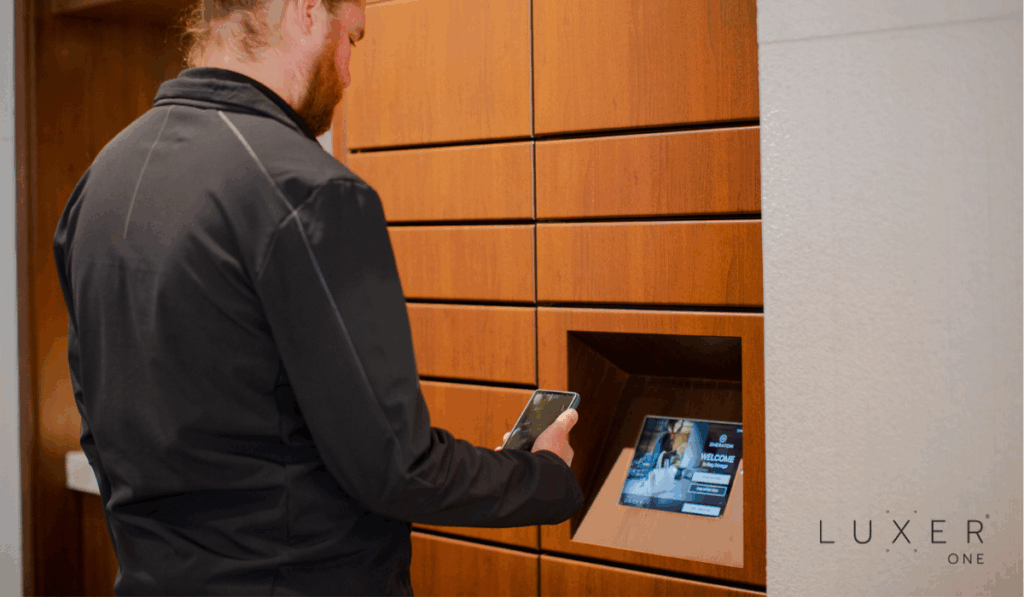
Hotel guest using mobile app to open smart lockers to pick up package

Sustainability, Wellness & New Revenue Streams

Beyond the tech, trends around sustainability, wellness, and new traveller segments were front and centre. The EHL report points out that luxury, wellness real-estate and remote-work enabled travel are reshaping hotel offerings.

From a practical lens: hotels are exploring how to monetise “ancillary services” (co-work spaces, premium luggage storage, late check-out drop-off zones) and how to position themselves as lifestyle destinations, not just places to sleep.

These shifts underscore that the state of the hospitality industry today requires thinking beyond room-nights: think guest flow, off-hours usage, multi-purpose spaces.

What Leaders Should Do Now

Given the trends and the show insights, here’s a checklist for hotel operators:

  • Map your guest-journey and identify friction points (check-in, luggage, packages, storage, late arrival).

  • Audit your hardware-infrastructure: lockers, smart storage, guest logistics — are they modern, mobile-integrated, guest-friendly?

  • Quantify operational cost-leaks: labour, guest waiting time, mis-handled packages or storage issues.

  • Link technology and infrastructure to revenue: how does an improved guest-logistics workflow contribute to guest spend, satisfaction, loyalty?

  • Plan for the next 12–18 months with both guest-experience and profit in mind: the state of the hospitality industry now demands both.
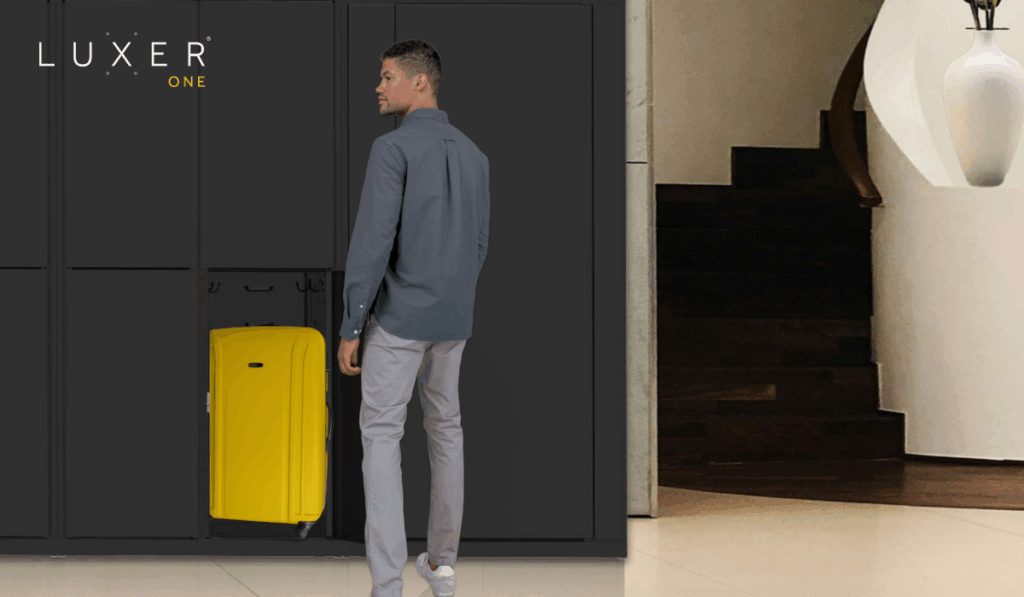
Hotel guest picking up luggage from storage lockers in lobby

Why We Showed Up

At The Hospitality Show 2025, we were onsite with our booth showcasing our automated package lockers and secure bag storage lockers: hardware and software solutions built for the hospitality domain. These offerings align perfectly with the trends we’ve just discussed: modern guest-journey logistics, self-service convenience, and infrastructure that supports both guest experience and operational efficiency. This includes new opportunities for revenue generation!

Let’s Talk

Want to explore how modern locker infrastructure can become a strategic asset for your property? Reach out to our team today to talk about our hotel-specific storage and guest-logistics solutions and how they can plug into your operations. Contact us and learn more about our hotel solutions.

  • Christina Draper

    Christina Draper, Marketing Content Manager at Luxer One, creates storytelling-driven content that connects with property management professionals and highlights innovations in multifamily package management. With a marketing background from UNC Charlotte, she develops cross-channel campaigns that showcase how Luxer One is redefining the resident experience.

    See Posts

RECENT POSTS

The Middleman Problem: Why More Delivery Logistics Creates More Problems

The Middleman Problem: Why More Delivery Logistics Creates More Problems

On paper, adding more steps to a delivery process can sound like progress. More coordination, more handling, and more structure.
But in reality, more logistics often leads to more problems.
This is the core issue facing today’s multifamily delivery logistics strategies. In an effort to manage growing package volume, many systems have introduced additional layers between the carrier and the resident.
And while those layers are meant to help, they often create the opposite effect.
Because every extra step is another opportunity for something to go off track.

Read More »
food pantry access

From Food Banks to Food Access Networks: How Distribution Is Evolving

Modern food pantries are being asked to do more with less. They need to serve more people, offer greater flexibility, and operate with fewer staff and volunteers. As organizations look for ways to expand access without increasing overhead, many are wondering: Is there a better way to distribute food?
This Q&A explores the kinds of questions partners are already asking, and how smart locker solutions are helping provide answers.

Read More »
Scalable Package Management Solutions that Work for Every Community

Luxer Liaison: Scalable Package Management Solutions That Work for Every Community

From boutique properties to high rise luxury buildings, every community faces a different mix of challenges. Limited space, growing delivery volume, resident expectations, and staffing constraints all play a role. The common thread is the need for scalable package management solutions that adapt instead of overwhelm.
That’s where the Luxer Liaison package service stands out. By combining on site expertise with flexible service models, Liaison supports communities of all sizes without forcing them into rigid systems or delayed delivery models.

Read More »
Delivered Should Mean Delivered: The Problem with Delayed Package Models

Delivered Should Mean Delivered: The Problem with Delayed Package Models

There was a time when “delivered” meant something simple. A package arrived and a resident picked it up, end of story. Today, that definition is not so clear.
In some communities, “delivered” no longer means a package is in a resident’s hands. It means it is somewhere in the process. Waiting. Moving. Delayed. And that shift is exactly where frustration begins.

Read More »
What to Look for in a Package Management Solution for Multifamily Communities

Package Management Solution Tips: What Multifamily Communities Should Look for Today

Package management is no longer a behind-the-scenes operation. For multifamily communities, it has become a defining part of the resident experience.
Properties are facing a surge in deliveries, increasing pressure on staff, and rising expectations from residents who want fast, secure, and convenient package access. What used to be a minor operational task is now a major decision point for property performance.
That’s why having the right strategy matters. This guide to package management will walk through the most important factors to consider so your property can stay efficient, competitive, and resident-focused.

Read More »

TOPICS

Share: