
LUXER ONE BLOG

Smart Lockers for Asset Exchange and Package Management in the Modern Workplace

Smart Lockers for Asset Exchange and Package Management in the Modern Workplace

Workplace operations have changed dramatically in recent years. Hybrid schedules, distributed teams, and higher expectations for speed and accountability have reshaped how offices manage equipment, documents, and deliveries. As a result, many organizations are rethinking how assets move through the workplace.

That shift is driving increased demand for smart lockers for asset exchange and package management, a secure and automated solution designed to reduce loss, streamline workflows, and scale with enterprise operations. For workplace managers and operations directors, smart lockers are no longer a convenience. They are becoming a core infrastructure tool for the modern workplace.

The Growing Challenge of Asset Exchange and Package Management

In traditional office environments, asset exchange relied heavily on manual processes. Laptops were handed over at IT desks. Important documents passed through front offices. Packages piled up in unsecured mailrooms.

Today, those methods create real operational risks.

First, asset loss and shrinkage increase when equipment and packages are left unattended or tracked manually. Even well-run offices struggle to maintain visibility when items change hands frequently.

Second, operational inefficiency slows teams down. Staff members spend valuable time coordinating handoffs, answering questions, and resolving missing item reports instead of focusing on higher-impact work.

Finally, legacy systems often fail to scale. As organizations grow or adopt hybrid work models, manual processes quickly become bottlenecks.

This is where smart lockers for the modern workplace deliver measurable value.

Open laptop on office desk in the workplace

How Smart Lockers Modernize Workplace Operations

Smart locker systems automate the exchange of assets and packages using secure, software-driven workflows. Each interaction is logged, access is controlled, and notifications keep users informed at every step.

Unlike traditional storage cabinets or mailrooms, smart lockers integrate directly into daily operations. Employees receive automated access codes. IT teams track asset movement in real time. Operations leaders gain visibility without increasing headcount.

For a deeper look at how this technology supports evolving office environments, see how smart lockers are revolutionizing asset management in the workplace.

Reducing Asset Loss and Shrinkage Through Automation

Asset loss is rarely intentional. Most losses happen due to poor tracking, unclear ownership, or unsecured handoffs. Smart lockers address these issues at the source.

Each asset exchange is tied to a verified user, a specific time, and a digital record. This accountability significantly reduces shrinkage while improving trust across departments.

This approach has proven especially effective in environments that manage sensitive or high-value materials. For example, government offices have adopted asset exchange lockers to securely distribute documents and equipment while maintaining strict chain-of-custody requirements. You can see how this works in practice in the smart lockers for tax collectors case study, where automation improved security without adding administrative burden.

By eliminating ambiguity, smart lockers help organizations protect assets while simplifying compliance.

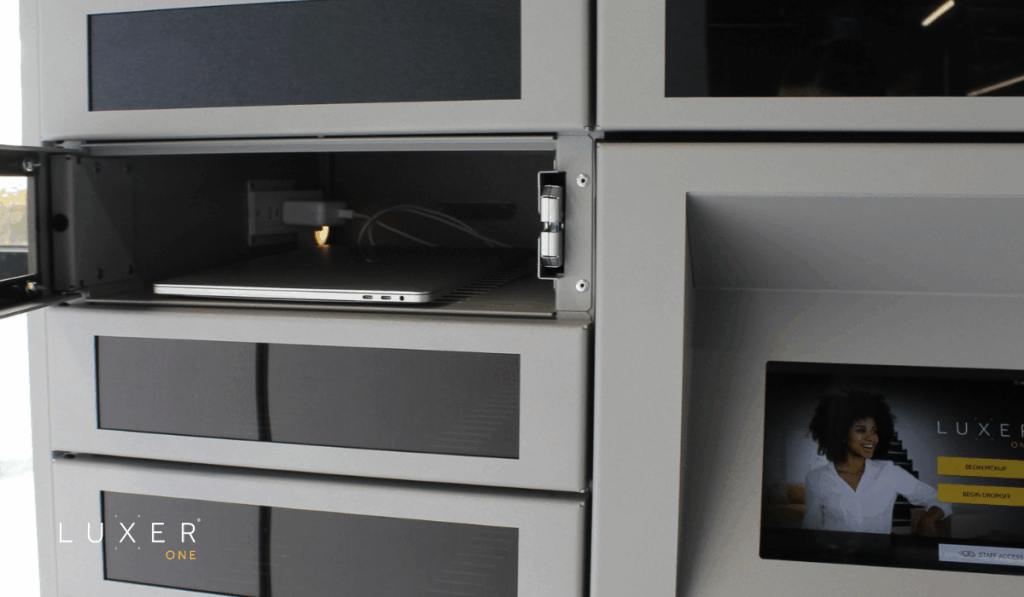
Asset management lockers with door open showing laptop charging inside

Driving Greater Operational Efficiency Across Teams

Beyond security, the biggest operational win comes from time savings. Smart lockers remove friction from everyday exchanges.

Instead of coordinating schedules or staffing handoff points, teams can rely on automated access. Employees retrieve items when it fits their workflow. Operations teams reduce interruptions. IT departments gain predictable, repeatable processes for equipment distribution and returns.

This efficiency extends directly into package management. Offices receiving high package volumes often struggle with congestion and manual tracking. Smart locker systems centralize deliveries, automate notifications, and eliminate the need for constant oversight.

To explore this use case further, see how organizations automate their office mailrooms with smart package systems to reduce delays and improve workplace experience.

Smart Lockers for Package Management at Scale

Package volume in the workplace continues to rise. Employee deliveries, vendor shipments, and hybrid work equipment all contribute to the load.

Smart lockers provide a scalable solution for managing this growth without expanding physical mailrooms or staffing levels. Deliveries are securely stored, recipients are notified automatically, and pickup happens on demand.

A strong example of this approach is Grubhub’s workplace deployment. By implementing smart lockers for package management, the organization improved delivery flow, reduced internal handling time, and increased overall accountability. You can learn more by downloading the Grubhub package management case study, which highlights how automation supports fast-moving, high-volume environments.

For operations directors managing enterprise offices, this scalability is critical. Smart lockers adapt to growth without disrupting existing workflows.

Wood-wrapped, secure smart lockers with door open showing package

Supporting Hybrid and Enterprise Work Models

Hybrid work has added complexity to asset exchange. Employees may need equipment outside of standard office hours. IT teams must manage returns efficiently. Facilities leaders need solutions that work without constant supervision.

Smart lockers meet these needs by enabling self-service access while maintaining full visibility. Assets can be issued, returned, or swapped without requiring staff presence. This flexibility supports distributed teams while preserving operational control.

Importantly, smart locker systems scale across multiple locations. Whether deployed in a single headquarters or across a national footprint, the same platform delivers consistent reporting, access controls, and performance insights.

This enterprise-ready design makes smart lockers for asset exchange and package management a long-term investment rather than a temporary fix.

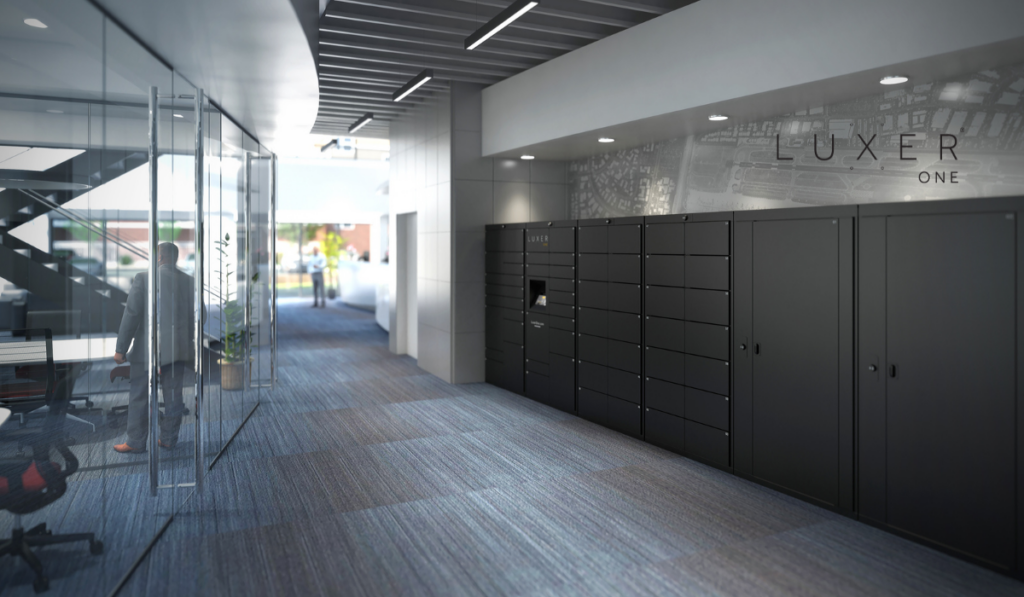
Luxer One Black Smart Lockers in an Office Setting

Why Smart Lockers Are a Strategic Workplace Upgrade

When evaluated strategically, smart lockers solve multiple operational challenges at once. They reduce asset loss, improve efficiency, and support modern work patterns without adding complexity.

More importantly, they create a better experience for employees. Reliable access, clear communication, and faster workflows build trust and reduce friction. Over time, those improvements contribute to stronger workplace satisfaction and smoother operations.

For workplace managers and operations directors, smart lockers represent a shift toward proactive infrastructure. Instead of reacting to losses, delays, or complaints, teams gain tools that prevent issues before they arise.

Bringing It All Together

As workplace operations continue to evolve, organizations need systems that are secure, efficient, and scalable. Smart lockers for asset exchange and package management deliver on all three, supporting everything from IT equipment handoffs to high-volume package delivery.

By automating workflows and increasing visibility, smart lockers help modern workplaces operate with confidence. They protect valuable assets, free up staff time, and adapt to the demands of enterprise growth.

If you are evaluating smart lockers for the modern workplace, now is the time to explore how a purpose-built solution can support your operational goals. Contact the Luxer One team to learn how smart lockers can be tailored to your workplace environment and long-term strategy.

  • Christina Draper

    Christina Draper, Marketing Content Manager at Luxer One, creates storytelling-driven content that connects with property management professionals and highlights innovations in multifamily package management. With a marketing background from UNC Charlotte, she develops cross-channel campaigns that showcase how Luxer One is redefining the resident experience.

    See Posts

RECENT POSTS

smart locker integrations for universities

What Should Universities Look for in a Smart Locker System Integration?

As universities modernize campus operations, smart lockers are increasingly part of the conversation. But while the hardware often gets the spotlight, experienced decision makers know the real long term value lies in integration. That’s why institutions evaluating smart locker solutions should focus just as heavily on integration capabilities as on physical design.
So what should universities actually look for when evaluating smart locker system integrations? In this blog, we’re answering the key questions universities should ask, and how Luxer One supports those requirements.

Read More »
How to Launch Package Lockers in Your Community

How to Launch Package Lockers in Your Community

Installing a package locker system is a major upgrade for your community. But knowing how to launch package lockers properly is what turns a new system into a retention-driving amenity.
In today’s market, where residents are evaluating renewals earlier and weighing value more carefully, a smooth rollout can reinforce convenience, security, and operational excellence from day one.
If you are preparing to introduce lockers at your property, here are five strategic package locker launch ideas that protect your investment and elevate resident experience.

Read More »
What’s the Difference Between Electronic and Smart Lockers?

What’s the Difference Between Electronic and Smart Lockers?

If you’re researching package management solutions, you’ve likely come across both electronic lockers and smart lockers. While the terms are sometimes used interchangeably, they are not the same.
The main difference between electronic and smart lockers is connectivity and system intelligence.
Electronic lockers use digital access methods instead of traditional keys. Smart lockers go further by using cloud-based software, real-time tracking, integrations, and advanced management tools to automate and optimize the entire package workflow.
For multifamily property managers and owners, that distinction matters more than ever.

Read More »
Onsite vs Offsite Package Management: What Multifamily Leaders Need to Know

Onsite vs Offsite Package Management: What Multifamily Leaders Need to Know

Package volume has fundamentally reshaped multifamily operations. What used to be a convenience has become a daily operational responsibility, a resident satisfaction driver, and in some cases, a liability risk.
As properties evaluate solutions, many are weighing onsite vs offsite package management models. Both promise convenience. Both aim to reduce staff burden. But the operational realities and resident experience can look very different.
Below we discuss what you should consider before deciding.

Read More »
The Rise of Build-to-Rent: What It Means for Proptech and the Future of Amenities

The Rise of Build-to-Rent: What It Means for Proptech and the Future of Amenities

Build-to-rent is no longer a niche concept. It is quickly becoming one of the most important shifts in the multifamily industry.
This is not a temporary response to interest rates or a passing housing cycle. We are watching the formation of a distinct asset class. And like any new asset class, it comes with a new operating model, new resident expectations, and new requirements for technology.
The mistake I see most often is treating build-to-rent as simply horizontal multifamily. It is not. The physical layout may resemble single-family homes, but the operational philosophy has to be entirely different.

Read More »

TOPICS

Share: