

LUXER ONE BLOG

How to Unlock Government Funding for Food Pantries

As food insecurity continues to rise across the U.S., food pantries and food banks are being asked to do more than ever with fewer resources. But new opportunities are opening for organizations ready to modernize their approach.

From federal grants to local partnerships, government funding for food pantries has expanded in recent years to support infrastructure upgrades, technology innovation, and programs that improve equitable access to food. For many communities, that means new potential to integrate solutions like smart lockers that make food distribution safer, faster, and more accessible.

Our new Food Pantry Funding Guide breaks down exactly where that funding is coming from and how your organization can tap into it.

A Growing Need for Smarter Access

Feeding America estimates that 44 million people in the U.S. face food insecurity. Local food banks are reportedly serving up to 15% more households than they did before the pandemic. That demand is stretching staff, volunteers, and facility capacity. This strain is forcing many administrators to look for creative, sustainable ways to reach more people.

Smart lockers are emerging as one of those solutions. By providing secure, 24/7 pickup access, they allow pantries to extend service hours, protect privacy, and reduce operational strain. Additionally, it all aligns with many of the goals outlined in current funding programs.

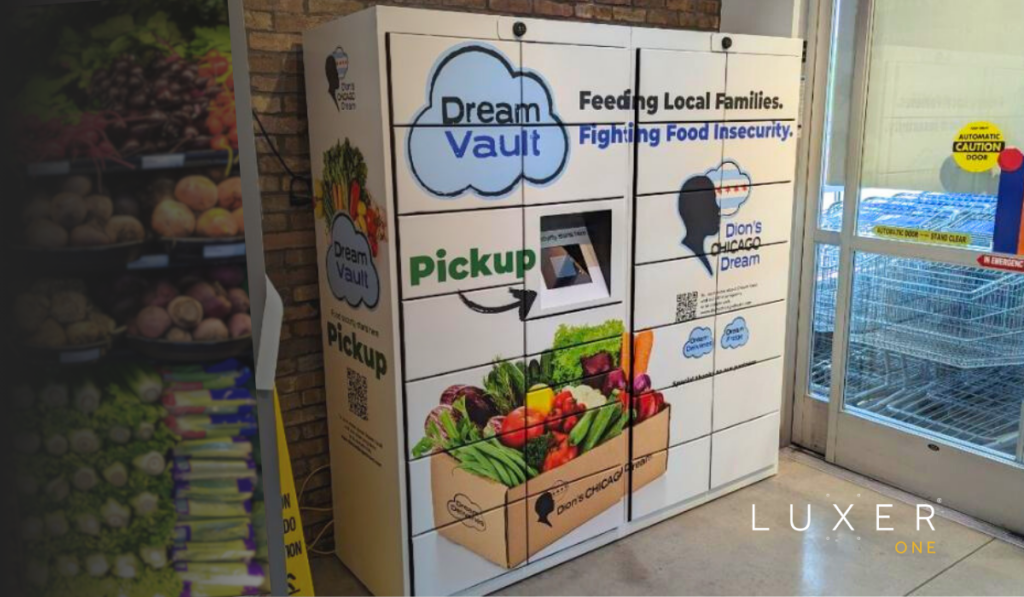
Deon's Dream Food Pantry Lockers in Chicago

Opportunities Are Expanding

For multifamily properties, package volume isn’t just a space issue, it’s a resident experience issue. The Prime Day effect on multifamily

The Food Pantry Funding Guide outlines the latest federal, state, and community-based programs supporting food access initiatives. Whether you’re applying for USDA rural development grants, community resilience funds, or city-level infrastructure programs, these opportunities can help transform how your organization serves its neighbors.

Beyond funding, the guide also highlights key strategies for building stronger proposals. This includes how to align your goals with public funding priorities and demonstrate measurable community impact.

Staffer loading food pantry locker with grocery items for distribution

Why Now Is the Time to Act

As awareness of food insecurity grows nationwide, agencies are prioritizing funding for organizations that use innovation to extend their reach. Programs that integrate automation, accessibility, and technology, like smart locker systems, are often more competitive in grant evaluations.

That makes this an ideal time to review your operations, identify potential partners, and explore funding paths that can make long-term impact possible.

Download the Food Pantry Funding Guide

If your organization is ready to take the next step, start with our comprehensive Food Pantry Funding Guide. Inside, you’ll find insights on available grants, proposal-building tips, and examples of how smart lockers are helping food pantries nationwide.

Luxer One is proud to support communities that make food access equitable and efficient through innovative technology. Learn more when you chat with us today!

  • Christina Draper

    Christina Draper, Marketing Content Manager at Luxer One, creates storytelling-driven content that connects with property management professionals and highlights innovations in multifamily package management. With a marketing background from UNC Charlotte, she develops cross-channel campaigns that showcase how Luxer One is redefining the resident experience.

    See Posts

RECENT POSTS

woman shopping in person pickup

Has Delivery Replaced Pickup? What the Data Says About Retail’s Next Chapter

Retailers face more choices than ever when it comes to fulfillment: ship-to-home, same-day delivery, third-party courier pick-ups, and in-store or curbside pickup (BOPIS – Buy Online, Pickup In-Store). Is the traditional in-person pickup model fading away in favor of delivery and third‐party logistics? Data suggests that in-store/curbside pickup remains not only relevant but increasingly important, in a transformed, omnichannel context.

Read More »
Best Practices For Package Locker Setup In Apartments

Best Practices For Package Locker Setup In Apartments

Package lockers have become an essential amenity in modern apartment communities. With daily delivery volumes rising and residents expecting secure self-service pickup, a well planned locker setup can make a major difference in resident satisfaction and staff efficiency. Below are the top questions property managers ask when planning a successful package locker deployment, along with practical best practices.

Read More »
The Future of Real Estate Technology: What Multifamily Leaders Should Prepare For Now

The Future of Real Estate Technology: What Multifamily Leaders Should Prepare For Now

Real estate tech is advancing faster than ever, and multifamily operators are feeling the shift across every corner of their portfolios. AI adoption is accelerating, centralized operations are becoming the standard, and residents expect more connected, digital-first experiences in their homes. Following recent industry conversations, including trends highlighted at OPTECH 2025, the future of real estate technology is taking shape around efficiency, data intelligence, automation, and resident expectations.
For multifamily leadership teams, understanding where the industry is heading is only half the challenge. The real task is identifying the practical steps to stay competitive today while preparing for what is next.
Below is a look at what is driving the future of real estate technology, supported by the latest industry data, along with actionable insights you can use to future-ready your operations.

Read More »
The Impact of Online Shopping on Multifamily and Why Package Management Matters More Than Ever

The Impact of Online Shopping on Multifamily and Why Package Management Matters More Than Ever

Online shopping continues to grow at a rapid pace, and multifamily communities are feeling the effects more than almost any other sector. In early 2025, U.S. e-commerce sales were up 5.3% year-over-year, reaching 15.5% of all retail spending, according to the U.S. Census Bureau. At the same time, global online shopping participation surpassed 2.7 billion digital buyers, reflecting a long-term shift toward online purchasing.
For multifamily operators, regional managers, and asset managers, this trend creates a daily operational reality: higher-than-ever delivery volume, greater pressure on staff, and the constant challenge of managing package piles at apartments. This blog breaks down how the surge in online shopping is reshaping multifamily communities and what forward-thinking properties are doing to keep up.

Read More »
How To Cut the Carbon Footprint From Package Deliveries in Your Community

How To Cut the Carbon Footprint From Package Deliveries in Your Community

As resident expectations rise and delivery volumes continue to grow, multifamily communities are looking for practical ways to cut the carbon footprint tied to daily package traffic. While sustainability efforts often focus on building operations or energy upgrades, last-mile delivery is an overlooked area where properties can make meaningful impact.
This guide answers common questions about where emissions come from, how operations contribute, and how modern tools including the sustainability of smart lockers can help communities reduce waste, streamline processes, and support broader ESG goals.

Read More »

TOPICS

Share: