


LUXER ONE BLOG

Unlocking Revenue with Smart Lockers: A Strategic Response to Online Cart Abandonment

Unlocking Revenue with Smart Lockers: A Strategic Response to Online Cart Abandonment

Online cart abandonment is not a new problem, but it is becoming a more expensive one.

As e-commerce has matured, shopper expectations have risen just as fast. Convenience, flexibility, and control now play as large a role in conversion as price or product availability. Shoppers hesitate, leave, and often do not return when these expectations aren’t met.

For retail operations leaders, cart abandonment can no longer be viewed as a marketing or UX issue alone. It’s also a fulfillment and operational challenge, and one that demands a more strategic response.

Cart Abandonment by the Numbers

The scale of the issue is difficult to ignore. In 2025, global shopping cart abandonment rates hover around 70 percent, meaning roughly seven out of every ten online carts are never converted. Across ecommerce, that represents trillions of dollars in merchandise left behind annually.

While reasons for abandonment vary, recent surveys consistently point to a few dominant themes:

  • Unexpected costs at checkout
  • Lack of convenient delivery or pickup options
  • Concerns about timing, availability, or reliability of fulfillment
  • Friction in the final steps of the purchase journey

For retailers, this data reinforces a critical insight: shoppers are not abandoning carts because they are unsure what they want. They are abandoning carts because the fulfillment experience does not match their expectations.

Person shopping online on mobile phone

Why Fulfillment Options Now Drive Conversion

Over the last few years, fulfillment has shifted from a backend operation to a front-line conversion driver. Buy Online, Pick Up In Store (BOPIS) has become a central part of that shift.

More than two-thirds of U.S. shoppers now use BOPIS regularly, not only for speed, but for certainty. Shoppers want to know exactly when and how they will receive their purchase. When those options are unclear, inconvenient, or unavailable, hesitation sets in.

Traditional pickup counters and service desks struggle to scale with this demand. Long wait times, limited pickup hours, and staffing constraints all reintroduce friction into what should be a seamless experience. That friction often appears at the exact moment a shopper is deciding whether to complete a purchase.

Where BOPIS Lockers Change the Equation

Smart BOPIS lockers directly address the fulfillment concerns that lead to abandonment.

Instead of forcing shoppers to choose between home delivery or staffed in-store pickup, lockers introduce a third option that emphasizes speed, control, and reliability. Orders can be securely placed in lockers and retrieved by customers on their schedule, without waiting in line or relying on staff availability.

From an operational perspective, lockers also create consistency. Orders move through a standardized flow, reducing errors and exceptions that slow down fulfillment teams.

For retailers looking to understand the operational impact in more detail, this Guide to Retail BOPIS Lockers breaks down how lockers integrate into existing store and fulfillment workflows while supporting scalability.

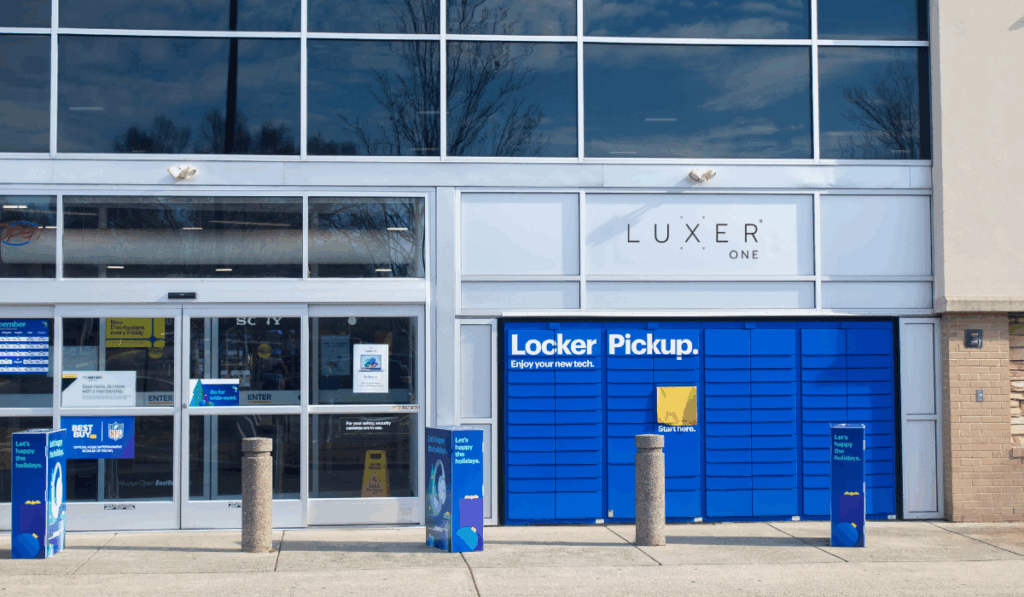
Blue, BOPIS smart lockers from Luxer One at door of retail store

Reducing Friction at the Most Critical Moment

Cart abandonment often occurs at the final step of checkout when shoppers are asked to commit to a delivery or pickup option.

When lockers are presented clearly as part of the checkout experience, they reduce uncertainty. Shoppers know:

  • Where their order will be
  • When it will be available
  • How quickly they can retrieve it

This clarity helps convert intent into action. Rather than abandoning a cart due to fulfillment hesitation, shoppers are given a low-risk, convenient alternative that feels reliable.

Lockers also support faster order readiness, which shortens the gap between purchase and pickup. That speed matters, especially for time-sensitive purchases where shoppers may otherwise look elsewhere.

Unlocking Revenue with Smart Lockers

From a revenue perspective, lockers support conversion in two key ways.

First, they help recover purchases that might otherwise be abandoned due to fulfillment friction. When customers see a flexible, self-service pickup option, the barrier to completing checkout drops.

Second, lockers improve the overall experience post-purchase. A smooth pickup reinforces trust and increases the likelihood of repeat behavior. Over time, that consistency contributes to higher lifetime value, not just one-time conversions.

Retailers exploring how lockers support revenue with smart lockers often find that the impact is not isolated to ecommerce metrics. Store labor efficiency improves, customer satisfaction scores rise, and fulfillment errors decrease, all of which support healthier margins.

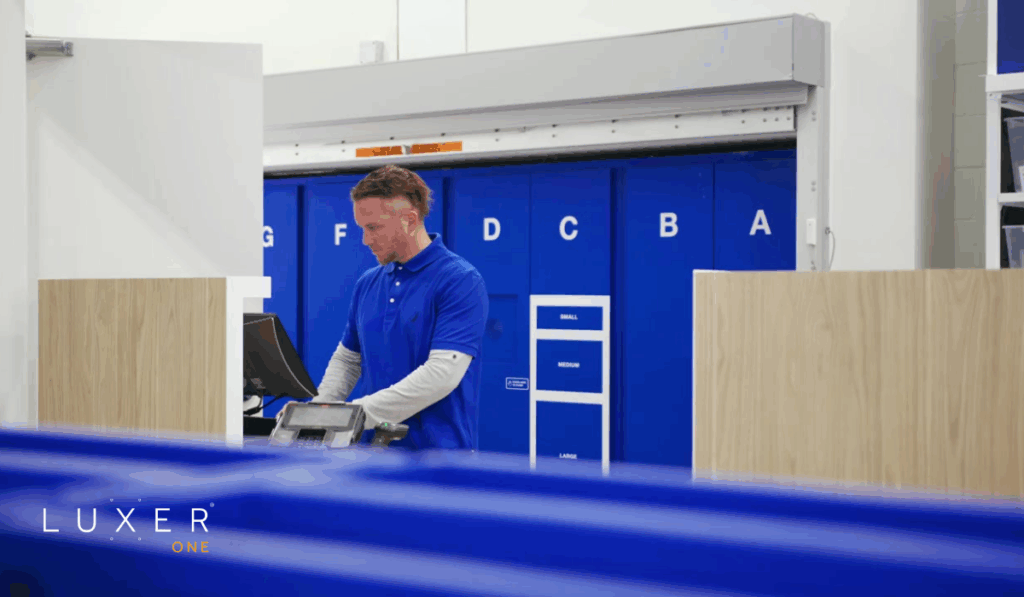
Fulfillment staff at retail store working on computer with rear loading BOPIS lockers in the background

Supporting Complex Pickup and Return Flows

Modern retail fulfillment is rarely linear. BOPIS, BORIS (Buy Online, Return In Store), and third-party delivery all coexist within the same operational ecosystem.

Smart locker systems are increasingly designed to support these overlapping flows. Orders can be staged securely, returned items can be processed without clogging service counters, and third-party drivers can complete pickups efficiently without disrupting store operations.

Supporting BOPIS and BORIS pickups with smart lockers helps retailers manage these complexities without adding friction. Similarly, lockers play a growing role in supporting last-mile logistics. Third-party drivers can access designated lockers quickly, reducing dwell time and improving delivery consistency.

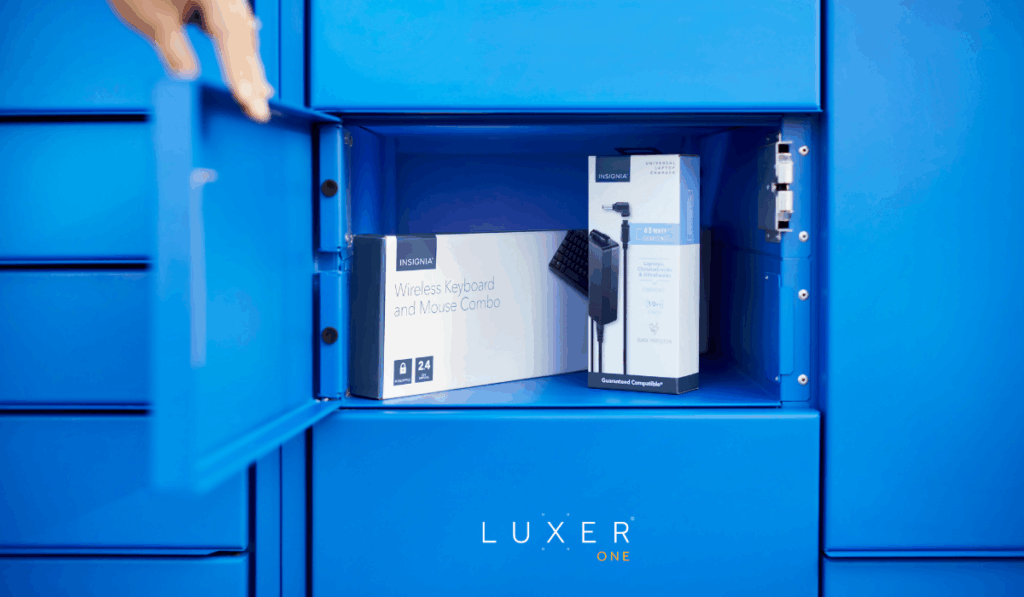
Customer picking up BOPIS order from smart lockers

Why Locker Design Matters More Than Ever

Not all lockers are created equal. As BOPIS volume grows, locker placement, access points, and loading workflows become increasingly important.

Rear-loading locker designs, for example, allow staff to load orders from secure back-of-house areas while customers access lockers from the front. This separation improves security, speeds up fulfillment, and keeps high-traffic areas clear.

A Strategic Shift, Not a Tactical Fix

Cart abandonment is often handled with promotional tactics, discounts, or remarketing campaigns. While those tools have a place, they do not solve one of the root causes when fulfillment friction is the issue.

A strategic response to online cart abandonment requires retailers to rethink how fulfillment is presented, executed, and experienced. BOPIS lockers offer a scalable, customer-focused solution that aligns operational efficiency with shopper expectations.

For retail operations leaders, the question is no longer whether fulfillment impacts conversion. The data makes that clear. The question is whether your current pickup experience is helping shoppers complete purchases or quietly encouraging them to walk away.

Learn how smart lockers can strengthen your BOPIS strategy and recover lost revenue when you contact Luxer One.

  • Christina Draper

    Christina Draper, Marketing Content Manager at Luxer One, creates storytelling-driven content that connects with property management professionals and highlights innovations in multifamily package management. With a marketing background from UNC Charlotte, she develops cross-channel campaigns that showcase how Luxer One is redefining the resident experience.

    See Posts

RECENT POSTS

luxens on the rise ashley b

Luxens on the Rise: Employee Highlight | Ashley Blakely

At Luxer One, growth is part of the job. We prioritize promoting from within, provide clear paths for advancement, and encourage every team member to explore new opportunities! Our Luxens on the Rise series highlights team members who have carved their own paths within the company, taking on new challenges and evolving their careers along the way.

Read More »
Parcel Locker Solutions for Canadian Multifamily Communities

Parcel Locker Solutions for Canadian Multifamily Communities

Canadian multifamily communities are experiencing a major shift in parcel management. As online shopping continues to grow and resident expectations rise, developers and operators are under increasing pressure to modernize how deliveries are handled.
That is why more properties are investing in parcel locker solutions that improve security, simplify parcel management, and create a better resident experience.
According to recent research from Mordor Intelligence, the Canadian courier, express, and parcel market is projected to grow to more than USD $20 billion by 2031, driven largely by continued eCommerce growth and increasing delivery demand. For multifamily operators, that means parcel volume is not slowing down anytime soon.

Read More »
Boost Resident Retention with Reliable Partners

Resident Retention Starts With Reliable Multifamily Partners

Resident retention has become one of the most important metrics in multifamily housing and one of the hardest to maintain. Today’s residents expect convenience, consistency, and responsive service across every touchpoint of their living experience. When operations fall short, frustration builds quickly.
That’s why more property and regional managers are reevaluating not just the amenities they offer, but the multifamily technology partners behind them.
Reliable partners don’t just help properties run smoothly. They directly support resident satisfaction, operational consistency, and long-term asset value.

Read More »
what is the best way to manage packages in a university mailroom?

What Is the Best Way to Manage Packages in a University Mailroom?

University mailrooms are under more pressure than ever. As online shopping continues to grow, campuses are receiving an unprecedented volume of packages each day, often without the staffing or storage space to keep up. For many universities, the question is no longer whether a new system is needed, it’s what is the best system to use?

Read More »
The Hidden Cost of Off-Site Package Models

The Hidden Cost of Off-Site Package Models

At first glance, some package management solutions seem like a win for property teams. They promise fewer packages on-site, less clutter, and less day-to-day handling.
But what looks convenient on the surface often comes with hidden tradeoffs. While these models may reduce visibility on the property, they do not eliminate the problem. They shift it somewhere else.
And in many cases, they shift it directly onto residents.

Read More »

TOPICS

Share: