

LUXER ONE BLOG

Smart Lockers for Asset Exchange and Package Management in the Modern Workplace

Smart Lockers for Asset Exchange and Package Management in the Modern Workplace

Workplace operations have changed dramatically in recent years. Hybrid schedules, distributed teams, and higher expectations for speed and accountability have reshaped how offices manage equipment, documents, and deliveries. As a result, many organizations are rethinking how assets move through the workplace.

That shift is driving increased demand for smart lockers for asset exchange and package management, a secure and automated solution designed to reduce loss, streamline workflows, and scale with enterprise operations. For workplace managers and operations directors, smart lockers are no longer a convenience. They are becoming a core infrastructure tool for the modern workplace.

The Growing Challenge of Asset Exchange and Package Management

In traditional office environments, asset exchange relied heavily on manual processes. Laptops were handed over at IT desks. Important documents passed through front offices. Packages piled up in unsecured mailrooms.

Today, those methods create real operational risks.

First, asset loss and shrinkage increase when equipment and packages are left unattended or tracked manually. Even well-run offices struggle to maintain visibility when items change hands frequently.

Second, operational inefficiency slows teams down. Staff members spend valuable time coordinating handoffs, answering questions, and resolving missing item reports instead of focusing on higher-impact work.

Finally, legacy systems often fail to scale. As organizations grow or adopt hybrid work models, manual processes quickly become bottlenecks.

This is where smart lockers for the modern workplace deliver measurable value.

Open laptop on office desk in the workplace

How Smart Lockers Modernize Workplace Operations

Smart locker systems automate the exchange of assets and packages using secure, software-driven workflows. Each interaction is logged, access is controlled, and notifications keep users informed at every step.

Unlike traditional storage cabinets or mailrooms, smart lockers integrate directly into daily operations. Employees receive automated access codes. IT teams track asset movement in real time. Operations leaders gain visibility without increasing headcount.

For a deeper look at how this technology supports evolving office environments, see how smart lockers are revolutionizing asset management in the workplace.

Reducing Asset Loss and Shrinkage Through Automation

Asset loss is rarely intentional. Most losses happen due to poor tracking, unclear ownership, or unsecured handoffs. Smart lockers address these issues at the source.

Each asset exchange is tied to a verified user, a specific time, and a digital record. This accountability significantly reduces shrinkage while improving trust across departments.

This approach has proven especially effective in environments that manage sensitive or high-value materials. For example, government offices have adopted asset exchange lockers to securely distribute documents and equipment while maintaining strict chain-of-custody requirements. You can see how this works in practice in the smart lockers for tax collectors case study, where automation improved security without adding administrative burden.

By eliminating ambiguity, smart lockers help organizations protect assets while simplifying compliance.

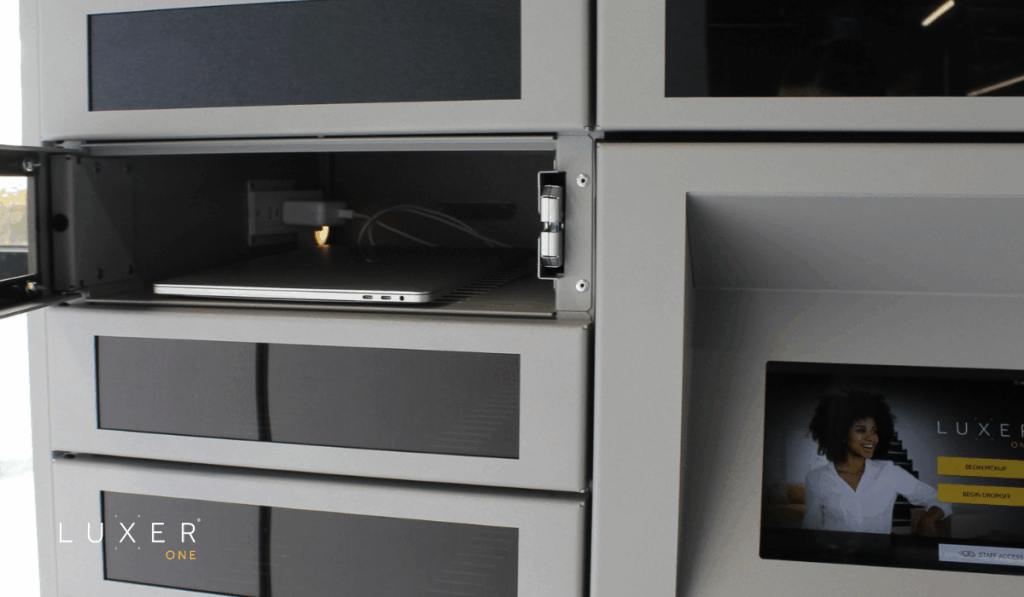
Asset management lockers with door open showing laptop charging inside

Driving Greater Operational Efficiency Across Teams

Beyond security, the biggest operational win comes from time savings. Smart lockers remove friction from everyday exchanges.

Instead of coordinating schedules or staffing handoff points, teams can rely on automated access. Employees retrieve items when it fits their workflow. Operations teams reduce interruptions. IT departments gain predictable, repeatable processes for equipment distribution and returns.

This efficiency extends directly into package management. Offices receiving high package volumes often struggle with congestion and manual tracking. Smart locker systems centralize deliveries, automate notifications, and eliminate the need for constant oversight.

To explore this use case further, see how organizations automate their office mailrooms with smart package systems to reduce delays and improve workplace experience.

Smart Lockers for Package Management at Scale

Package volume in the workplace continues to rise. Employee deliveries, vendor shipments, and hybrid work equipment all contribute to the load.

Smart lockers provide a scalable solution for managing this growth without expanding physical mailrooms or staffing levels. Deliveries are securely stored, recipients are notified automatically, and pickup happens on demand.

A strong example of this approach is Grubhub’s workplace deployment. By implementing smart lockers for package management, the organization improved delivery flow, reduced internal handling time, and increased overall accountability. You can learn more by downloading the Grubhub package management case study, which highlights how automation supports fast-moving, high-volume environments.

For operations directors managing enterprise offices, this scalability is critical. Smart lockers adapt to growth without disrupting existing workflows.

Wood-wrapped, secure smart lockers with door open showing package

Supporting Hybrid and Enterprise Work Models

Hybrid work has added complexity to asset exchange. Employees may need equipment outside of standard office hours. IT teams must manage returns efficiently. Facilities leaders need solutions that work without constant supervision.

Smart lockers meet these needs by enabling self-service access while maintaining full visibility. Assets can be issued, returned, or swapped without requiring staff presence. This flexibility supports distributed teams while preserving operational control.

Importantly, smart locker systems scale across multiple locations. Whether deployed in a single headquarters or across a national footprint, the same platform delivers consistent reporting, access controls, and performance insights.

This enterprise-ready design makes smart lockers for asset exchange and package management a long-term investment rather than a temporary fix.

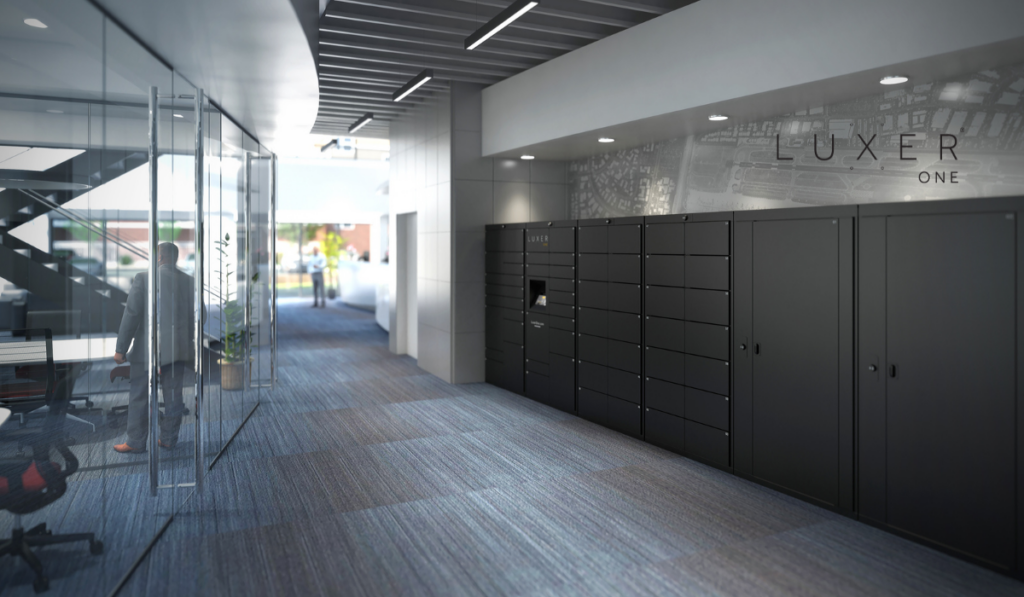
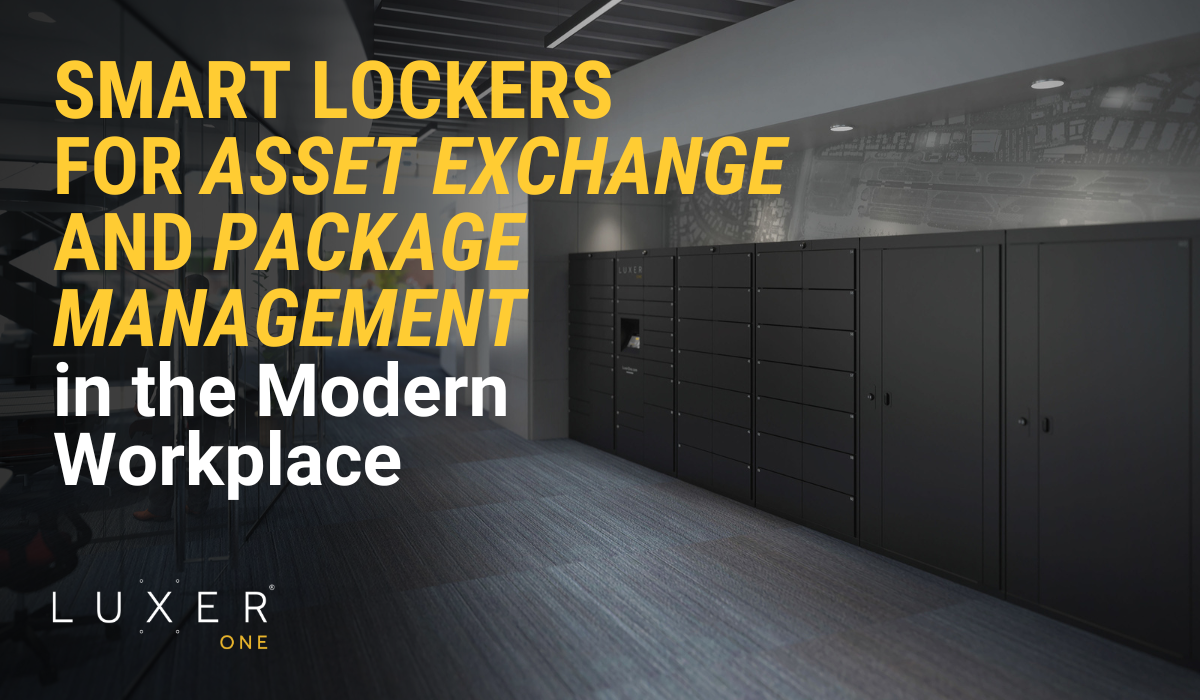
Luxer One Black Smart Lockers in an Office Setting

Why Smart Lockers Are a Strategic Workplace Upgrade

When evaluated strategically, smart lockers solve multiple operational challenges at once. They reduce asset loss, improve efficiency, and support modern work patterns without adding complexity.

More importantly, they create a better experience for employees. Reliable access, clear communication, and faster workflows build trust and reduce friction. Over time, those improvements contribute to stronger workplace satisfaction and smoother operations.

For workplace managers and operations directors, smart lockers represent a shift toward proactive infrastructure. Instead of reacting to losses, delays, or complaints, teams gain tools that prevent issues before they arise.

Bringing It All Together

As workplace operations continue to evolve, organizations need systems that are secure, efficient, and scalable. Smart lockers for asset exchange and package management deliver on all three, supporting everything from IT equipment handoffs to high-volume package delivery.

By automating workflows and increasing visibility, smart lockers help modern workplaces operate with confidence. They protect valuable assets, free up staff time, and adapt to the demands of enterprise growth.

If you are evaluating smart lockers for the modern workplace, now is the time to explore how a purpose-built solution can support your operational goals. Contact the Luxer One team to learn how smart lockers can be tailored to your workplace environment and long-term strategy.

  • Christina Draper

    Christina Draper, Marketing Content Manager at Luxer One, creates storytelling-driven content that connects with property management professionals and highlights innovations in multifamily package management. With a marketing background from UNC Charlotte, she develops cross-channel campaigns that showcase how Luxer One is redefining the resident experience.

    See Posts

RECENT POSTS

The State of the Multifamily Market: Stability Is Returning, but Discipline Still Matters

The State of the Multifamily Market: Stability Is Returning, but Discipline Still Matters

After several years of volatility, the state of the multifamily market entering 2026 feels more predictable than it has since the early post-pandemic period. Rent growth has normalized, supply pressures are beginning to ease in many metros, and demand fundamentals are slowly strengthening. However, this is not a return to the high-growth environment operators experienced earlier in the decade.
Instead, the Q1 2026 outlook reflects a market where stability is returning, but performance depends heavily on operational discipline, cost control, and resident experience. Properties that adapt to this reality are finding steadier footing. Those that rely on outdated assumptions or inefficient systems may struggle to keep pace.
This Q1 2026 multifamily market report breakdown explores what the latest data is telling operators and what it means for day-to-day decision-making.

Read More »
How to Save Time and Money with Package Management at Apartments

How to Save Time and Money with Package Management at Apartments

Smart lockers and package rooms have become essential infrastructure for modern apartment communities. They create secure, self-service delivery workflows, reduce front office congestion, and give residents flexibility to pick up packages on their own schedule.
For many communities, these systems already do most of the heavy lifting. But at larger properties or across growing portfolios, even the best package management technology benefits from consistent human support.
That is where onsite package management staff come in. When paired with smart lockers and package rooms, they help communities save time and money with package management by ensuring systems are used properly, residents are supported, and onsite teams stay focused on higher-value work.

Read More »
Unlocking Revenue with Smart Lockers: A Strategic Response to Online Cart Abandonment

Unlocking Revenue with Smart Lockers: A Strategic Response to Online Cart Abandonment

Online cart abandonment is not a new problem, but it is becoming a more expensive one.
As ecommerce has matured, shopper expectations have risen just as fast. Convenience, flexibility, and control now play as large a role in conversion as price or product availability. When those expectations are not met, shoppers hesitate, leave, and often do not return.
For retail operations leaders, cart abandonment should no longer be viewed as just a marketing or UX issue alone. It’s also a fulfillment and operational challenge, and one that demands a more strategic response.

Read More »
How Rear Loading Lockers Are Revolutionizing BOPIS for the Retail Industry

How Rear Loading Lockers Are Revolutionizing BOPIS for the Retail Industry

The Buy Online, Pick Up In Store (BOPIS) model has gone from “nice to have” to a cornerstone of modern retail fulfillment, driven by consumer demand for convenience, speed, and flexibility. As retailers scale omnichannel efforts, not all BOPIS solutions perform equally well. Enter rear loading lockers, a smart locker innovation that is reshaping how retailers fulfill pickup orders while improving the customer experience and operational efficiency.
Here is how rear loading lockers are redefining BOPIS and why they are becoming a must have in the retail landscape.

Read More »

TOPICS

Share: