

LUXER ONE BLOG

What’s The ROI on Smart Lockers for Apartments?

What’s The ROI on Smart Lockers for Apartments?

When apartment communities evaluate new amenities, few generate clearer operational and financial returns than automated package systems. Between time saved and improvement to operational efficiency it’s no wonder that properties see significant ROI on smart lockers.

Below is a simple breakdown of how to evaluate the return on investment for smart lockers in today’s multifamily environment.

Why Does ROI on Smart Lockers Matter for Apartment Owners?

Smart lockers are no longer a luxury feature. With online shopping continuing to grow and last-mile carriers delivering more frequently than ever, unmanaged package volume can strain labor budgets, reduce resident satisfaction, and expose communities to operational risk.

Many properties face consistent bottlenecks and rising staff workload, and these challenges are outlined in resources like the last-mile delivery challenges for property managers.

For owners responsible for NOI performance, the ROI conversation matters because manual package handling is expensive, time-consuming, and scales poorly as delivery volume increases.

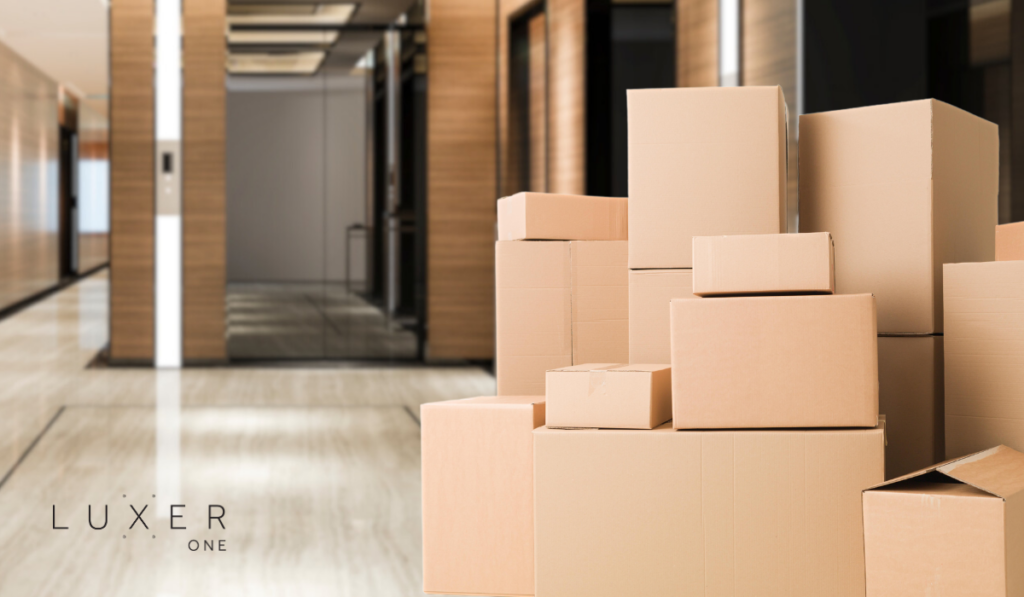
Package piles in multifamily communities

How Do You Calculate the Cost of Managing Packages Manually?

A strong ROI analysis begins with two core inputs:

  • Package volume: From our analytics, on average communities receive 60 packages per 100 units per day.

  • Staff time: Furthermore, we’ve found that teams spend roughly 5 minutes per package on intake, notifications, storage, and retrieval. This doesn’t even include fielding the “where’s my package?” emails and complaints from residents.

Using these averages, a 300-unit community receives approximately 180 packages per day.

At 5 minutes per package, that equals:

  • 900 minutes (15 hours) of staff time per day

  • Roughly 75 hours per week

  • At an average staff wage of $20/hour, that is $1,500 per week, or over $78,000 per year dedicated solely to package handling

This does not include overtime, turnover, inefficiencies, or the broader operational opportunity cost of pulling leasing teams away from revenue-producing tasks.

Property manager stressed and overwhelmed at computer

How Do Smart Lockers Reverse These Costs?

Smart package lockers automate the intake and pickup process, removing nearly all staff involvement. Deliveries are securely scanned into the system, residents receive an automatic pickup notification, and carriers complete the drop-off in seconds.

Automation delivers several measurable benefits:

  • Reduced labor hours and frees onsite teams to focus on leasing and resident services.

  • Fewer bottlenecks, especially during peak delivery periods.

  • Improved accuracy and fewer misplaced or delayed packages.

  • Increased security which can reduce theft and loss. Even the improvement to security with smart lockers alone represents a tangible return for many communities.

When comparing the labor savings against the initial system cost and any ongoing service or software fees, many communities achieve a full return on investment during their first operational year.

Resident grabbing package from large Luxer One locker compartment

What About Long-Term ROI?

Because package volume continues to grow year over year, the ROI through the first 5 years is often even stronger than the first-year payoff with continued growth.

A community saving $78,000 annually in labor recovers several times the cost of the locker system across a standard five-year horizon. Those savings compound when factoring in resident satisfaction, staff efficiency, security improvements, and sustainability benefits.

Many owners also evaluate the NOI lift created when amenities improve retention and support higher renewal rates as a secondary but meaningful ROI factor.

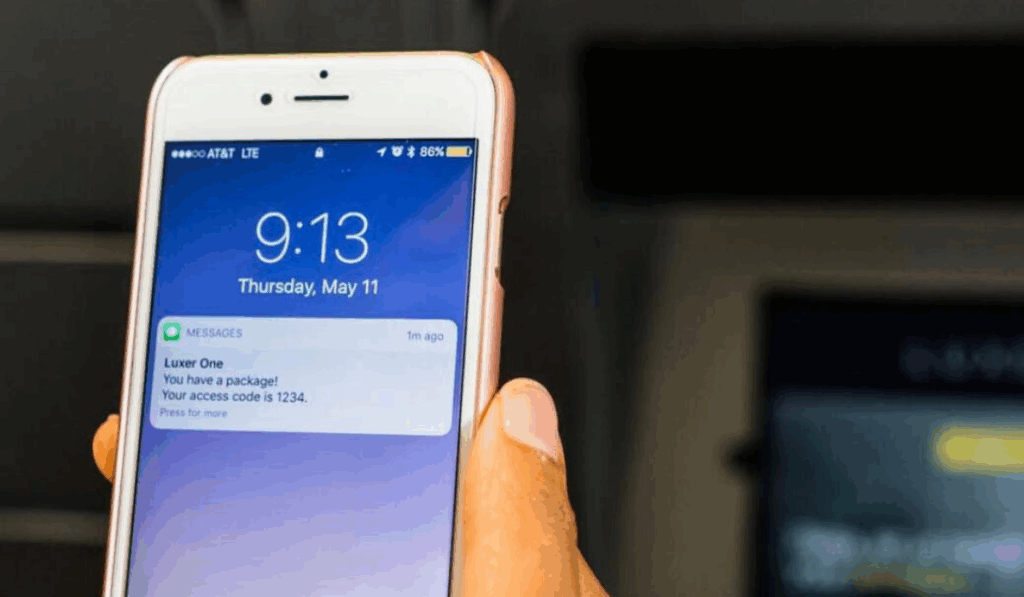
Resident using the Luxer One mobile app notifications on their phone to open the smart locker

Can Smart Lockers Generate Revenue Too?

Yes. Although ROI does not require additional revenue streams, communities often accelerate payback through usage fees and premium delivery services. Property plans (such as Level Up from Luxer One) can support amenity monetization by offering convenience-based options that residents willingly pay for.

For a deeper look at how communities create incremental returns, see this overview of new revenue streams for multifamily communities.

Revenue is not the main lever of ROI, but it can meaningfully shorten the payback period.

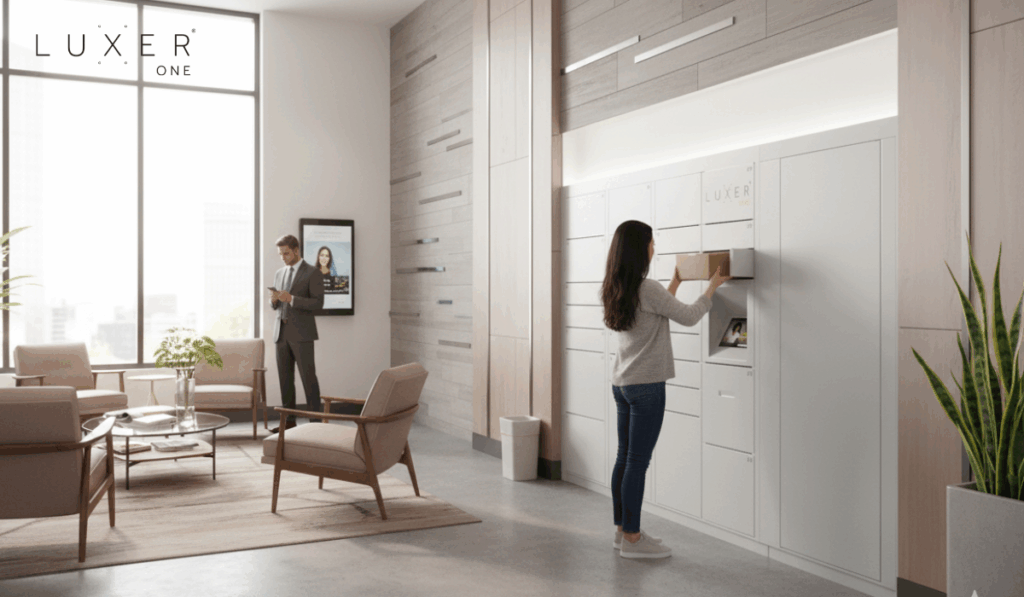
Resident grabbing package from Luxer One smart lockers in entry area of apartment office

What Should Owners Evaluate Before Investing in Smart Lockers?

Owners evaluating the ROI of smart lockers should consider:

  • Package volume and resident demographics

  • Labor allocation and how much time staff spends on package tasks

  • System capacity today and five years from now

  • Security features, which directly impact loss prevention and risk

  • Integration with smart package rooms, if hybrid solutions are needed

  • Long-term durability and vendor reliability

For a deeper dive into planning and sizing a system, owners can access the Guide to Package Management download.

Conclusion: Smart Lockers Deliver Clear, Measurable ROI

When calculating the ROI on smart lockers, most apartment owners discover that automation replaces thousands of hours of annual labor. Additionally these systems strengthen operational efficiency, reduce risk, and enhance the resident experience.

In many cases, communities achieve a return within the first year and significantly more across a five-year horizon. If you want a customized ROI analysis for your property or portfolio, contact Luxer One to get started.

  • Christina Draper

    Christina Draper, Marketing Content Manager at Luxer One, creates storytelling-driven content that connects with property management professionals and highlights innovations in multifamily package management. With a marketing background from UNC Charlotte, she develops cross-channel campaigns that showcase how Luxer One is redefining the resident experience.

    See Posts

RECENT POSTS

The State of the Multifamily Market: Stability Is Returning, but Discipline Still Matters

The State of the Multifamily Market: Stability Is Returning, but Discipline Still Matters

After several years of volatility, the state of the multifamily market entering 2026 feels more predictable than it has since the early post-pandemic period. Rent growth has normalized, supply pressures are beginning to ease in many metros, and demand fundamentals are slowly strengthening. However, this is not a return to the high-growth environment operators experienced earlier in the decade.
Instead, the Q1 2026 outlook reflects a market where stability is returning, but performance depends heavily on operational discipline, cost control, and resident experience. Properties that adapt to this reality are finding steadier footing. Those that rely on outdated assumptions or inefficient systems may struggle to keep pace.
This Q1 2026 multifamily market report breakdown explores what the latest data is telling operators and what it means for day-to-day decision-making.

Read More »
Smart Lockers for Asset Exchange and Package Management in the Modern Workplace

Smart Lockers for Asset Exchange and Package Management in the Modern Workplace

Workplace operations have changed dramatically in recent years. Hybrid schedules, distributed teams, and higher expectations for speed and accountability have reshaped how offices manage equipment, documents, and deliveries. As a result, many organizations are rethinking how assets move through the workplace.
That shift is driving increased demand for smart lockers for asset exchange and package management, a secure and automated solution designed to reduce loss, streamline workflows, and scale with enterprise operations. For workplace managers and operations directors, smart lockers are no longer a convenience. They are becoming a core infrastructure tool for the modern workplace.

Read More »
How to Save Time and Money with Package Management at Apartments

How to Save Time and Money with Package Management at Apartments

Smart lockers and package rooms have become essential infrastructure for modern apartment communities. They create secure, self-service delivery workflows, reduce front office congestion, and give residents flexibility to pick up packages on their own schedule.
For many communities, these systems already do most of the heavy lifting. But at larger properties or across growing portfolios, even the best package management technology benefits from consistent human support.
That is where onsite package management staff come in. When paired with smart lockers and package rooms, they help communities save time and money with package management by ensuring systems are used properly, residents are supported, and onsite teams stay focused on higher-value work.

Read More »
Unlocking Revenue with Smart Lockers: A Strategic Response to Online Cart Abandonment

Unlocking Revenue with Smart Lockers: A Strategic Response to Online Cart Abandonment

Online cart abandonment is not a new problem, but it is becoming a more expensive one.
As ecommerce has matured, shopper expectations have risen just as fast. Convenience, flexibility, and control now play as large a role in conversion as price or product availability. When those expectations are not met, shoppers hesitate, leave, and often do not return.
For retail operations leaders, cart abandonment should no longer be viewed as just a marketing or UX issue alone. It’s also a fulfillment and operational challenge, and one that demands a more strategic response.

Read More »

TOPICS

Share: