


In today’s workplace, the volume of incoming packages and mail at corporate offices is higher than ever. From vendor shipments to employee-online orders, mailrooms are under pressure. If your team still relies on manually logging delivery slips, paging recipients, or stuffing dozens of parcels into storage rooms, it’s time to rethink the workflow.
In this article we’ll answer your key questions on how to automate your office mailroom. We’ll discuss how modern smart package systems are designed not just for letters but full-scale package management. These types of package solutions for offices help you streamline operations, improve security, delight employees, and support sustainability goals.
What are the biggest challenges in a traditional office mailroom?
A manual mailroom often involves these pain points:
- Staff manually signing in packages, tracking spreadsheets, chasing recipients.
- High risk of lost or misplaced items, leading to unhappy employees and wasted time.
- Non-secured access to the storage/mail room or staff signing for a package not meant for them.
- Labor-heavy workflows that divert employee time from higher-value tasks.
- Overflowing storage or packages waiting days for pickup.
- Limited reporting or visibility into what’s coming in and going out.
And the numbers back that up: for example, research shows organizations can reduce mailroom operational costs by up to 60% by implementing digital/mail-automation workflows. Also, the global mailroom automation market is estimated at about USD 2.8 billion in 2024 and growing steadily. All this underlines why the old “lots of physical slips and manual processes” model is increasingly untenable.
Modern facilities are turning to automated solutions such as smart package rooms and smart package lockers to improve operations and reduce costs.
Why is it more important than ever to automate your office mailroom?
Several converging trends make automation essential now:
- Package volume explosion: With e-commerce, hybrid working, and increased vendor deliveries, mailrooms are seeing far more packages than traditional incoming mail. Smart package systems respond to the greater scale.
- Employee experience and expectations: Staff expect fast, seamless service. No one wants to wait by a desk for a delivery or have to page everyone in the office.
- Security and compliance pressures: Sensitive material is being delivered to offices; companies need tracking, audit trails, and controlled access.
- Sustainability goals: Automation means less paper, less transport within buildings, and fewer return trips for greener operations.
- Office operations scaling: Multi-tenant buildings, larger campuses, shared spaces—all require scalable solutions. These modern package solutions for offices are tailored to meet that. Reports show that the digital mailroom software market alone is forecasted to grow at a strong rate.
When you commit to automating your mailroom, you’re not just changing one process, you’re upgrading your entire backend of how deliveries flow through your organization.
How do smart package systems actually work?
Here’s a simplified snapshot of how a smart package system typically replaces manual workflows:
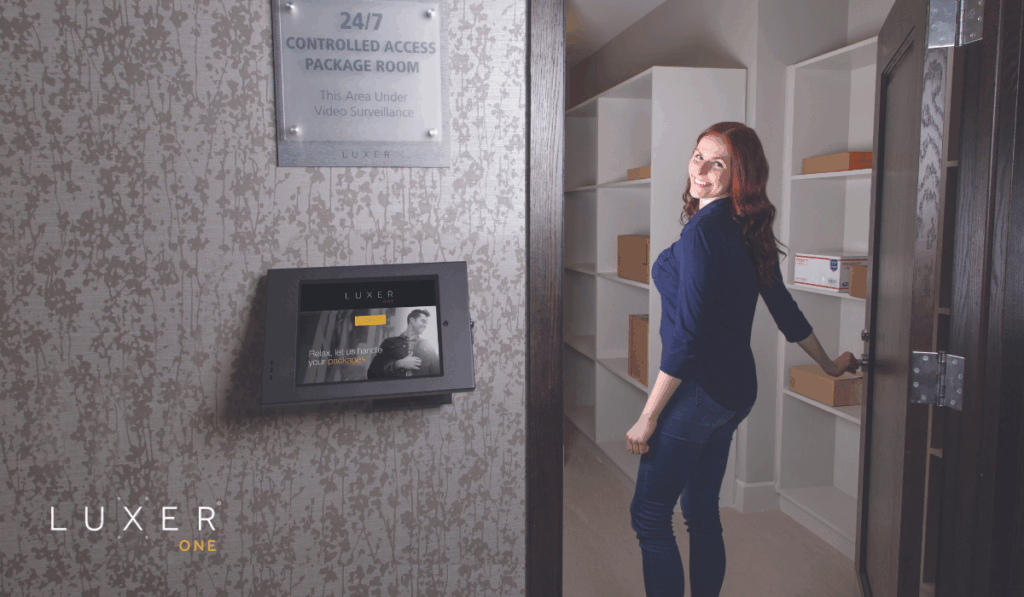
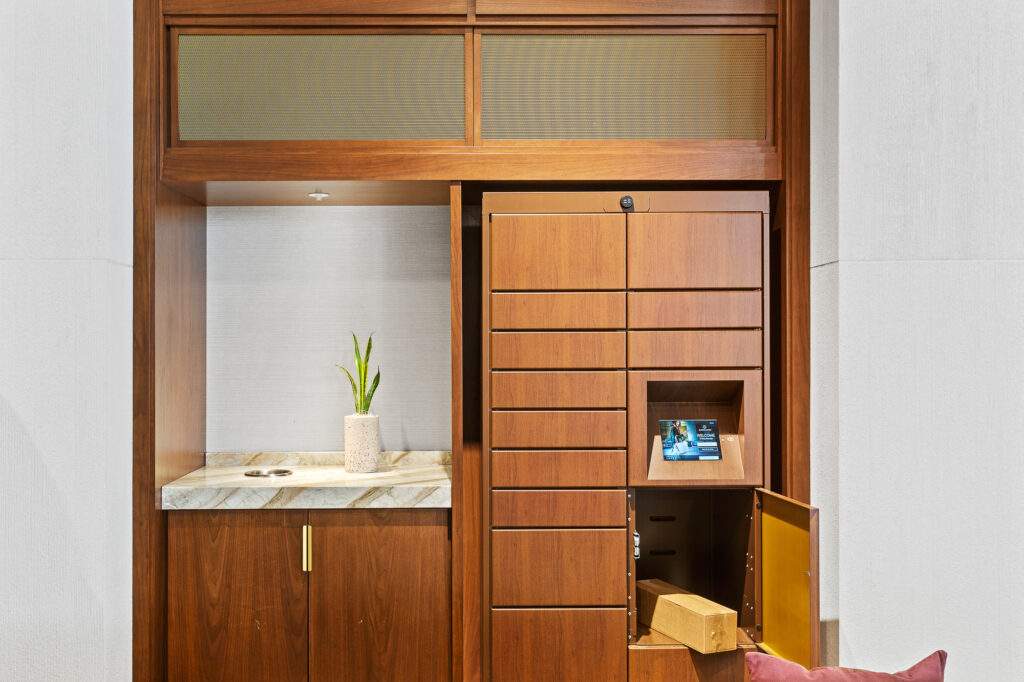
- Carriers deliver packages instead of signing sheets, they scan and drop into secure compartments or a designated room.
- The system logs the delivery and triggers an alert (email/SMS/app) to the recipient.
- The recipient uses a code, badge, or app to access their item at their convenience with no paging or waiting.
- Administrators gain real-time visibility on what’s been delivered, picked up, still waiting, and how long items sit.
- The system integrates with building management or office operations platforms (optional) to tie mail/package flows into your broader ecosystem.
Smart package solutions for the modern office are transforming more than just delivery acceptance. Replacing the old spreadsheets and overflow storage methods makes everything simpler, faster, more secure and transparent.
What benefits can companies expect when they automate their office mailroom?
When you choose to automate your office mailroom, you’ll see a range of benefits across efficiency, security, employee experience and sustainability:
- Efficiency: Lead times drop, fewer mis-delivered or lost packages, less labor time chasing delivery slips and recipients. Industry data indicates processing times can be reduced by as much as 90% with digital workflows
- Security & compliance: Audit logs, secure access, automated chain of custody means you reduce risk of unauthorized pick-up.
- Employee experience: Recipients receive notification, pick up at their convenience, no waiting in line or digging through piles of packages.
- Sustainability/space: Less paper logging, less internal transport of packages, less storage space taken up by overflow. Many organizations report significantly lower cost and resource usage.
- Scalable operations: Whether you’re a small office or a large campus, you can scale up as the system grows as package volumes and facility needs grow.
For example, GrubHub made the switch to automated package rooms a few years ago. The GrubHub Package Room Case Study reveals how they transformed their internal delivery process, enabled faster pickup, and freed up staff capacity. See how a smart system can work in real-world office settings.
What should facilities and operations teams look for in a package management partner?
When selecting a vendor to help you automate your office mailroom, look for the following key criteria:
- Reliability & uptime: The system has to run smoothly. Package volumes and delivery expectations don’t wait for downtime.
- Scalability: Can the solution grow as your office’s size, package volume or locations expand?
- Integration & ecosystem support: Does the solution tie into your broader building/office operations? If you already invest in other systems, this matters.
- User experience: Both administrators and end-users (recipients) must find the system intuitive. If it’s too complex, you’ll have adoption issues.
- Security & audit capabilities: Controlled access, audit logs, chain of custody, alerts all impact risk mitigation.
- Reporting & analytics: You should be able to measure metrics (e.g., time to pickup, volume, mis-deliveries) and track ROI.
- Vendor longevity and support: You want a partner who will be around, is responsive, and evolves their product, not one that disappears or stagnates.
By evaluating against those criteria, you’ll be better positioned to pick a solution that doesn’t just solve today’s mailroom issues, but supports your office operations into the future.
Final Thoughts
Package delivery volumes are growing and workplace expectations are rising. Now is the time to automate your office mailroom. By implementing modern smart-package systems designed for enterprise workflows, you access a new era of operational efficiency, employee satisfaction, security and sustainability. These package solutions for offices aren’t just nice to have, they’re becoming essential.
If you’re ready to explore how your organization can modernize its mailroom and package handling operations, we invite you to contact us today. Let’s talk about how we can help you deploy the right system, streamline your mailroom, and support your broader office-solutions strategy.
-
Christina Draper, Marketing Content Manager at Luxer One, creates storytelling-driven content that connects with property management professionals and highlights innovations in multifamily package management. With a marketing background from UNC Charlotte, she develops cross-channel campaigns that showcase how Luxer One is redefining the resident experience.
See Posts