




LUXER ONE BLOG

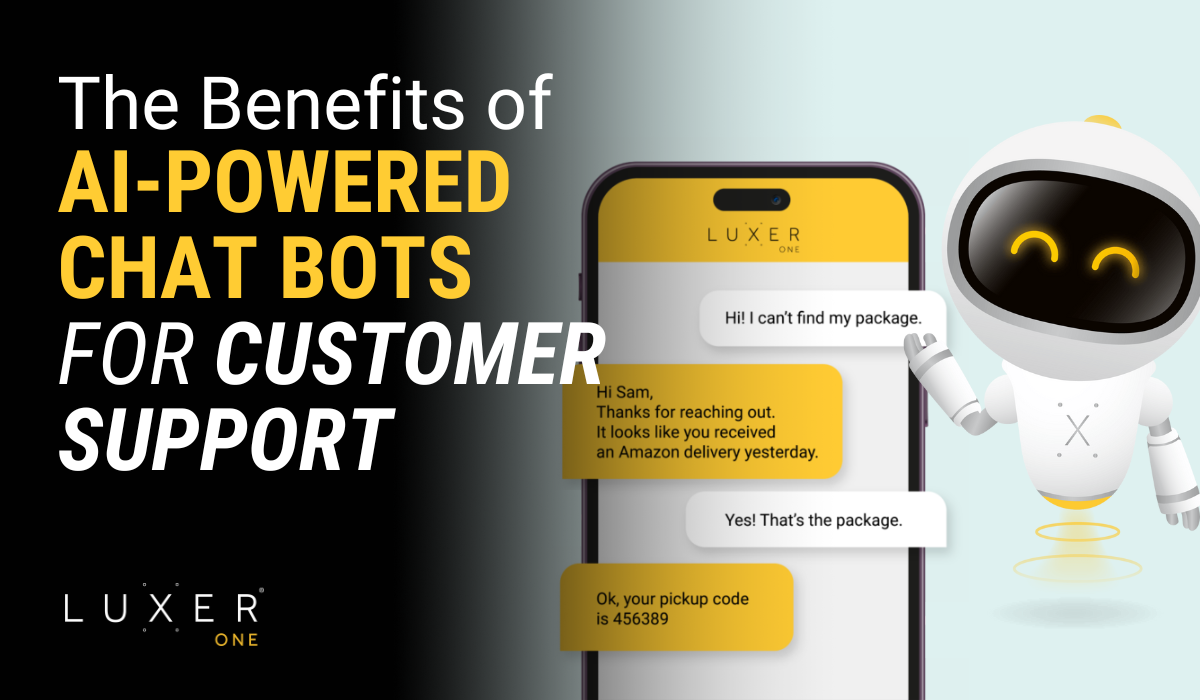
The Benefits of AI-Powered Chat Bots for Customer Support

The Benefits of AI-Powered Chat Bots for Customer Support

It’s no secret that customer support is a core part of the resident experience and a critical factor in how property teams manage their day-to-day workload. Residents expect fast answers. Property managers need reliable tools. And operators want partners who can support both without adding friction.

AI-powered chat bots are emerging as a practical and trustworthy first line of customer support. Not as a replacement for people, but as a way to ensure humans are available where they matter most.

From a proptech perspective, the conversation around AI has matured. The question is no longer whether AI belongs in customer support, but how it can be used responsibly, transparently, and effectively in multifamily environments.

Why Speed and Accuracy Matter More Than Ever in Multifamily Support

Multifamily customer support serves two audiences at once. Residents need quick answers about deliveries, access, and day-to-day issues. Property teams need tools that reduce repetitive tasks and prevent small questions from becoming operational disruptions.

When simple questions stack up, support teams get stretched thin. Response times slow. Frustration builds. And the issues that truly need human attention are delayed.

This is where AI-powered chat bots add immediate value. They are designed to handle high-volume, repetitive questions quickly and consistently, creating breathing room for on-site teams and support staff to focus on complex or sensitive situations.

In practice, this means residents get answers faster and property teams regain time.

Resident speaking on phone with support representative

AI as the First Line of Defense, Not the Final One

One of the biggest misconceptions around AI in customer support is that it replaces human interaction. In reality, the most effective systems do the opposite.

AI works best as the first touchpoint. It answers straightforward questions, routes requests correctly, and gathers information before a human ever needs to step in. When escalation is needed, the handoff is cleaner, faster, and more informed.

This layered approach improves outcomes for everyone involved. Residents are not stuck waiting for simple answers. Property managers are not fielding the same questions repeatedly. And support teams can spend their time solving real problems rather than responding to routine inquiries.

In multifamily, where service quality directly impacts retention and satisfaction, this balance matters.

Ai-powered tech

Addressing the Common Concerns Around AI Support

Despite growing adoption, hesitation around AI-powered chat bots is understandable. Operators want to protect the resident experience and maintain trust. Three concerns come up most often.

Loss of the human touch

Residents do not want to feel like they are talking to a machine that cannot understand them. The solution is not to remove AI, but to design it thoughtfully. Clear escalation paths and visible human support ensure residents always know help is available when they need it.

Incorrect or incomplete answers

AI is only as good as the information it is trained on. Generic or poorly maintained chat bots can frustrate users. In contrast, systems trained in-house, continuously updated, and closely monitored can deliver accurate, relevant responses aligned with real-world scenarios.

Resident frustration

Ironically, frustration often comes from delays, not automation. When residents receive immediate answers to common questions, satisfaction improves. When they need a person, fast escalation matters more than whether AI was involved at the start.

When implemented responsibly, AI reduces friction instead of creating it.

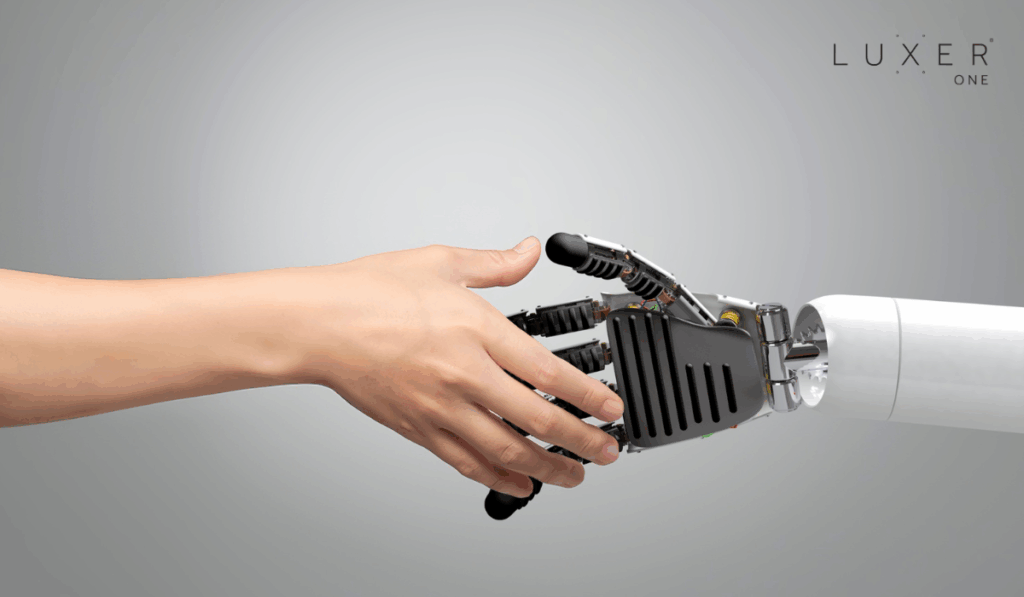
Human hand reaching out to robot hand

Why Training and Oversight Make All the Difference

Not all AI-powered chat bots are created equal. The difference lies in who builds them, how they are trained, and how often they evolve.

In multifamily proptech, the most effective AI solutions are developed by teams who deeply understand the operational realities of properties and residents. Training AI in-house allows for tighter quality control, faster iteration, and alignment with real support needs.

Ongoing innovation also matters. Resident behavior changes. Technology evolves. Support expectations shift. AI must be actively improved to remain helpful, accurate, and trustworthy.

This is where AI becomes an asset rather than a risk.

Supporting Both Residents and Property Teams at Scale

One of the most overlooked benefits of AI-powered chat bots for customer support is their ability to serve multiple audiences simultaneously.

For residents, AI provides:

  • Immediate answers to common questions

  • 24/7 access to support information

  • Consistent responses regardless of time or volume

For property teams, AI delivers:

  • Fewer interruptions during peak hours

  • Reduced ticket volume for repetitive issues

  • Better visibility into recurring questions and pain points

At scale, this dual support model strengthens operations while improving the resident experience.

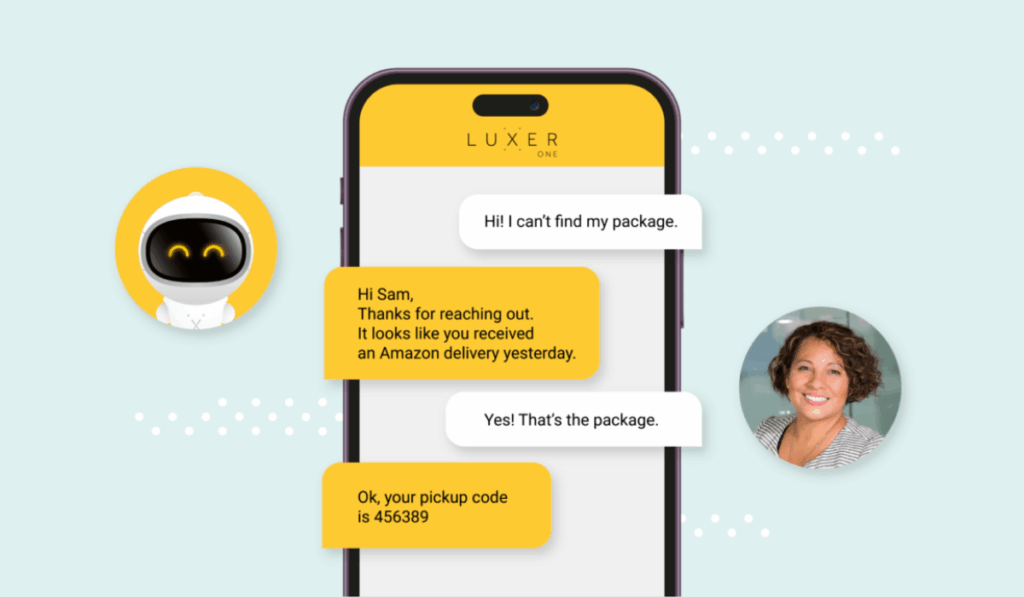
Luxer One chat bot example finding a residents package

What AI Adoption Signals About a Vendor

For multifamily operators evaluating technology partners, customer support is often the deciding factor. AI adoption can be a signal of strength or a red flag, depending on how it is used.

Strong vendors view AI as an extension of their support philosophy, not a replacement for it. They invest in technology that enhances responsiveness while maintaining access to knowledgeable human teams.

When assessing vendors, operators should ask:

  • Is AI used to improve response times or cut corners?

  • Are humans easy to reach when needed?

  • Is the system continuously updated and monitored?

The answers reveal whether a vendor is built for long-term partnership or short-term efficiency.

Customer support rep on the phone

AI and Human Support Are Stronger Together

The future of customer support in multifamily is not fully automated, nor is it fully manual. It is collaborative.

AI-powered chat bots handle the fast, the frequent, and the straightforward. Humans handle the nuanced, the complex, and the relational. Together, they create a support experience that is responsive, reliable, and scalable.

For multifamily operators, this balance is no longer optional. It is a requirement for keeping up with resident expectations and operational demands.

A Smarter Standard for Customer Support

At Luxer One, technology has always been a means to an end, not the end itself. Our AI chat bot was trained in-house by our software team, built around real support scenarios, and continuously improved to deliver accurate, helpful responses for both residents and property managers.

Just as importantly, it is backed by real people who step in when AI should step aside.

That balance is what defines reliable customer support today.

If you are evaluating package solutions and want a partner that combines smart technology with unparalleled human support, contact us to learn how Luxer One delivers package management backed by customer service you can trust.

  • Dar Tafarrodi

    Dar Taffarodi is the GM of ARR at Luxer One, responsible for recurring revenue growth and customer experience. With 25+ years leading large-scale customer operations at Luxer One, Verizon, and ClearCaptions, he specializes in building scalable, high-performing service organizations.

    See Posts

RECENT POSTS

The State of the Multifamily Market: Stability Is Returning, but Discipline Still Matters

The State of the Multifamily Market: Stability Is Returning, but Discipline Still Matters

After several years of volatility, the state of the multifamily market entering 2026 feels more predictable than it has since the early post-pandemic period. Rent growth has normalized, supply pressures are beginning to ease in many metros, and demand fundamentals are slowly strengthening. However, this is not a return to the high-growth environment operators experienced earlier in the decade.
Instead, the Q1 2026 outlook reflects a market where stability is returning, but performance depends heavily on operational discipline, cost control, and resident experience. Properties that adapt to this reality are finding steadier footing. Those that rely on outdated assumptions or inefficient systems may struggle to keep pace.
This Q1 2026 multifamily market report breakdown explores what the latest data is telling operators and what it means for day-to-day decision-making.

Read More »
Smart Lockers for Asset Exchange and Package Management in the Modern Workplace

Smart Lockers for Asset Exchange and Package Management in the Modern Workplace

Workplace operations have changed dramatically in recent years. Hybrid schedules, distributed teams, and higher expectations for speed and accountability have reshaped how offices manage equipment, documents, and deliveries. As a result, many organizations are rethinking how assets move through the workplace.
That shift is driving increased demand for smart lockers for asset exchange and package management, a secure and automated solution designed to reduce loss, streamline workflows, and scale with enterprise operations. For workplace managers and operations directors, smart lockers are no longer a convenience. They are becoming a core infrastructure tool for the modern workplace.

Read More »
How to Save Time and Money with Package Management at Apartments

How to Save Time and Money with Package Management at Apartments

Smart lockers and package rooms have become essential infrastructure for modern apartment communities. They create secure, self-service delivery workflows, reduce front office congestion, and give residents flexibility to pick up packages on their own schedule.
For many communities, these systems already do most of the heavy lifting. But at larger properties or across growing portfolios, even the best package management technology benefits from consistent human support.
That is where onsite package management staff come in. When paired with smart lockers and package rooms, they help communities save time and money with package management by ensuring systems are used properly, residents are supported, and onsite teams stay focused on higher-value work.

Read More »
Unlocking Revenue with Smart Lockers: A Strategic Response to Online Cart Abandonment

Unlocking Revenue with Smart Lockers: A Strategic Response to Online Cart Abandonment

Online cart abandonment is not a new problem, but it is becoming a more expensive one.
As ecommerce has matured, shopper expectations have risen just as fast. Convenience, flexibility, and control now play as large a role in conversion as price or product availability. When those expectations are not met, shoppers hesitate, leave, and often do not return.
For retail operations leaders, cart abandonment should no longer be viewed as just a marketing or UX issue alone. It’s also a fulfillment and operational challenge, and one that demands a more strategic response.

Read More »

TOPICS

Share: