


LUXER ONE BLOG

Best Practices For Package Locker Setup In Apartments

Best Practices For Package Locker Setup In Apartments

Package lockers have become an essential amenity in modern apartment communities. With daily delivery volumes rising and residents expecting secure self-service pickup, a well planned locker setup can make a major difference in resident satisfaction and staff efficiency. Below are the top questions property managers ask when planning a successful package locker deployment, along with practical best practices.

What makes an ideal package locker location in an apartment community?

The location of your lockers is one of the biggest factors in how smoothly the system will operate. Lockers perform best when located near the existing mailroom or a primary entry area. The recommended placement conditions include an unlocked vestibule, ground floor access, a level path of travel, and a centralized position for carriers and residents to reach quickly.

When researching the best package management solution it’s important to compare how different layouts affect day-to-day flow. Centralizing the location ensures that carriers do not waste time navigating the building and that residents can easily pick up deliveries at any hour.

To help you evaluate whether your location is optimal, consider the experience of all three groups: carriers, residents, and onsite teams.

Package piles in multifamily communities

How much capacity should a property plan for?

Capacity planning is one of the most overlooked parts of a successful locker rollout, yet it has a direct impact on resident satisfaction and system uptime.

Best practice guidelines recommend:

  • Planning for 40 to 50 percent locker doors per unit
  • Installing one locker tower for every 30 units
  • Expecting roughly 15 deliverable packages per tower on average

According to our experiences over the past 15 years, we’ve found these capacity recommendations help communities avoid overcrowded lockers.

For properties that see higher package volumes, supplementing lockers with an automated package room can be an efficient solution. You can learn more about how different systems compare in What Is The Best Package Solution for Multifamily Properties?

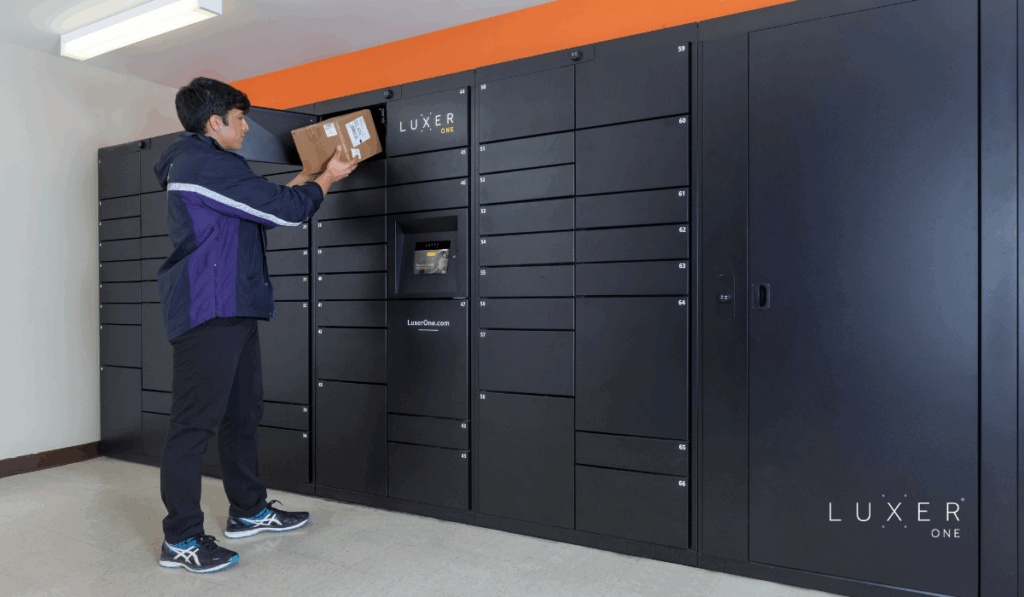
Multiple packages in an oversized Luxer One package locker

Should lockers be placed indoors or outdoors?

Both placements work well when designed correctly, but each has specific considerations.

Indoor lockers are the most common choice because they protect hardware from weather exposure and are typically placed near mailrooms and entry areas.

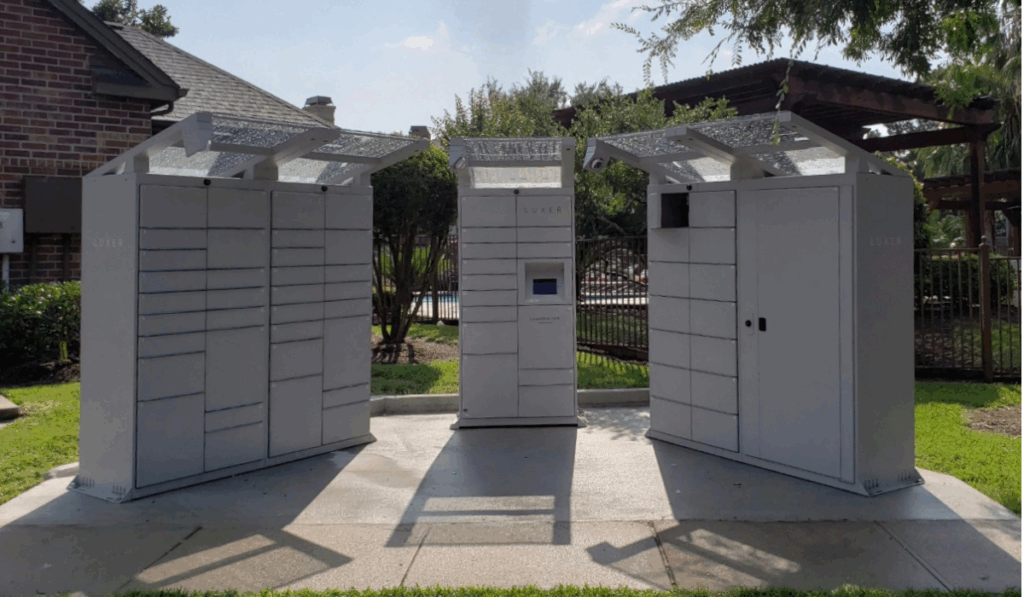
Outdoor lockers must meet durability requirements. Outdoor units should include protective roof shields, high quality steel with proper coating, bolted anchoring to withstand severe conditions, outdoor safe cameras, and ratings for extreme cold temperatures such as negative 40 degrees Celsius.

If you are evaluating outdoor deployment, review How Secure Are Package Lockers? for more considerations around intrusion resistance and surveillance.

Carrier delivering package to smart parcel lockers from Luxer One

What features matter most for smooth operations and resident satisfaction?

A high level, easy to maintain system benefits both residents and property teams. Features worth prioritizing include:

Reliable access and theft deterrence. Many communities use secure smart lockers to reduce theft in high traffic lobbies.

High package acceptance rates. Locker size mix matters. National data indicates that 47 percent of packages go into small lockers, followed by 29 percent for medium, 11 percent for large, and 13 percent for oversized. Make sure the system you choose has the correct mix to avoid misdeliveries or hallway overflow.

Smart software and reporting tools. A well designed dashboard helps staff view system usage, manage alerts, and quickly address resident inquiries.

System durability and build quality. Long lasting solutions should be UL certified to meet building safety standards and comply with new construction requirements. This avoids many of the long term risks highlighted in Warning Signs Your Solution Isn’t Built to Last.

Resident using the Luxer One mobile app notifications on their phone to open the smart locker

How can properties avoid long term operational issues?

Many challenges arise from choosing a system that cannot scale with resident demand. To future ready your setup, consider:

  • Planning for years of increasing package volume

  • Choosing a provider that offers both locker and room configurations

  • Ensuring the system includes surveillance options for audit verification

  • Confirming that support response is fast and consistent

  • Verifying hardware certifications for safety and durability
Outdoor Smart Lockers with roof kits from Luxer One after a rain storm

How do you select the right provider?

The right package locker partner should offer expertise, reliability, and a proven track record. Property managers often look for:

  • Systems built for long term durability

  • High uptime and dependable support

  • Scalable configurations for changing package volumes

  • Smart features that simplify both resident and staff experiences

  • Clear commitments to safety standards and compliance

Explore how different systems compare, download the Guide to Multifamily Package Management, a helpful resource for teams planning upgrades or new installations.

Ready to set up a package locker system that works for your community?

A well planned setup can improve resident satisfaction, reduce staff workload, and keep deliveries secure. If you want expert support in designing the right configuration for your property, contact Luxer One to get started.

  • Christina Draper

    Christina Draper, Marketing Content Manager at Luxer One, creates storytelling-driven content that connects with property management professionals and highlights innovations in multifamily package management. With a marketing background from UNC Charlotte, she develops cross-channel campaigns that showcase how Luxer One is redefining the resident experience.

    See Posts

RECENT POSTS

What Your Mid-Year Multifamily Market Report Reveals About 2026 Multifamily Market Trends

What Your Mid-Year Multifamily Market Report Reveals About 2026 Multifamily Market Trends

Budget season is here, and with it comes the same question every property manager, owner, and developer is asking: what does the rest of 2026 actually look like, and what should that mean for 2027?
That’s why we built the Mid-Year Multifamily Market Report: a data-backed snapshot of the multifamily market trends shaping occupancy, pricing, supply, and operations right now, with a clear “what it means” takeaway for every finding.

Read More »
Budget Season Is Here. What the Market Is Actually Telling You.

Budget Season Is Here. What the Market Is Actually Telling You.

August marks the start of budget season for most of the multifamily industry. Over the next 60 to 90 days, property managers are reviewing vendor contracts, owners are stress-testing their 2027 revenue assumptions, and developers are making go or no-go decisions on projects they have been holding.

Everyone is asking the same question: what kind of market are we actually planning into?

Read More »
luxens on the rise employee highlight

Luxens on the Rise: Employee Highlight | Ryan Hellwig

At Luxer One, growth is part of the job. We prioritize promoting from within, provide clear paths for advancement, and encourage every team member to explore new opportunities! Our Luxens on the Rise series highlights team members who have carved their own paths within the company, taking on new challenges and evolving their careers along the way.
Read More »
Food pantry on college campus

How Do Food Pantries Work on College Campuses?

Universities are facing pressure to manage technology as conveniently as students and faculty experience other aspects of campus life.

Traditional distribution methods often struggle to keep up with demand. Manual checkouts, limited office hours, long lines, and inconsistent tracking can create challenges for IT teams and students. As campuses continue modernizing operations, many universities are rethinking their IT equipment distribution process.

Read More »

TOPICS

Share: