




LUXER ONE BLOG

The Future of Real Estate Technology: What Multifamily Leaders Should Prepare For Now

The Future of Real Estate Technology: What Multifamily Leaders Should Prepare For Now

Real estate tech is advancing faster than ever, and multifamily operators are feeling the shift across every corner of their portfolios. AI adoption is accelerating, centralized operations are becoming the standard, and residents expect more connected, digital-first experiences in their homes. Following recent industry conversations, including trends highlighted at OPTECH 2025, the future of real estate technology is taking shape around efficiency, data intelligence, automation, and resident expectations.

For multifamily leadership teams, understanding where the industry is heading is only half the challenge. The real task is identifying the practical steps to stay competitive today while preparing for what is next.

Below is a look at what is driving the future of real estate technology, supported by the latest industry data, along with actionable insights you can use to future-ready your operations.

AI Is Moving From Pilot Project to Core Infrastructure

Across real estate tech, AI is no longer an experiment. It is becoming a foundational operating tool. Research from EliseAI shows that 68 percent of surveyed multifamily operators have integrated AI into existing systems, and 86 percent are running multiple AI pilots at the same time.

Another recent industry roundup found that 68 percent of property management companies using AI report improved operational efficiency. At the same time, AI tools now handle roughly 75 percent of tenant communications, cutting response times by nearly 40 percent.

What this means for multifamily teams: AI is finally becoming a long-term part of the operational stack, not an optional add-on. Operators are using it for:

  • Lead nurturing and leasing assistance

  • Predictive maintenance

  • Automated task routing

  • Insights from portfolio-wide data

  • Package and access workflow automation

Practical Tip:
Start with a narrow operational pain point, such as communications, maintenance triage, or package auditing, rather than trying to deploy AI across the entire ecosystem at once. Incremental wins build organizational trust and ensure sustainable adoption.

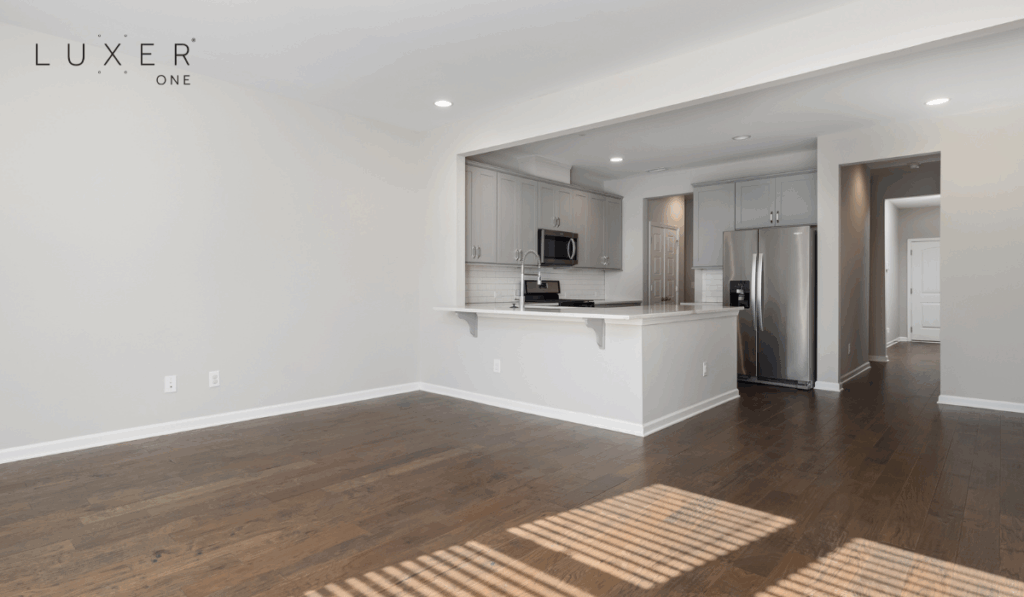
New apartment build that is empty and ready to be occupied

Centralized Operations Are Reshaping Multifamily Roles

If AI is the brain of modern real estate tech, centralized operations are becoming its backbone. According to recent industry research, as many as 80 percent of third-party multifamily managers are centralizing at least one part of their operations, driven by staffing pressures and the need for greater efficiency.

Centralization now extends beyond leasing to include:

  • Call centers and communication hubs

  • Centralized maintenance coordination

  • Digital access and credential management

  • Package room and locker oversight

  • Standardized workflows across the portfolio

Operators are seeking ways to shift repetitive onsite tasks off property teams, giving staff more time for resident service, retention, and higher-impact work.

This is where tools like automated package systems and building dashboards become essential. For example, the Luxer One Property Dashboard centralizes visibility into package activity, audit history, and system performance.

Practical Tip:
Before centralizing, audit your tech stack. Identify where duplicate tools, outdated manual processes, or siloed data sources are holding your teams back. Centralization succeeds when the underlying technology is unified and standardized.

Status tracking on the Luxer One Property Dashboard

The Rise of Data Intelligence: Digital Twins, Portfolio Modeling, and New Analytics

The future of real estate technology is not just powered by AI. It is shaped by the massive amounts of data operators can now collect, analyze, and model.

In the broader real estate sector, the market for AI-driven analytics is projected to grow from 2.9 billion dollars in 2024 to 41.5 billion dollars by 2033, according to recent industry forecasts.

Meanwhile, tools like digital twins and synthetic data simulations are becoming more accessible. These technologies allow teams to:

  • Predict building performance

  • Test renovation or amenity scenarios

  • Model staffing needs

  • Anticipate resident demand

  • Optimize space and asset utilization

Practical Tip:
If your team is already collecting data from access control, package systems, maintenance logs, or leasing platforms, the next step is integration. A connected, cross-system view of your portfolio is more valuable than isolated dashboards.

Resident grabbing package from large Luxer One locker compartment

Cybersecurity and AI Governance Are Moving Front and Center

As real estate tech becomes more advanced, regulation and data governance are evolving right alongside it. Recent litigation related to AI-driven pricing tools has pushed multifamily owners and managers to adopt more transparent, controlled processes for how data is used in decision-making.

Examples of this shift include:

The result: The future of real estate technology requires strong governance, resident transparency, and vendor selection standards grounded in data protection and auditability.

Practical Tip:
Document how each system uses resident or operational data. Vendor partners should offer clear audit trails, secure data handling, and transparent product roadmaps.

Multifamily regional managers are looking for ways to offer centralized operations

Resident Experience Is Still Driving Tech Investment

Even as operations become more digital, the resident experience remains the most powerful differentiator. Surveys continue to show that modern renters expect:

  • Frictionless access control


  • Reliable WiFi and connected building experiences


  • Contactless deliveries


  • Fast response times from staff


  • Amenities that reflect high-tech convenience


A recent Multifamily Executive report found that properties investing in stronger tech stacks see elevated satisfaction and retention.

Package management remains one of the most visible resident-facing touchpoints and the rise of e-commerce makes it impossible to ignore. Smart lockers, automated package rooms, and digital notifications solve an everyday frustration for residents and free up hours of staff time.

Practical Tip:
Map the resident journey. Identify the points where experience breaks down, not just at move-in or renewal but across daily interactions such as deliveries, access, maintenance requests, and communication.

Boosting Resident Retention

Preparing for the Next Wave of Innovation

While conversations at events like OPTECH highlight the future, such as agentic AI, robotics, or digital twins, the most important step for multifamily teams today is readiness.

To position your organization for what is coming next, prioritize investments in:

  • Interoperable systems that connect with each other

  • Secure and governed data frameworks

  • Automation tools that remove repetitive onsite workloads

  • Centralized oversight dashboards

  • Resident-facing technologies that deliver daily convenience

If you want to see how these trends intersect with staffing, operations, and emerging challenges, this recent analysis breaks them down well.

Conclusion

As real estate tech continues to evolve, multifamily operators need solutions that support efficiency today and scalability tomorrow. Smart package management systems, including automated lockers, package rooms, and centralized dashboards, help properties reduce operational strain, improve resident satisfaction, and prepare for the next wave of innovation.

Explore package management solutions today! Contact us to learn how our automated solutions fit into the future of real estate technology.

  • Christina Draper

    Christina Draper, Marketing Content Manager at Luxer One, creates storytelling-driven content that connects with property management professionals and highlights innovations in multifamily package management. With a marketing background from UNC Charlotte, she develops cross-channel campaigns that showcase how Luxer One is redefining the resident experience.

    See Posts

RECENT POSTS

The Hidden Cost of Off-Site Package Models

The Hidden Cost of Off-Site Package Models

At first glance, some package management solutions seem like a win for property teams. They promise fewer packages on-site, less clutter, and less day-to-day handling.
But what looks convenient on the surface often comes with hidden tradeoffs. While these models may reduce visibility on the property, they do not eliminate the problem. They shift it somewhere else.
And in many cases, they shift it directly onto residents.

Read More »

Luxens on the Rise: Employee Highlight | Saular Moaddeli

At Luxer One, growth is part of the job. We prioritize promoting from within, provide clear paths for advancement, and encourage every team member to explore new opportunities! Our Luxens on the Rise series highlights team members who have carved their own paths within the company, taking on new challenges and evolving their careers along the way.
This month, we’re featuring Craig Meddin, Founder and CEO of Postal Solutions. With more than 25 years in the industry, Craig has built a business centered on helping properties simplify mail and package management, not just with technology, but with the right systems behind it.

Read More »
The Middleman Problem: Why More Delivery Logistics Creates More Problems

The Middleman Problem: Why More Delivery Logistics Creates More Problems

On paper, adding more steps to a delivery process can sound like progress. More coordination, more handling, and more structure.
But in reality, more logistics often leads to more problems.
This is the core issue facing today’s multifamily delivery logistics strategies. In an effort to manage growing package volume, many systems have introduced additional layers between the carrier and the resident.
And while those layers are meant to help, they often create the opposite effect.
Because every extra step is another opportunity for something to go off track.

Read More »
food pantry access

From Food Banks to Food Access Networks: How Distribution Is Evolving

Modern food pantries are being asked to do more with less. They need to serve more people, offer greater flexibility, and operate with fewer staff and volunteers. As organizations look for ways to expand access without increasing overhead, many are wondering: Is there a better way to distribute food?
This Q&A explores the kinds of questions partners are already asking, and how smart locker solutions are helping provide answers.

Read More »
Scalable Package Management Solutions that Work for Every Community

Luxer Liaison: Scalable Package Management Solutions That Work for Every Community

From boutique properties to high rise luxury buildings, every community faces a different mix of challenges. Limited space, growing delivery volume, resident expectations, and staffing constraints all play a role. The common thread is the need for scalable package management solutions that adapt instead of overwhelm.
That’s where the Luxer Liaison package service stands out. By combining on site expertise with flexible service models, Liaison supports communities of all sizes without forcing them into rigid systems or delayed delivery models.

Read More »

TOPICS

Share: