
LUXER ONE BLOG

Has Delivery Replaced Pickup? What the Data Says About Retail’s Next Chapter

woman shopping in person pickup

Retailers face more choices than ever when it comes to fulfillment: ship-to-home, same-day delivery, third-party courier pick-ups, and in-store or curbside pickup (BOPIS – Buy Online, Pickup In-Store). Is the traditional in-person pickup model fading away in favor of delivery and third‐party logistics? Data suggests that in-store/curbside pickup remains not only relevant but increasingly important, in a transformed, omnichannel context.

 “44% of shoppers still prefer in-store retail, though they expect seamless digital integration.”

The Ongoing Strength of the Physical Store and Pickup

According to one 2025 report, 44% of shoppers still prefer in-store retail, though they expect seamless digital integration. In addition, online statistics for 2024 show that U.S. consumers spent roughly $5.927 trillion in brick-and-mortar stores vs. $1.337 trillion online, meaning physical stores remain the dominant channel. 

Within that broader context, services like BOPIS/curbside pickup are growing. For example, another report shows that 67% of U.S. shoppers used click-and-collect (i.e., BOPIS) in the past six months, and it expects 10% of all sales to be fulfilled via BOPIS by 2025. Projections estimate the U.S. BOPIS market could grow to over $500 billion by 2033.

These stats suggest that the role of in-store/curbside pickup is far from gone, rather, it is being re-defined.
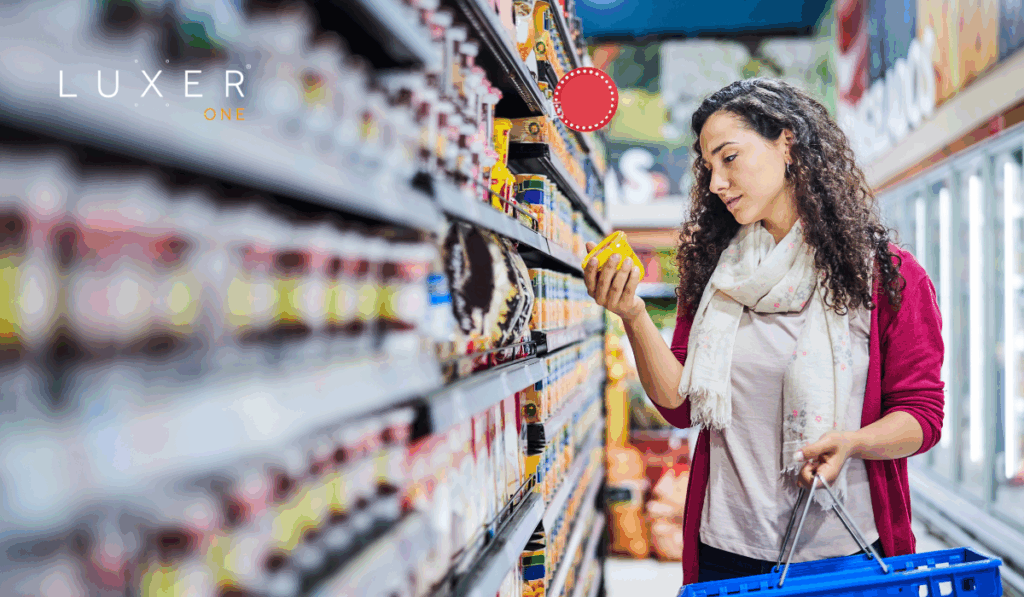
woman shopping in grocery store aisle

Do Retail Customers Prefer In-Store Pickup?

There are several reasons why BOPIS remains attractive to consumers:
  • Convenience and immediacy: Shoppers like the ability to order online and retrieve items quickly without shipping delays or fees. For many, avoiding shipping costs is a motivator.
  • Omnichannel synergy: Pickup often leads to additional in-store purchases. One source reports that 67% of click-and-collect customers make additional purchases when they are in-store.
  • Reduced logistics cost/risk: Fulfillment at or near a store can reduce shipping time and cost compared to long-distance home delivery. This also mitigates failed-delivery issues that plague last-mile logistics.
  • Physical store as experience centre: For customers who still value touching and seeing products, or getting them immediately, the store plays a role digital cannot easily replicate. 

The Rise of Last-Mile Delivery and Its Impact

41-53%

of logistics costs can be attributed to the last-mile, including ship to home.

31%

of the third-party logistic market is retail based.

66%

of consumers expect same-day delivery, and expectations are rising.

What this means for in-store pickup is that it needs to evolve. Stores should focus on offering a seamless omnichannel experience, integrating digital and physical, and optimizing logistics, according to this trend report.

woman online shopping

How Should Retailers Think About Pickup in 2026?

For retailers aiming to make pickup work, here are some strategic considerations:

  1. Inventory visibility is critical. If a customer orders online expecting to pick up in-store, but inventory isn’t accurate, it undermines trust and defeats the convenience value.
  2. The pickup experience should be frictionless. That means clear signage, dedicated pickup counters or lockers, minimal wait, and communication. Think notifications when the order is ready, parking guidance for curbside, or digital lock-code retrieval if using lockers.
  3. Think of the pickup point as an opportunity, not just for fulfilment, but for engagement. Many pickup customers make additional purchases in-store. If the pickup counter is well integrated with store flow, it can drive incremental revenue.
  4. Consider alternatives like store-based lockers or automated pickup kiosks as part of the fulfilment strategy. These can reduce labour, allow 24/7 access, and integrate with online ordering workflows.
  5. Revisit economics. Last-mile costs remain high and consumers continue to expect speed and convenience. Pickup models offer a cost-effective alternative. Incorporating pickup effectively can mitigate some of the delivery burden.

Has delivery replaced pickup?

Quite the opposite. In-person pickup remains a relevant and strategic component of the modern retail fulfilment mix. It’s not going away, but it must be re-imagined. Shopper expectations are increasing and last-mile delivery is becoming more complex and expensive. Retailers who invest in seamless, frictionless pickup models, digital-to-physical integration, locker deployments, and store fulfillment workflows, will find themselves better positioned to win and retain customers.

For retailers seeking to elevate their pickup experience, solutions like those from Luxer One offer smart locker systems designed for retail environments. These systems provide an elegant way to deliver online-orders-to-store and allow customers to retrieve them on their schedule, making the in-person pickup model even stronger. Lockers can reduce labour, increase convenience, enable after-hours access, and leverage the store as a fulfilment hub.

If you’re exploring how to strengthen your in-store pickup offering, learn about how smart locker infrastructure can support your omnichannel strategy and turn pickup into a competitive advantage.

  • Lauren Buote

    Lauren Buote is a Marketing Coordinator at Luxer One who blends her fine arts background from North Carolina State University, with marketing experience in small businesses and museums. She specializes in content and design that support Luxer One’s storytelling and brand growth in the Commercial sector.

    See Posts

RECENT POSTS

The State of the Multifamily Market: Stability Is Returning, but Discipline Still Matters

The State of the Multifamily Market: Stability Is Returning, but Discipline Still Matters

After several years of volatility, the state of the multifamily market entering 2026 feels more predictable than it has since the early post-pandemic period. Rent growth has normalized, supply pressures are beginning to ease in many metros, and demand fundamentals are slowly strengthening. However, this is not a return to the high-growth environment operators experienced earlier in the decade.
Instead, the Q1 2026 outlook reflects a market where stability is returning, but performance depends heavily on operational discipline, cost control, and resident experience. Properties that adapt to this reality are finding steadier footing. Those that rely on outdated assumptions or inefficient systems may struggle to keep pace.
This Q1 2026 multifamily market report breakdown explores what the latest data is telling operators and what it means for day-to-day decision-making.

Read More »
Smart Lockers for Asset Exchange and Package Management in the Modern Workplace

Smart Lockers for Asset Exchange and Package Management in the Modern Workplace

Workplace operations have changed dramatically in recent years. Hybrid schedules, distributed teams, and higher expectations for speed and accountability have reshaped how offices manage equipment, documents, and deliveries. As a result, many organizations are rethinking how assets move through the workplace.
That shift is driving increased demand for smart lockers for asset exchange and package management, a secure and automated solution designed to reduce loss, streamline workflows, and scale with enterprise operations. For workplace managers and operations directors, smart lockers are no longer a convenience. They are becoming a core infrastructure tool for the modern workplace.

Read More »
How to Save Time and Money with Package Management at Apartments

How to Save Time and Money with Package Management at Apartments

Smart lockers and package rooms have become essential infrastructure for modern apartment communities. They create secure, self-service delivery workflows, reduce front office congestion, and give residents flexibility to pick up packages on their own schedule.
For many communities, these systems already do most of the heavy lifting. But at larger properties or across growing portfolios, even the best package management technology benefits from consistent human support.
That is where onsite package management staff come in. When paired with smart lockers and package rooms, they help communities save time and money with package management by ensuring systems are used properly, residents are supported, and onsite teams stay focused on higher-value work.

Read More »
Unlocking Revenue with Smart Lockers: A Strategic Response to Online Cart Abandonment

Unlocking Revenue with Smart Lockers: A Strategic Response to Online Cart Abandonment

Online cart abandonment is not a new problem, but it is becoming a more expensive one.
As ecommerce has matured, shopper expectations have risen just as fast. Convenience, flexibility, and control now play as large a role in conversion as price or product availability. When those expectations are not met, shoppers hesitate, leave, and often do not return.
For retail operations leaders, cart abandonment should no longer be viewed as just a marketing or UX issue alone. It’s also a fulfillment and operational challenge, and one that demands a more strategic response.

Read More »

TOPICS

Share: