

LUXER ONE BLOG

Retail Industry Trends for 2026: What Operations Leaders Should Prepare For

Retail Industry Trends for 2026: What Operations Leaders Should Prepare For

After a turbulent few years of shifting consumer confidence, supply chain recalibration and nonstop digital innovation, retail is entering 2026 with more clarity and more pressure. The last 12 months revealed a shopper who is simultaneously value driven and convenience obsessed, pushing retailers to rethink how stores operate, how fulfillment happens and how technology drives profitability instead of complexity.

As leaders head into the NRF Big Show in New York, the message is clear. 2026 will reward retailers who streamline operations, modernize fulfillment and build flexible omnichannel experiences rooted in real, measurable efficiency. Here is what the latest data, forecasts and industry analyses tell us about the retail landscape ahead.

The Ongoing Strength of the Physical Store and Pickup

According to one 2025 report, 44% of shoppers still prefer in-store retail, though they expect seamless digital integration. In addition, online statistics for 2024 show that U.S. consumers spent roughly $5.927 trillion in brick-and-mortar stores vs. $1.337 trillion online, meaning physical stores remain the dominant channel. 

Within that broader context, services like BOPIS/curbside pickup are growing. For example, another report shows that 67% of U.S. shoppers used click-and-collect (i.e., BOPIS) in the past six months, and it expects 10% of all sales to be fulfilled via BOPIS by 2025. Projections estimate the U.S. BOPIS market could grow to over $500 billion by 2033.

These stats suggest that the role of in-store/curbside pickup is far from gone, rather, it is being re-defined.

Shoppers in a retail store looking at items

Consumers Are Value Oriented, But Convenience Still Wins

Holiday 2025 results and consumer research signal a cautious but resilient shopper heading into the new year. Industry surveys show consumers trading down in some categories due to lingering cost pressures, yet continuing to prioritize convenience, personalized experiences and fast fulfillment. This “value plus convenience” mindset is shaping how customers choose between delivery and pickup, how often they visit stores and what they expect from a unified shopping journey.

Recent data also shows that pickup continues to serve as a stabilizing channel, especially as delivery fees rise and operational costs climb. Our breakdown in Has Delivery Replaced Pickup? What the Data Says About Retail’s Next Chapter highlights how BOPIS remains a preferred choice for shoppers who want control and speed without added cost, an important indicator for 2026 planning.

What this means for retail operations leaders:
Convenience is no longer a differentiator. It is a baseline expectation. The winners will be those who can offer multiple fulfillment pathways while maintaining simplicity and operational margin.

AI Moves From Pilot Phase to Operational Infrastructure

Most retailers spent the past few years piloting artificial intelligence, testing it in forecasting, workforce optimization, dynamic pricing or customer analytics. In 2026, AI becomes an operational layer rather than an isolated experiment.

Industry outlooks from the past six months consistently point to three high impact areas.


Predictive and real time forecasting

AI powered demand sensing has improved dramatically, allowing retailers to plan inventory and labor more accurately as macro trends change. Operations leaders are increasingly adopting models that continuously recalculate based on weather, events, search patterns and real time sales.


Labor efficiency and workload balancing

AI enabled tools now support task automation, smarter scheduling and streamlined store execution. Rather than reducing headcount, most retailers are using AI to remove busywork and allow associates to focus on revenue driving service.


Shrink reduction and security analytics

Computer vision technology and smart sensors are becoming mainstream. As loss prevention grows more complex, AI tools are helping detect anomalies more quickly and reduce preventable shrink.


The bottom line: AI is no longer a future trend. It is retail’s new operating system. The challenge for 2026 is implementation without fragmentation. Leaders should prioritize platforms that enhance execution rather than adding new layers of complexity.

woman online shopping

Omnichannel 3.0: BOPIS, Faster Fulfillment and Smarter Pickup Design

E-commerce continues to grow, but omnichannel is where retailers are finding the strongest path to sustainable profit. The newest trend cycle, often described as Omnichannel 3.0, centers on speed, visibility and workflow precision.


BOPIS demand is still rising

Recent industry reporting shows steady year over year growth in BOPIS adoption across retail categories. Consumers trust it, store teams understand it and operations leaders can forecast it more reliably than last mile delivery.

As retailers refine click and collect strategies, one clear theme is emerging. Volume is growing faster than labor bandwidth.

This is where automated solutions play a critical role. Smart BOPIS lockers help reduce handoff time for associates, improve pickup accuracy and create predictable workflows during peak hours.


Consumers want fast pickup with zero friction

Customers increasingly expect:

  • Shorter wait times 
  • Dedicated pickup zones 
  • Clear communication and status updates 
  • Secure, self serve retrieval 


Retailers that streamline these elements see higher pickup satisfaction and lower fulfillment costs.

Where to weave in data:
Pair BOPIS growth statistics with consumer preference trends from the last two holiday seasons. These reinforce the need for infrastructure that supports high volume pickup without draining store labor.

Stores Are Becoming Fulfillment Engines

The evolving economics of retail have turned stores into multifunctional hubs. Some major chains report fulfilling up to 50% of online orders from store inventory. As this accelerates in 2026, operations leaders are prioritizing:

  • Backroom optimization

  • Faster staging for pickup

  • Inventory visibility across channels

  • Centralized tools that unify fulfillment workflows

As pickup volumes increase, the need for secure, space efficient and automated order handoff becomes more important. This includes locker based systems for retail, and even for adjacent sectors like QSR, where our insights on Food Pickup Trends show a similar shift toward automation that protects speed and consistency.

Why this matters for 2026:
Using stores as fulfillment hubs only works when handoff is controlled and efficient. Smart locker systems reduce order congestion, improve accuracy and allow frontline teams to stay focused on core service tasks.

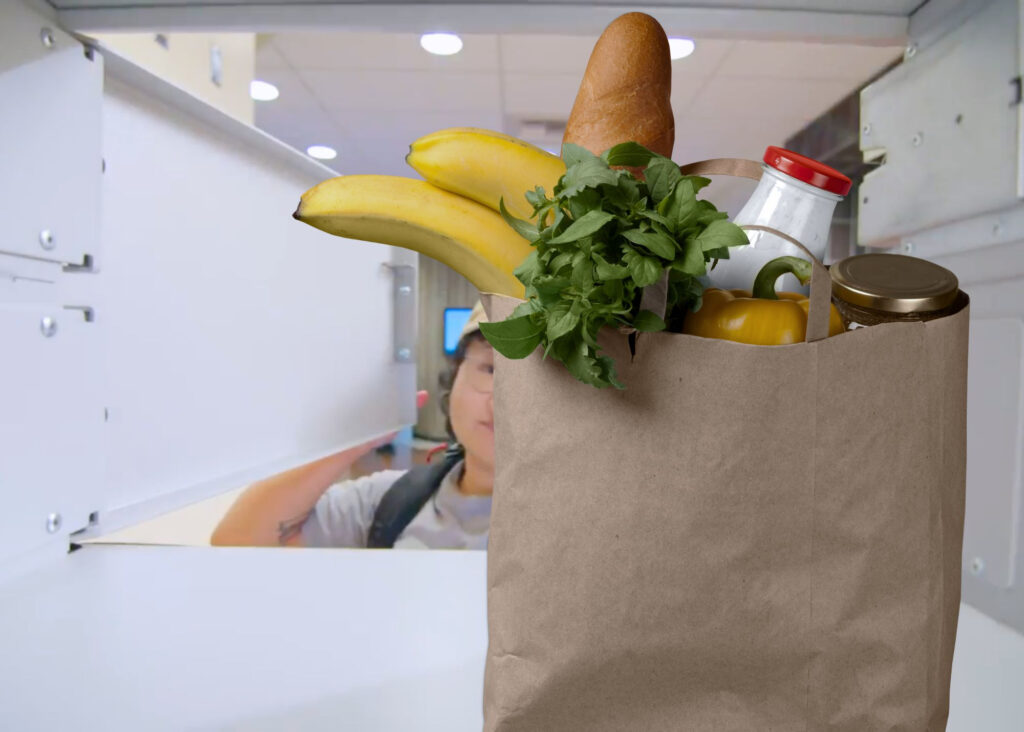
Customer picking up grocery order from smart lockers

Operational Resilience, Security and Sustainability Are Top Priorities

Retailers are entering 2026 with a renewed focus on building resilient and future friendly operations. Several cross industry trends stand out.


Security and compliance

With increased automation comes increased scrutiny. Retailers must secure customer data, protect in store assets and ensure consistent execution across multiple channels.


Streamlined returns management

Returns remain one of the highest cost segments of omnichannel commerce. Automated returns drop off points and centralized processing will continue expanding in 2026.


Sustainability linked to logistics efficiency

Customers are placing more value on lower impact fulfillment options. Smart pickup and consolidated delivery, supported by locker systems, help reduce repeat delivery attempts and improve overall energy efficiency.

For operations leaders planning the next 12 months, these themes align directly with cost control, store productivity and customer trust.

Conclusion: 2026 Belongs to Retailers Who Execute With Precision

Retail industry trends for 2026 point to a shift toward intelligent operations, flexible fulfillment and technology that genuinely simplifies how stores run day to day. As you explore the NRF Big Show floor, the most important question will not be “what is new?” but instead “what actually makes our operations better?”

Smart, automated pickup solutions are one of the clearest ways retailers can reduce labor strain, improve customer satisfaction and prepare for sustained omnichannel growth.

Explore how modern pickup systems can support your 2026 strategy → Contact Luxer One to learn more.

  • Christina Draper

    Christina Draper, Marketing Content Manager at Luxer One, creates storytelling-driven content that connects with property management professionals and highlights innovations in multifamily package management. With a marketing background from UNC Charlotte, she develops cross-channel campaigns that showcase how Luxer One is redefining the resident experience.

    See Posts

RECENT POSTS

The State of the Multifamily Market: Stability Is Returning, but Discipline Still Matters

The State of the Multifamily Market: Stability Is Returning, but Discipline Still Matters

After several years of volatility, the state of the multifamily market entering 2026 feels more predictable than it has since the early post-pandemic period. Rent growth has normalized, supply pressures are beginning to ease in many metros, and demand fundamentals are slowly strengthening. However, this is not a return to the high-growth environment operators experienced earlier in the decade.
Instead, the Q1 2026 outlook reflects a market where stability is returning, but performance depends heavily on operational discipline, cost control, and resident experience. Properties that adapt to this reality are finding steadier footing. Those that rely on outdated assumptions or inefficient systems may struggle to keep pace.
This Q1 2026 multifamily market report breakdown explores what the latest data is telling operators and what it means for day-to-day decision-making.

Read More »
Smart Lockers for Asset Exchange and Package Management in the Modern Workplace

Smart Lockers for Asset Exchange and Package Management in the Modern Workplace

Workplace operations have changed dramatically in recent years. Hybrid schedules, distributed teams, and higher expectations for speed and accountability have reshaped how offices manage equipment, documents, and deliveries. As a result, many organizations are rethinking how assets move through the workplace.
That shift is driving increased demand for smart lockers for asset exchange and package management, a secure and automated solution designed to reduce loss, streamline workflows, and scale with enterprise operations. For workplace managers and operations directors, smart lockers are no longer a convenience. They are becoming a core infrastructure tool for the modern workplace.

Read More »
How to Save Time and Money with Package Management at Apartments

How to Save Time and Money with Package Management at Apartments

Smart lockers and package rooms have become essential infrastructure for modern apartment communities. They create secure, self-service delivery workflows, reduce front office congestion, and give residents flexibility to pick up packages on their own schedule.
For many communities, these systems already do most of the heavy lifting. But at larger properties or across growing portfolios, even the best package management technology benefits from consistent human support.
That is where onsite package management staff come in. When paired with smart lockers and package rooms, they help communities save time and money with package management by ensuring systems are used properly, residents are supported, and onsite teams stay focused on higher-value work.

Read More »
Unlocking Revenue with Smart Lockers: A Strategic Response to Online Cart Abandonment

Unlocking Revenue with Smart Lockers: A Strategic Response to Online Cart Abandonment

Online cart abandonment is not a new problem, but it is becoming a more expensive one.
As ecommerce has matured, shopper expectations have risen just as fast. Convenience, flexibility, and control now play as large a role in conversion as price or product availability. When those expectations are not met, shoppers hesitate, leave, and often do not return.
For retail operations leaders, cart abandonment should no longer be viewed as just a marketing or UX issue alone. It’s also a fulfillment and operational challenge, and one that demands a more strategic response.

Read More »

TOPICS

Share: