

LUXER ONE BLOG

Holiday BOPIS Case Study Breakdown: How Smart Lockers Streamline Seasonal Fulfillment

Holiday BOPIS Case Study Breakdown: How Smart Lockers Streamline Seasonal Fulfillment

The holiday season has become retail’s ultimate stress test. Buy Online, Pick Up In Store (BOPIS) operations are often the first to feel the pressure. With peak order volumes up to 40% higher than average, many retailers struggle to balance customer expectations with limited staff and store space.

Luxer One’s new case study, How Smart Lockers Transformed Holiday BOPIS for a National Retailer, offers an inside look. We cover how one major brand overcame those challenges using automated smart locker technology. The results? Faster pickup times, reduced labor strain, and higher customer satisfaction across hundreds of stores nationwide.

What You’ll Learn in the Case Study

This data-rich breakdown explores how retailers can prepare for the next holiday surge, and what happens when they don’t. Here’s a preview of what’s inside:

  1. The Scale of the BOPIS Surge
    During the 2024 holiday season, one major retailer saw a 40%+ spike in BOPIS orders compared to pre-holiday averages, stretching fulfillment teams to their limits.

  2. How Smart Lockers Delivered Results
    Over a five-year period, more than 451,000 BOPIS orders were processed through Luxer One lockers, saving 27,000–37,000 labor hours. That’s the equivalent to up to 18 full-time employees.

  3. Quantifiable ROI and Long-Term Impact
    By modernizing their BOPIS model, the retailer achieved a 227% return on investment and $57.6 million in total labor savings, while boosting customer satisfaction to 4.8 out of 5.

  4. Lessons for Retailers Heading Into 2025
    The case study highlights scalable strategies any retailer can apply to manage surging demand, reduce congestion, and create a seamless omni-channel pickup experience.
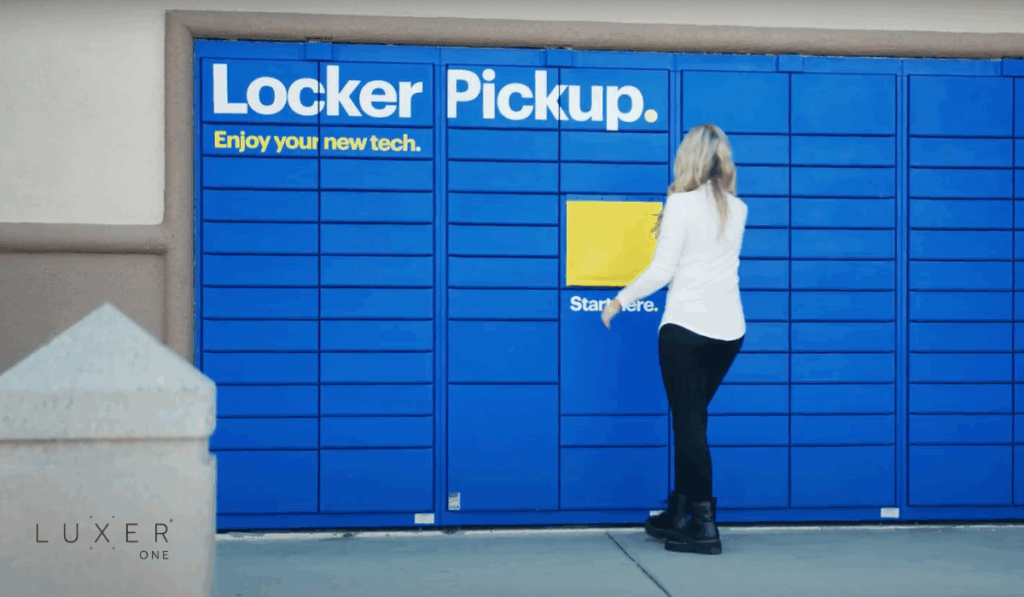
Woman approaching Luxer One BOPIS lockers at retail store to pickup order

Why This Matters Now

Holiday surges are no longer isolated events, they’re year-round challenges that define brand perception and loyalty. Smart locker systems offer a proven, scalable solution that meets customer expectations while protecting your team’s bandwidth.

For more insights, explore our blog on How to Prepare for the Holiday Shopping Season.

Download the Full Case Study

See how this national retailer achieved measurable results and what your brand can learn from their success.

At Luxer One, we help retailers address the very challenges highlighted in this case study. Learn how you can revolutionize your operations with retail solutions that are built to last!

  • Christina Draper

    Christina Draper, Marketing Content Manager at Luxer One, creates storytelling-driven content that connects with property management professionals and highlights innovations in multifamily package management. With a marketing background from UNC Charlotte, she develops cross-channel campaigns that showcase how Luxer One is redefining the resident experience.

    See Posts

RECENT POSTS

smart locker integrations for universities

What Should Universities Look for in a Smart Locker System Integration?

As universities modernize campus operations, smart lockers are increasingly part of the conversation. But while the hardware often gets the spotlight, experienced decision makers know the real long term value lies in integration. That’s why institutions evaluating smart locker solutions should focus just as heavily on integration capabilities as on physical design.
So what should universities actually look for when evaluating smart locker system integrations? In this blog, we’re answering the key questions universities should ask, and how Luxer One supports those requirements.

Read More »
How to Launch Package Lockers in Your Community

How to Launch Package Lockers in Your Community

Installing a package locker system is a major upgrade for your community. But knowing how to launch package lockers properly is what turns a new system into a retention-driving amenity.
In today’s market, where residents are evaluating renewals earlier and weighing value more carefully, a smooth rollout can reinforce convenience, security, and operational excellence from day one.
If you are preparing to introduce lockers at your property, here are five strategic package locker launch ideas that protect your investment and elevate resident experience.

Read More »
What’s the Difference Between Electronic and Smart Lockers?

What’s the Difference Between Electronic and Smart Lockers?

If you’re researching package management solutions, you’ve likely come across both electronic lockers and smart lockers. While the terms are sometimes used interchangeably, they are not the same.
The main difference between electronic and smart lockers is connectivity and system intelligence.
Electronic lockers use digital access methods instead of traditional keys. Smart lockers go further by using cloud-based software, real-time tracking, integrations, and advanced management tools to automate and optimize the entire package workflow.
For multifamily property managers and owners, that distinction matters more than ever.

Read More »
Onsite vs Offsite Package Management: What Multifamily Leaders Need to Know

Onsite vs Offsite Package Management: What Multifamily Leaders Need to Know

Package volume has fundamentally reshaped multifamily operations. What used to be a convenience has become a daily operational responsibility, a resident satisfaction driver, and in some cases, a liability risk.
As properties evaluate solutions, many are weighing onsite vs offsite package management models. Both promise convenience. Both aim to reduce staff burden. But the operational realities and resident experience can look very different.
Below we discuss what you should consider before deciding.

Read More »
The Rise of Build-to-Rent: What It Means for Proptech and the Future of Amenities

The Rise of Build-to-Rent: What It Means for Proptech and the Future of Amenities

Build-to-rent is no longer a niche concept. It is quickly becoming one of the most important shifts in the multifamily industry.
This is not a temporary response to interest rates or a passing housing cycle. We are watching the formation of a distinct asset class. And like any new asset class, it comes with a new operating model, new resident expectations, and new requirements for technology.
The mistake I see most often is treating build-to-rent as simply horizontal multifamily. It is not. The physical layout may resemble single-family homes, but the operational philosophy has to be entirely different.

Read More »

TOPICS

Share: