

LUXER ONE BLOG

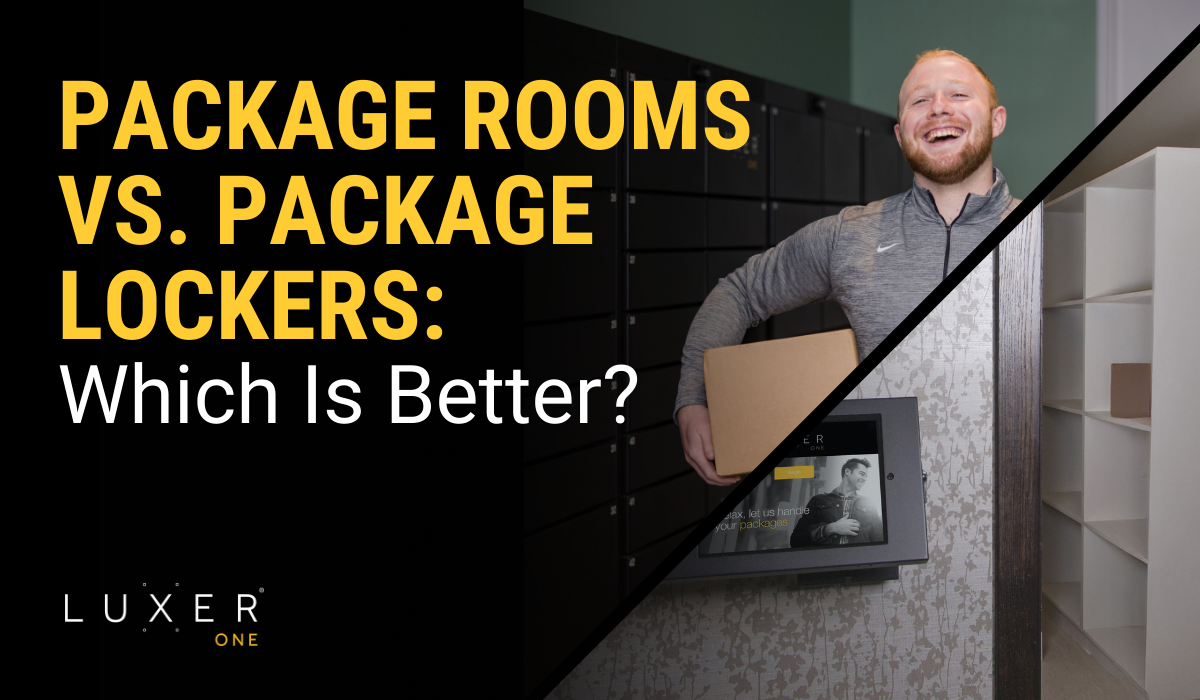
Package Rooms vs. Package Lockers: Which Is Better?

Package Rooms vs. Package Lockers: Which Is Better?

Finding the best package management systems for multifamily communities often comes down to one key question: package rooms vs. package lockers. Both solutions help properties handle rising delivery volumes, reduce staff workload, and improve the resident experience, but each one serves a different operational need. 

The right choice depends on your building style, delivery patterns, available space, and long term goals. This guide breaks down the differences, benefits, and limitations of each option to help you make an informed decision.

What Are Package Lockers?

Package lockers are automated, self service storage units that securely hold resident packages until pickup. Couriers deposit parcels into individual compartments, and residents retrieve them using a code or mobile credential.

Lockers offer predictable workflows and clear chain of custody, which is why many communities use them to reduce staff time and improve security. When built with quality materials and properly set up, package lockers are very secure.

Pros of Package Lockers

  1. High Security and Accountability

    Lockers encourage reliable courier compliance, maintain a secure pickup environment, and timestamp each transaction.

  2. Faster Pickup Experience

    Residents appreciate the quick scan and retrieve process. High traffic properties especially benefit from shorter wait times and predictable workflows.

  3. Labor Savings

    Automated lockers reduce staff involvement in package handling. Properties can see substantial ROI on smart lockers. Freeing up hours otherwise spent sorting, calling residents, or managing carrier issues have a major impact.

  4. Great for Medium and Large Properties

    Communities with consistent package volume and predictable spatial layout often find lockers easier to manage long term.
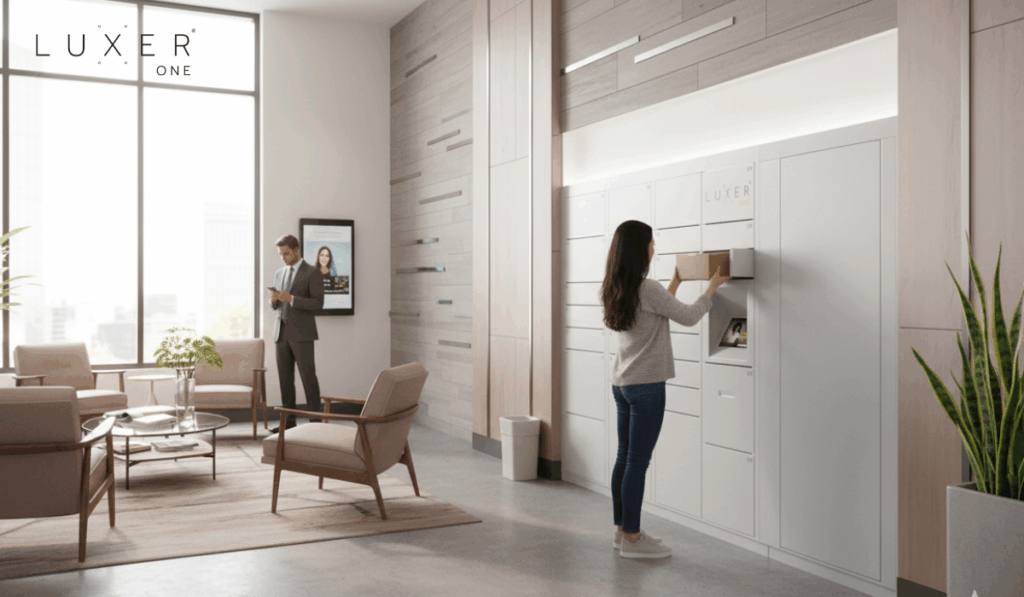
Resident picking up package from Luxer One smart lockers in apartment

Cons of Package Lockers

  1. Fixed Compartment Sizes

    Oversized or irregular packages may not fit inside lockers and need a backup workflow. Although some vendors, like Luxer One, provide oversized locker solutions. Many properties even opt for combo systems where larger boxes are placed in the package room.

  2. Space Requirements

    While lockers require less square footage than a room, they still need a compliant, accessible location with power and network connections. Outdoor solutions can help solve for location needs at some properties.

  3. Capacity Planning is Crucial

    Lockers perform best when sized appropriately. Following best practices for package locker setup can be the difference between a true solution and an unreliable amenity.
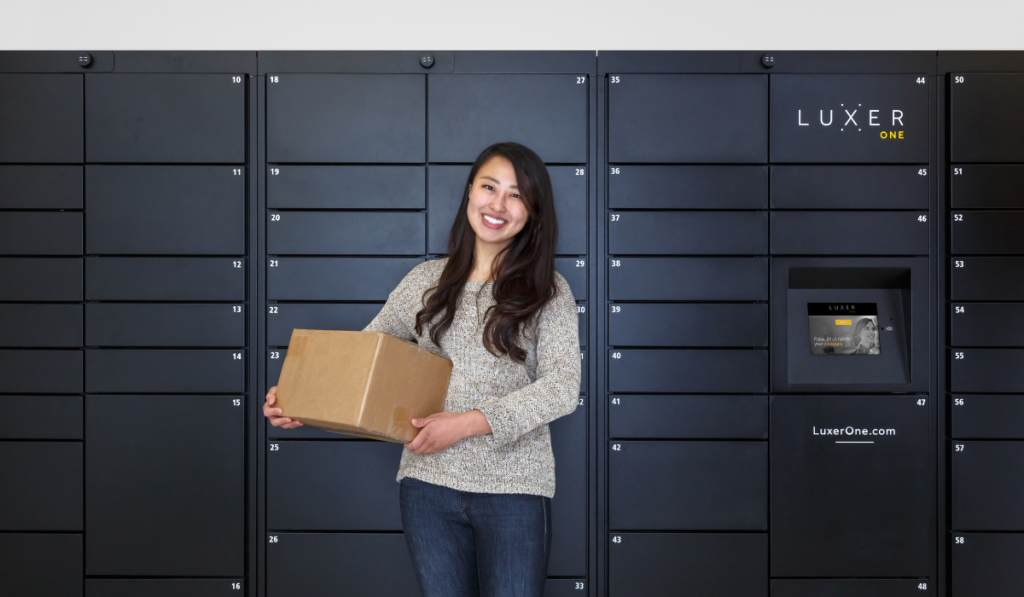
Multiple packages in an oversized Luxer One package locker

What Are Package Rooms?

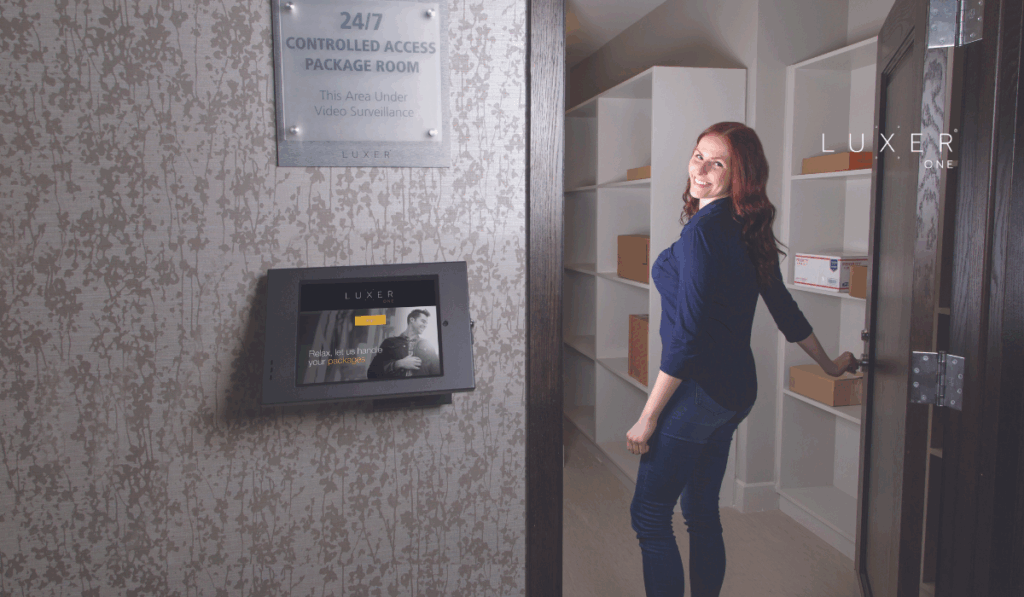
Package rooms convert a secure interior space into a technology enabled storage area for deliveries. Instead of individual compartments, rooms allow flexible shelving and can hold packages of all sizes. Smart room software logs each delivery and pickup, giving staff visibility and reducing human error.

This solution is often considered when buildings have older layouts, irregular delivery patterns, or high volumes that exceed what traditional lockers can accommodate.

Pros of Package Rooms

  1. Unlimited Size Flexibility

    Rooms support oversized parcels, bulk shipments, and seasonal spikes more easily than locker based systems.


  2. Scalable and Adaptable

    As delivery volume increases, shelving layouts and workflows can adjust. This is helpful for high rise communities, student housing, and mixed use properties.


  3. Efficient for High Volume Buildings

    Urban or luxury communities with extremely high package density may find that rooms allow couriers to drop off faster and reduce congestion.
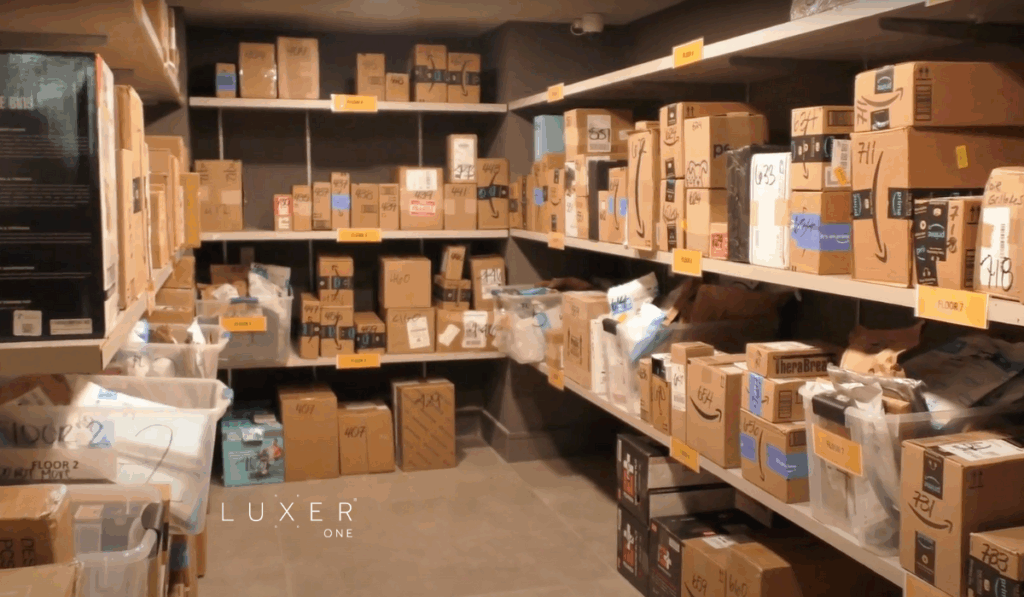
Parcels organized in a smart package room from Luxer One

Cons of Package Rooms

  1. Requires Managed Capacity and Organization

    Rooms need thoughtful layout planning, shelving strategies, and regular audits to remain efficient. Without consistent processes, they can become cluttered and reduce retrieval efficiency.


  2. Higher Security Considerations

    Because residents enter the room to retrieve packages, strong access controls and software tracking are essential to minimize risk.


  3. Space Availability

    Some communities simply do not have a room large enough to convert into a package area, especially garden style properties or buildings where storage space is limited.
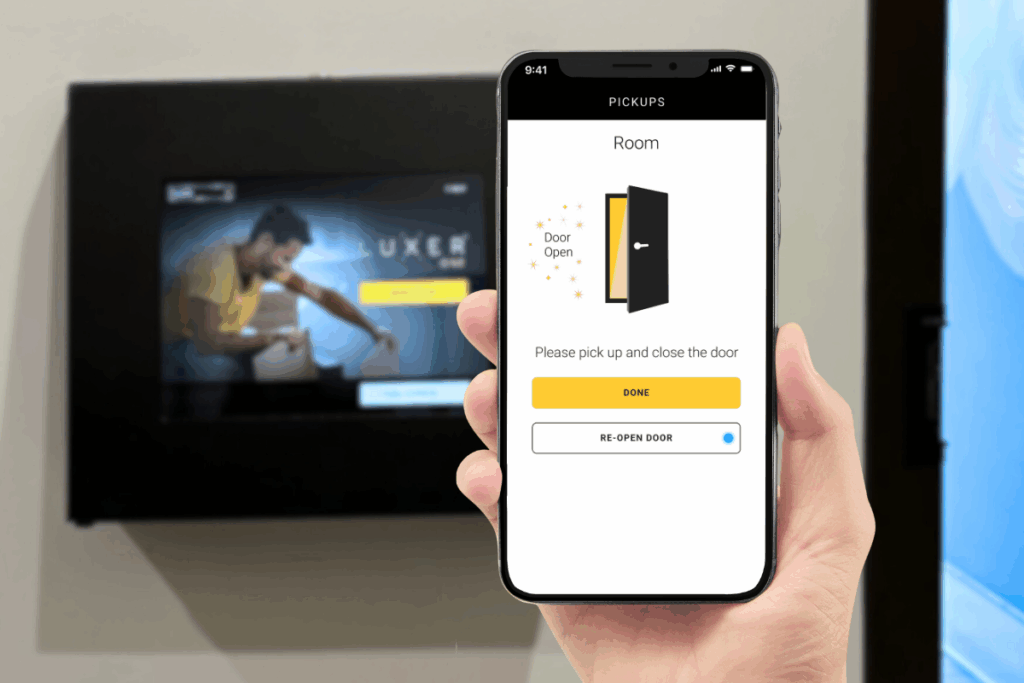
Resident using Luxer One mobile app to open the smart package room

Package Rooms vs. Package Lockers: Which Is Better for Different Property Types?

High Rise Buildings: Often handle high volumes and benefit from the flexibility of package rooms, though a hybrid approach with lockers for standard parcels is increasingly common.


Garden Style Apartments: Frequently choose lockers due to simpler installation, predictable workflows, and smaller delivery loads.


Urban Communities: May lean toward package rooms due to tight courier schedules and heavy delivery traffic.


Suburban or Mixed Use Properties: Both solutions can work well, depending on traffic, staffing levels, and resident expectations.


Luxury or Class A Communities: Tend to prioritize resident convenience and may invest in either a well designed locker wall or an elevated smart package room experience.

Residents love secure package solutions from Luxer One

How to Decide Between Package Rooms and Package Lockers

When evaluating package rooms vs. package lockers, consider the following operational factors:

  1. Delivery Volume

    High volume buildings often lean toward rooms or hybrid models. Moderate volume properties typically perform well with lockers.


  2. Space Constraints

    If space is limited, lockers are usually more practical. If space is abundant, rooms offer more layout flexibility.


  3. Security Needs

    If chain of custody and restricted access are top priority, lockers provide more controlled accountability.


  4. Staff Involvement

    Automated systems significantly reduce staff workload. Communities aiming for maximum labor savings often choose lockers or smart rooms with automated workflows.


  5. Resident Experience

    Pickup speed, clarity of organization, and reliability matter. Both systems can deliver strong resident satisfaction when configured correctly.

Communities exploring modern solutions often reference tools like the guide to multifamily package management to support planning and implementation decisions.

Luxer Liaison On-site Package Concierge opening the door to the Luxer One smart package room

The Bottom Line: Both Solutions Work, Depending on Your Property

There is no one size fits all answer. Lockers excel in structured environments with predictable flow, while rooms perform well in high volume or space rich properties. Many communities ultimately choose a hybrid model that combines lockers for standard parcels with a room for oversized items.

Both approaches can dramatically improve operational efficiency and resident satisfaction when designed and managed well. Luxer One supports communities implementing either option with secure technology, carrier friendly workflows, and modular systems that scale with your needs.

Ready to Find the Right Fit for Your Community?

Whether you are exploring package rooms, package lockers, or both, our team can help you determine the best solution for your building’s layout, volume, and resident expectations.

Contact us to get started.

  • Christina Draper

    Christina Draper, Marketing Content Manager at Luxer One, creates storytelling-driven content that connects with property management professionals and highlights innovations in multifamily package management. With a marketing background from UNC Charlotte, she develops cross-channel campaigns that showcase how Luxer One is redefining the resident experience.

    See Posts

RECENT POSTS

what is the best way to manage packages in a university mailroom?

What Is the Best Way to Manage Packages in a University Mailroom?

University mailrooms are under more pressure than ever. As online shopping continues to grow, campuses are receiving an unprecedented volume of packages each day, often without the staffing or storage space to keep up. For many universities, the question is no longer whether a new system is needed, it’s what is the best system to use?

Read More »
The Hidden Cost of Off-Site Package Models

The Hidden Cost of Off-Site Package Models

At first glance, some package management solutions seem like a win for property teams. They promise fewer packages on-site, less clutter, and less day-to-day handling.
But what looks convenient on the surface often comes with hidden tradeoffs. While these models may reduce visibility on the property, they do not eliminate the problem. They shift it somewhere else.
And in many cases, they shift it directly onto residents.

Read More »

Luxens on the Rise: Employee Highlight | Saular Moaddeli

At Luxer One, growth is part of the job. We prioritize promoting from within, provide clear paths for advancement, and encourage every team member to explore new opportunities! Our Luxens on the Rise series highlights team members who have carved their own paths within the company, taking on new challenges and evolving their careers along the way.
Read More »
The Middleman Problem: Why More Delivery Logistics Creates More Problems

The Middleman Problem: Why More Delivery Logistics Creates More Problems

On paper, adding more steps to a delivery process can sound like progress. More coordination, more handling, and more structure.
But in reality, more logistics often leads to more problems.
This is the core issue facing today’s multifamily delivery logistics strategies. In an effort to manage growing package volume, many systems have introduced additional layers between the carrier and the resident.
And while those layers are meant to help, they often create the opposite effect.
Because every extra step is another opportunity for something to go off track.

Read More »
food pantry access

From Food Banks to Food Access Networks: How Distribution Is Evolving

Modern food pantries are being asked to do more with less. They need to serve more people, offer greater flexibility, and operate with fewer staff and volunteers. As organizations look for ways to expand access without increasing overhead, many are wondering: Is there a better way to distribute food?
This Q&A explores the kinds of questions partners are already asking, and how smart locker solutions are helping provide answers.

Read More »

TOPICS

Share: