

LUXER ONE BLOG

Refrigerated Package Lockers & Their Benefit to Apartments

Refrigerated Package Lockers & Their Benefit to Apartments

As grocery delivery, meal kits, and prescription drop-offs become part of everyday apartment living, package management is no longer just about boxes. Property teams are now responsible for time-sensitive, perishable deliveries that cannot sit in an office or hallway for hours.

That’s where refrigerated package lockers come in. Designed specifically to protect temperature-controlled items while maintaining secure access, refrigerated lockers help apartment communities reduce liability, streamline operations, and deliver a better resident experience. All while taking work off the onsite teams plates.

Below, we break down how refrigerated lockers work, why they matter, and how they fit into a modern package management strategy.

The Problem: Perishable Deliveries Create Risk for Properties

Traditional package workflows were never built for refrigerated items. When groceries, medications, or meal kits arrive at a leasing office, staff are left with limited and risky options:

  • Store items in a shared fridge with limited space
  • Leave packages unattended until residents arrive
  • Ask carriers to return later, causing missed deliveries
  • Handle items manually, increasing liability exposure

Each of these scenarios introduces food safety concerns, resident complaints, and potential liability. If a refrigerated item spoils or goes missing, the property often bears the blame, even when the situation is out of staff control.

As package volumes rise and delivery windows tighten, these issues only become more difficult to manage without the right infrastructure in place.

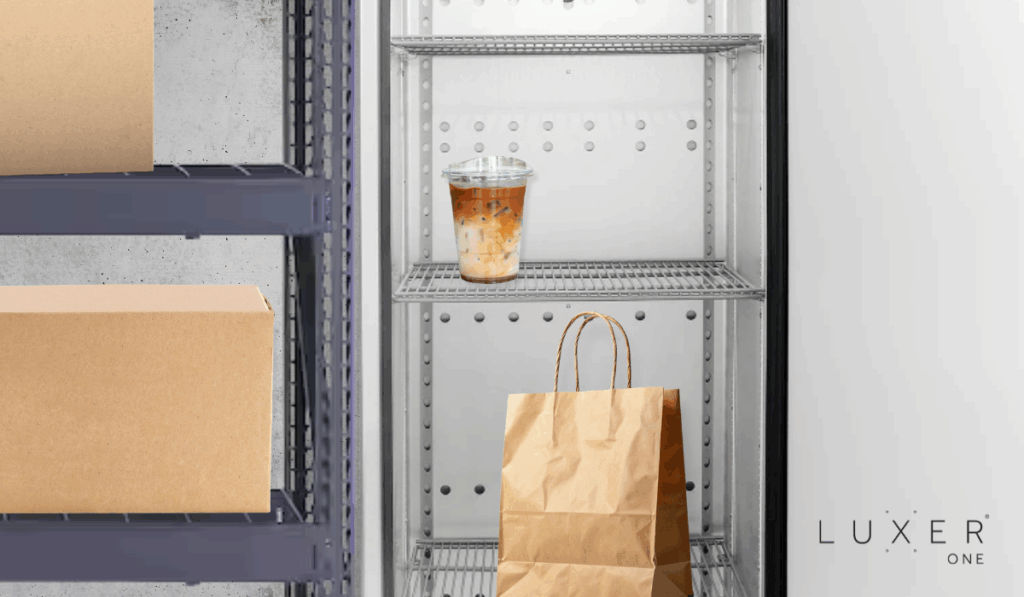
Perishable delivery items in smart fridge locker from Luxer One

The Solution: Refrigerated Package Lockers for Apartments

Refrigerated package lockers extend the same secure, automated package management process used for standard deliveries to temperature-sensitive items.

Instead of routing groceries or medications through the leasing office, carriers place them directly into secure, access-controlled refrigerated compartments. Residents receive an automated notification and retrieve their items on their own schedule.

Because refrigerated lockers integrate into a broader smart locker system, they support 24/7 access, reduce operational touchpoints, and maintain clear accountability for every delivery.

When implemented alongside standard lockers and package rooms, refrigerated lockers become a seamless part of a comprehensive package strategy rather than a one-off solution.

Key Features of Refrigerated Package Lockers

Refrigerated lockers are purpose-built for multifamily environments, balancing security, temperature control, and ease of use.

Secure, Controlled Access

Each delivery is tied to a unique access code or mobile credential, ensuring only the intended resident can retrieve the item. This mirrors the same security principles outlined in modern smart locker systems and aligns with best practices discussed in resources like how secure are package lockers.


Consistent Temperature Management

Compartments are designed to keep items within safe temperature ranges, protecting food quality, medication integrity, and perishable goods. Even during high delivery volume days.


Carrier-Friendly Delivery Flow

Delivery drivers follow the same intuitive process used for standard package lockers, reducing confusion, failed deliveries, and staff interruptions.


Scalable Design

Refrigerated lockers can be deployed as part of a larger package room or locker system, making it easier to scale capacity as resident needs evolve. Proper placement and setup follow the same principles outlined in best practices for package locker setup in apartments.

Staffer loading food pantry locker with grocery items for distribution

The Benefits for Property Managers and Operators

Reduced Liability Exposure

By removing staff from the chain of custody, refrigerated lockers significantly reduce the risk of spoilage claims, lost items, and food safety disputes. Packages are delivered, stored, and retrieved securely without manual handling.

Operational Efficiency

Leasing and maintenance teams are no longer interrupted by cold-storage questions or package coordination. Automated notifications and self-service pickup free staff to focus on higher-value tasks.

Improved Resident Satisfaction

Residents gain confidence knowing their groceries, prescriptions, or meal kits will be stored securely until they’re ready to pick them up even if they arrive hours after delivery.

Stronger Amenity Offering

Refrigerated lockers signal that a property understands modern delivery habits and invests in infrastructure that supports them. When paired with standard lockers and package rooms, they reinforce a community’s position as thoughtfully equipped and resident-focused.

Seamless Integration with Broader Package Management

Refrigerated lockers are not meant to replace traditional solutions, they complement them. When included as part of the best package management solution, they help properties address the full range of delivery types with a single, cohesive system.

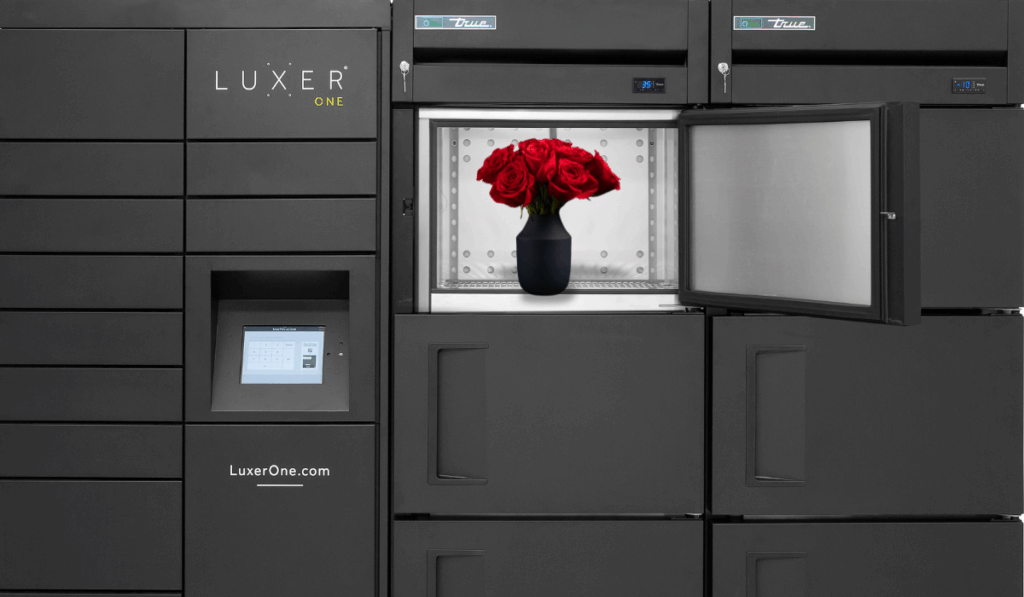
Flowers in smart fridge locker from Luxer One

Why Refrigerated Lockers Belong in Modern Package Rooms

As delivery trends continue to evolve, package rooms are no longer just storage spaces, they’re operational hubs. Adding refrigerated lockers ensures that perishable deliveries are treated with the same level of security and automation as standard packages.

This approach aligns with the growing recognition that smart refrigeration isn’t a luxury feature, but a practical necessity for communities managing daily grocery and medication deliveries. That idea is explored further in why a smart fridge belongs in your package room.

The Bottom Line

Refrigerated package lockers help apartment communities:

  • Reduce liability tied to perishable deliveries
  • Eliminate staff involvement in cold-storage handling
  • Improve resident trust and satisfaction
  • Support a scalable, future-ready package strategy

For property managers and operators navigating rising delivery volumes, refrigerated lockers provide a clear, efficient way to protect both residents and operations.

If you’re evaluating how refrigerated lockers could fit into your community’s package management approach, contact Luxer One to explore solutions designed specifically for multifamily environments.

  • Christina Draper

    Christina Draper, Marketing Content Manager at Luxer One, creates storytelling-driven content that connects with property management professionals and highlights innovations in multifamily package management. With a marketing background from UNC Charlotte, she develops cross-channel campaigns that showcase how Luxer One is redefining the resident experience.

    See Posts

RECENT POSTS

The State of the Multifamily Market: Stability Is Returning, but Discipline Still Matters

The State of the Multifamily Market: Stability Is Returning, but Discipline Still Matters

After several years of volatility, the state of the multifamily market entering 2026 feels more predictable than it has since the early post-pandemic period. Rent growth has normalized, supply pressures are beginning to ease in many metros, and demand fundamentals are slowly strengthening. However, this is not a return to the high-growth environment operators experienced earlier in the decade.
Instead, the Q1 2026 outlook reflects a market where stability is returning, but performance depends heavily on operational discipline, cost control, and resident experience. Properties that adapt to this reality are finding steadier footing. Those that rely on outdated assumptions or inefficient systems may struggle to keep pace.
This Q1 2026 multifamily market report breakdown explores what the latest data is telling operators and what it means for day-to-day decision-making.

Read More »
Smart Lockers for Asset Exchange and Package Management in the Modern Workplace

Smart Lockers for Asset Exchange and Package Management in the Modern Workplace

Workplace operations have changed dramatically in recent years. Hybrid schedules, distributed teams, and higher expectations for speed and accountability have reshaped how offices manage equipment, documents, and deliveries. As a result, many organizations are rethinking how assets move through the workplace.
That shift is driving increased demand for smart lockers for asset exchange and package management, a secure and automated solution designed to reduce loss, streamline workflows, and scale with enterprise operations. For workplace managers and operations directors, smart lockers are no longer a convenience. They are becoming a core infrastructure tool for the modern workplace.

Read More »
How to Save Time and Money with Package Management at Apartments

How to Save Time and Money with Package Management at Apartments

Smart lockers and package rooms have become essential infrastructure for modern apartment communities. They create secure, self-service delivery workflows, reduce front office congestion, and give residents flexibility to pick up packages on their own schedule.
For many communities, these systems already do most of the heavy lifting. But at larger properties or across growing portfolios, even the best package management technology benefits from consistent human support.
That is where onsite package management staff come in. When paired with smart lockers and package rooms, they help communities save time and money with package management by ensuring systems are used properly, residents are supported, and onsite teams stay focused on higher-value work.

Read More »
Unlocking Revenue with Smart Lockers: A Strategic Response to Online Cart Abandonment

Unlocking Revenue with Smart Lockers: A Strategic Response to Online Cart Abandonment

Online cart abandonment is not a new problem, but it is becoming a more expensive one.
As ecommerce has matured, shopper expectations have risen just as fast. Convenience, flexibility, and control now play as large a role in conversion as price or product availability. When those expectations are not met, shoppers hesitate, leave, and often do not return.
For retail operations leaders, cart abandonment should no longer be viewed as just a marketing or UX issue alone. It’s also a fulfillment and operational challenge, and one that demands a more strategic response.

Read More »

TOPICS

Share: